
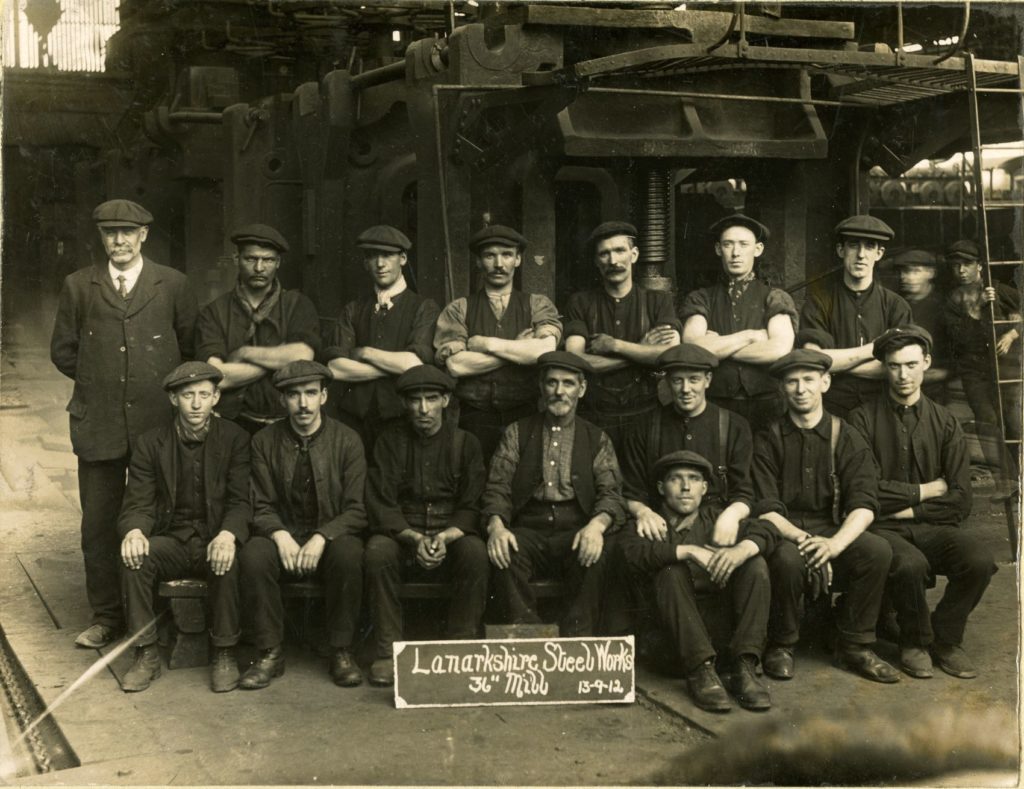
The iron industry played a huge part in Scotland’s story.
Although iron has been made for thousands of years, the Industrial Revolution took its production to new heights. The industry consumed vast quantities of raw materials and employed many thousands of people, who often migrated long distances to find work in the ironworks and foundries of industrial regions such as the area that is now North Lanarkshire.
Maybe some of those people are your ancestors? We are often asked what jobs people did in an ironworks so here is a quick primer.
What did an Ironworker do?

The term ‘ironworks’ is quite a broad one and can be confusing. We can break them down into three main categories, all of which might have the word ‘Ironworks’ in their name:
1. Pig Iron Works

‘Gartsherrie by Night’ by CR Stanley, 1853. Oil on canvas.
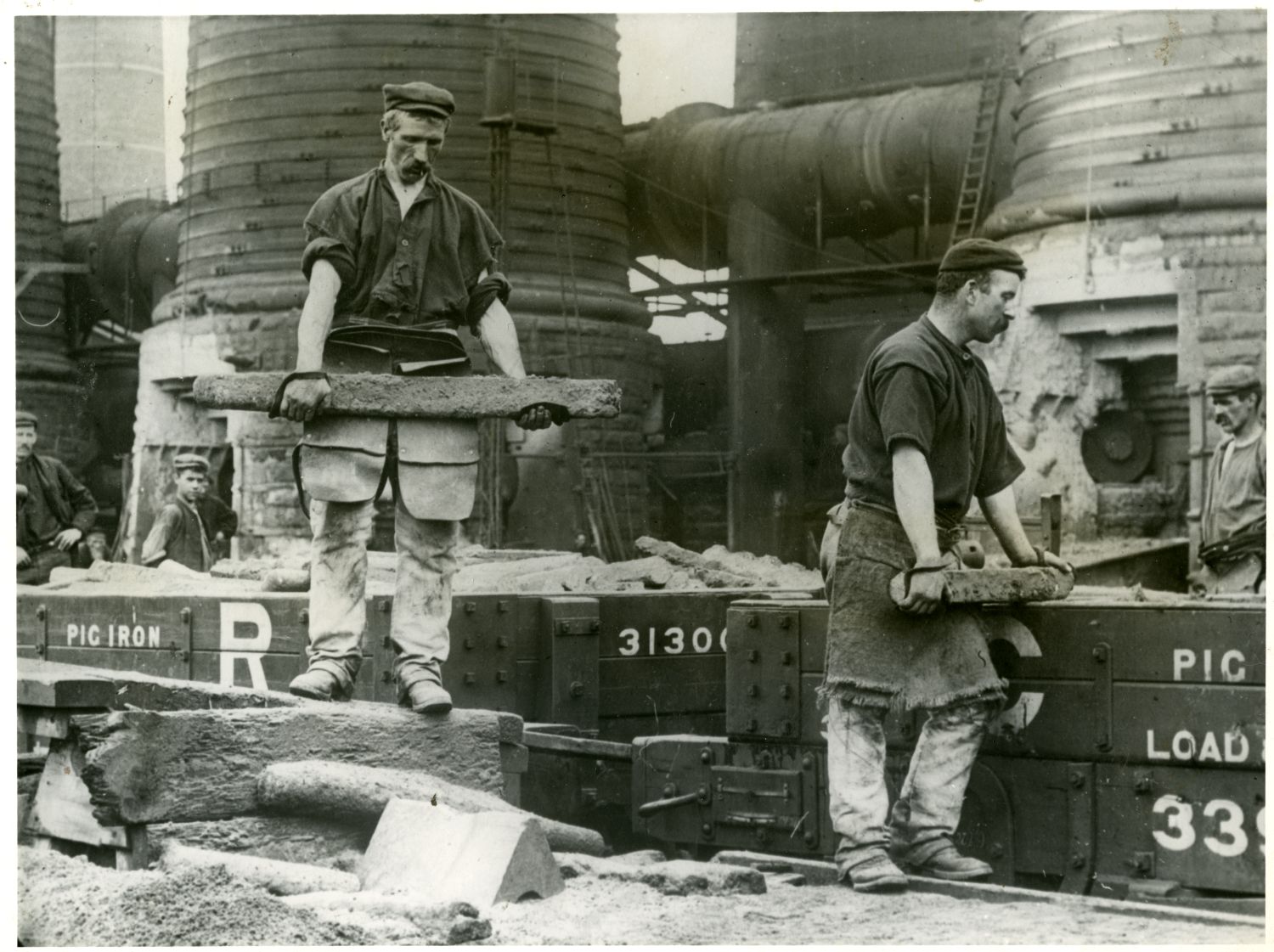
Here, naturally-occurring iron ore was ‘smelted’ into ‘pig iron’ which was cast as ingots (known as ‘pigs’) of hard, brittle iron which would be melted down and used in the other two types of ironworks. Examples of pig iron works in the North Lanarkshire area include the Gartsherrie, Summerlee, Calder and Coltness works.
2. Malleable Iron Works

Illustration of a puddler at work, 1920.
This was where pig iron was turned into ‘malleable iron’ (also known as ‘wrought iron’) through the ‘puddling process’;
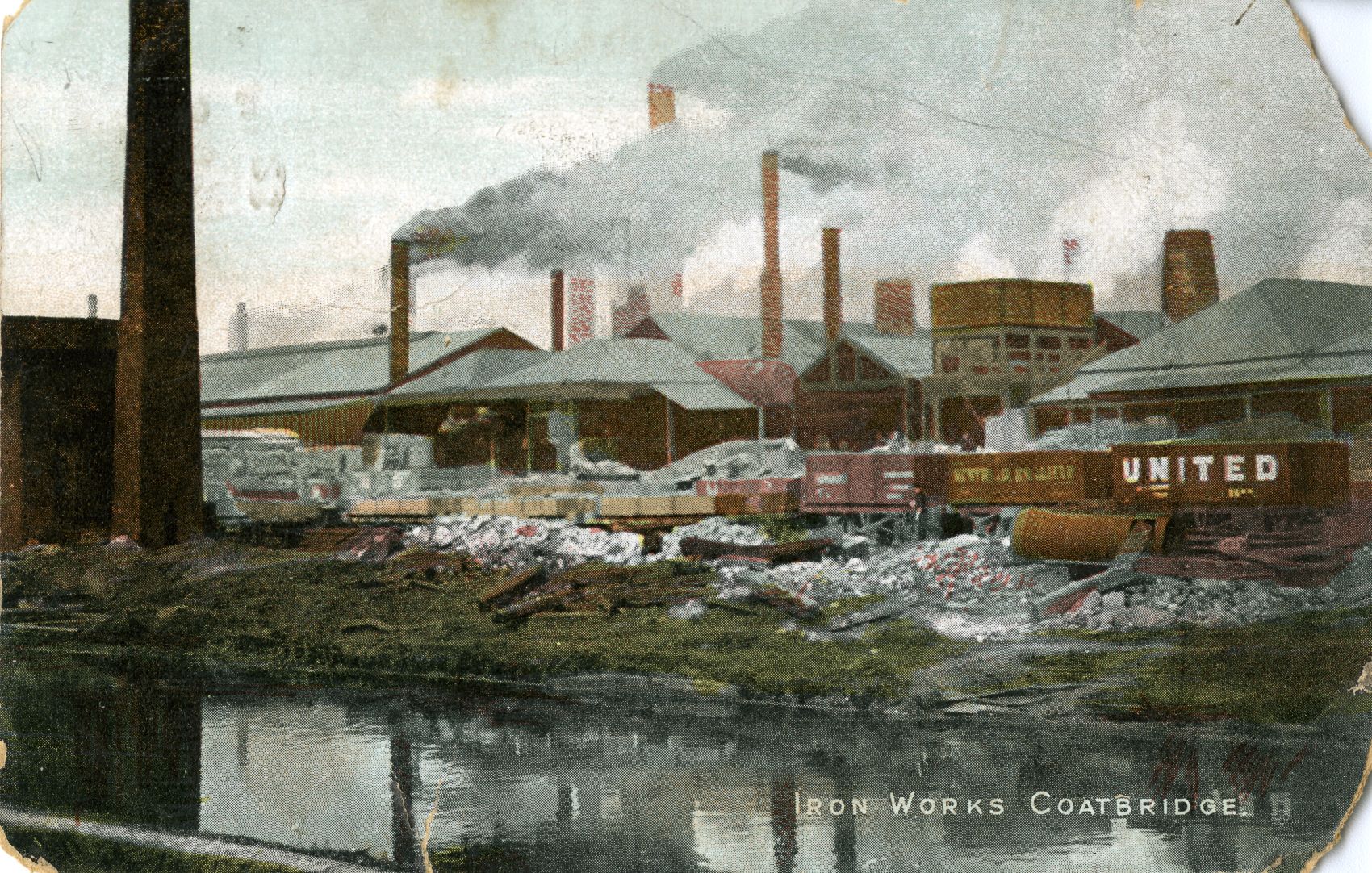
3. Iron Foundries
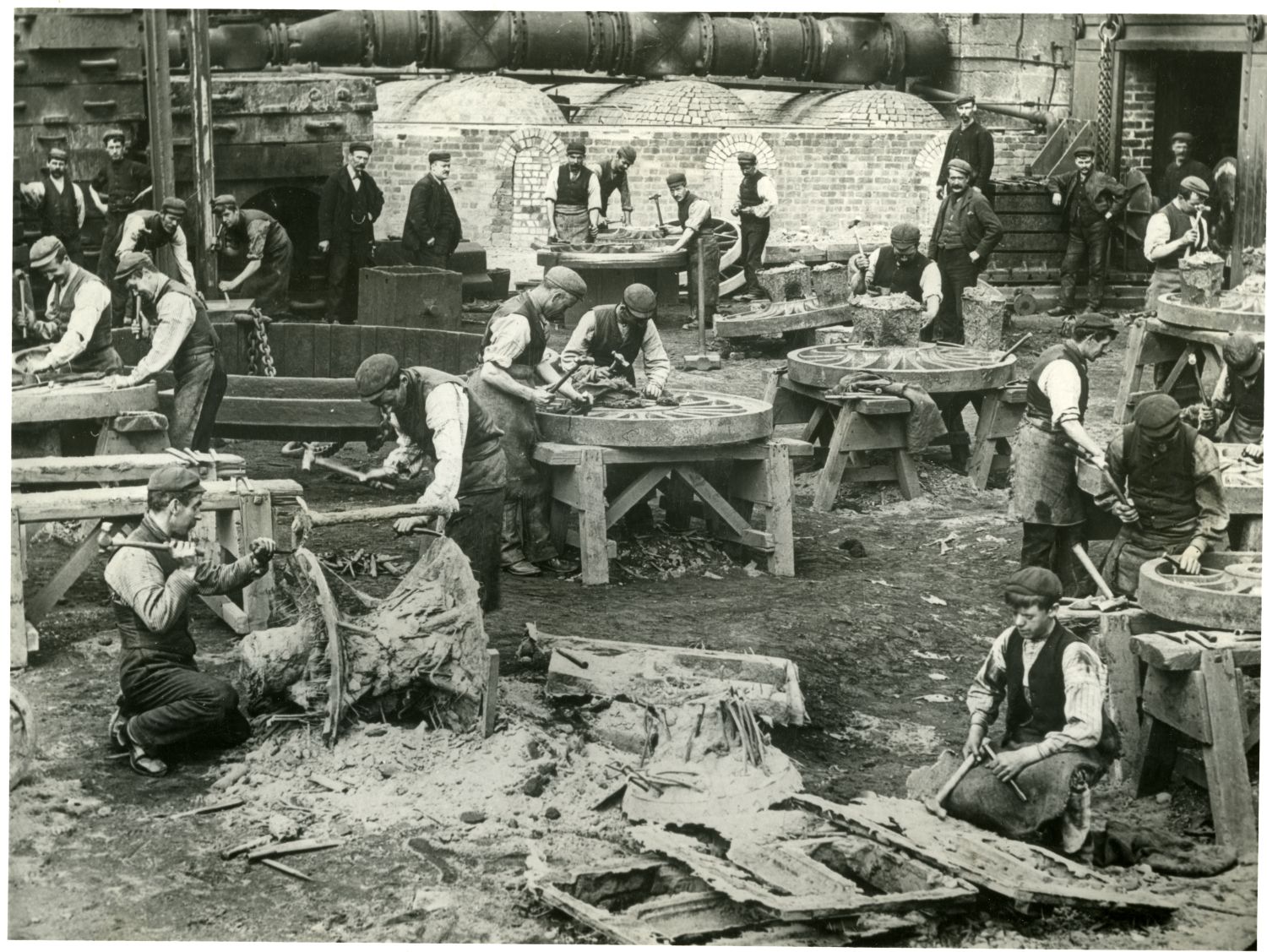
In these smaller factories iron wasn’t necessarily made but instead pig iron would be cast into shapes and malleable iron hammered and rolled into different iron products. Some larger foundries would melt large quantities of pig iron in ‘cupola furnaces’ and might even make steel.
In reality, an ironworks might include two or all three of these functions.
The ironworks might have other industrial activities on the same site, such as mining for raw materials, brick-making, or chemical production. It might also include a steelworks. Again, a steelworks might be somewhere that steel is made (from iron) or it might be somewhere that shapes or casts steel that has been made elsewhere. But steelworks are a topic for another day.
Like most businesses, the ironworks changed their products and production methods over time, depending on what the market demanded. For example, the Clydesdale Works near Bellshill started out making a variety of iron products but later specialised in making steel tubes after it was taken over.
Some Jobs in the Ironworks
Dresser – when an item has been cast in the foundry it has lots of bits of metal and sand attached from the pouring of the hot iron. These need to be removed to tidy-up the casting, a process known as Dressing.
Engineman – usually this is someone operating a stationary steam engine. This might be a blast furnace blowing engine, a rolling mill engine, or an engine for some other purpose such as driving machinery or pumping.
Filler – sometimes termed a Charger, this is someone whose job it was to literally fill a blast furnace. This involved unloading raw materials from railway wagons into handcarts and then travelling up to the tops of the furnaces by hoist and tipping the raw materials into the top of the furnace.
Furnace Keeper – this was a responsible position, in charge of the furnace team at a pig iron works. The keeper would oversee the ‘charging’ of the furnace by the fillers, the blowing of the furnace with hot air and would make the critical judgement when the furnace was ready to be ‘tapped’ and its contents released.
Furnaceman – this is a term for a blast furnace worker whose duties were likely to include filling the furnace and assisting with the tapping.
Hammerman or Shingler – this is a job in the malleable ironworks and forge, shaping hot iron with large mechanical hammers. In the early days these were usually water-powered ’tilt hammers’ but by the mid-1800s the hammers were steam powered.
Moulder – this highly skilled job involved creating moulds in casting sand ready to create metal castings. The moulder used special tools to smooth the sand and they also had to carefully control the amount of water in the clay-heavy sand.
Patternmaker – this was another critical role in the process of making castings. The patternmaker made a wooden version of the object that was to be cast. This would then be used to create the mould into which the molten iron or steel was poured.
Puddler – a crucial role in the malleable ironworks, the puddler was a highly-skilled man who also had to be physically very strong. Each puddler worked at an individual puddling furnace, manipulating a ball of molten iron under intense heat. When ready, the ball of iron would be beaten using a shingling hammer to remove impurities.
Roller – rolling mills were used to flatten and shape iron and steel to make bars, angles and plates. The iron rollers fed iron between rotating rolls with increasingly narrow gaps to gradually make the iron bar or plate thinner. They had to do this with tongs, catching the hot iron as it came out of the rolling mill at speed.
Smith – a blacksmith shaped metal by hand, using a variety of tools and keeping the metal hot at a forge. This was an important job in any ironworks.
Stoker – this person kept boilers fuelled. If a boiler ran out of fuel it would cool and the steam pressure would reduce, slowing down any machinery it was powering.
Researching Your Ironworker Ancestors
If you want to start tracing your ancestors, North Lanarkshire Archives and Local Studies have lots of resources to get you started, including:
- Old parish registers on Microfilm
- Census Returns on Microfilm
- Poor relief records
- Burial records
- Valuation rolls
- Electoral Rolls
They can also offer you advice along the way. Another excellent resource is the National Records of Scotland’s Scotlands People website.
For more general historical information, Museums, Archives and Local Studies hold objects, archives, maps and photographs, many of which are displayed on this website.
Anything You Want to Tell Us?

If you have information about any of the objects, documents or photographs displayed on this site, you can leave a comment on the object page.