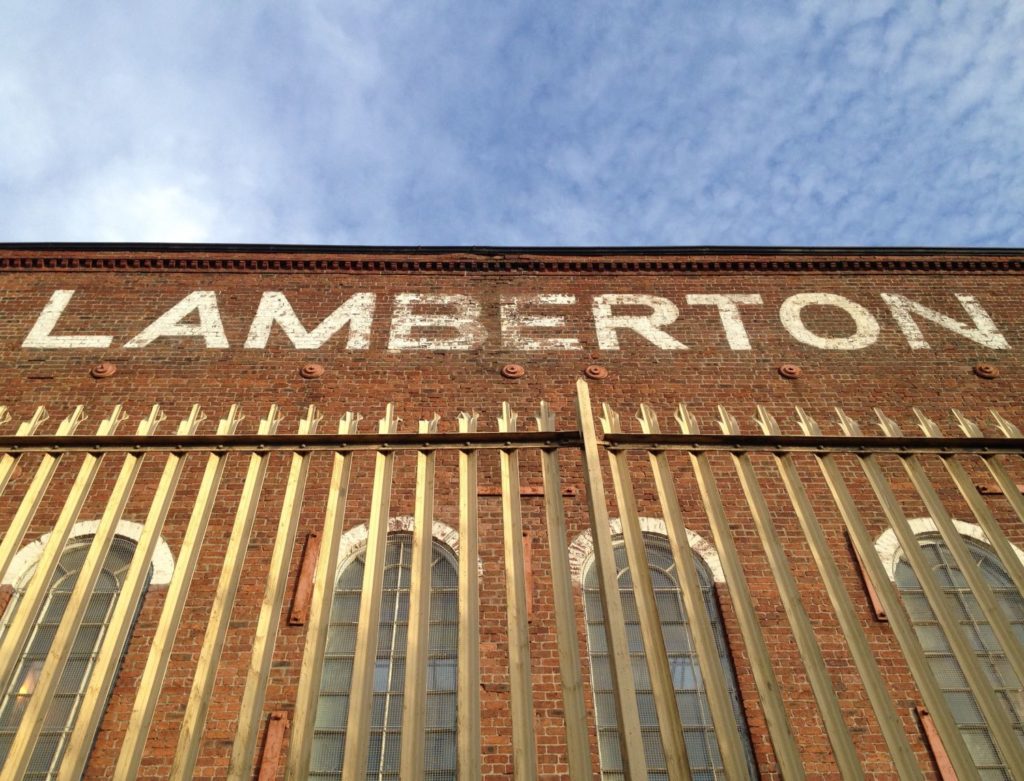
Lamberton’s is one of the most famous names in Lanarkshire engineering history. Although the firm no longer exists, its name still looks down on Coatbridge Sunnyside Station from the side of the Sunnyside Engine Works, the last remaining Victorian heavy engineering works building in Coatbridge.
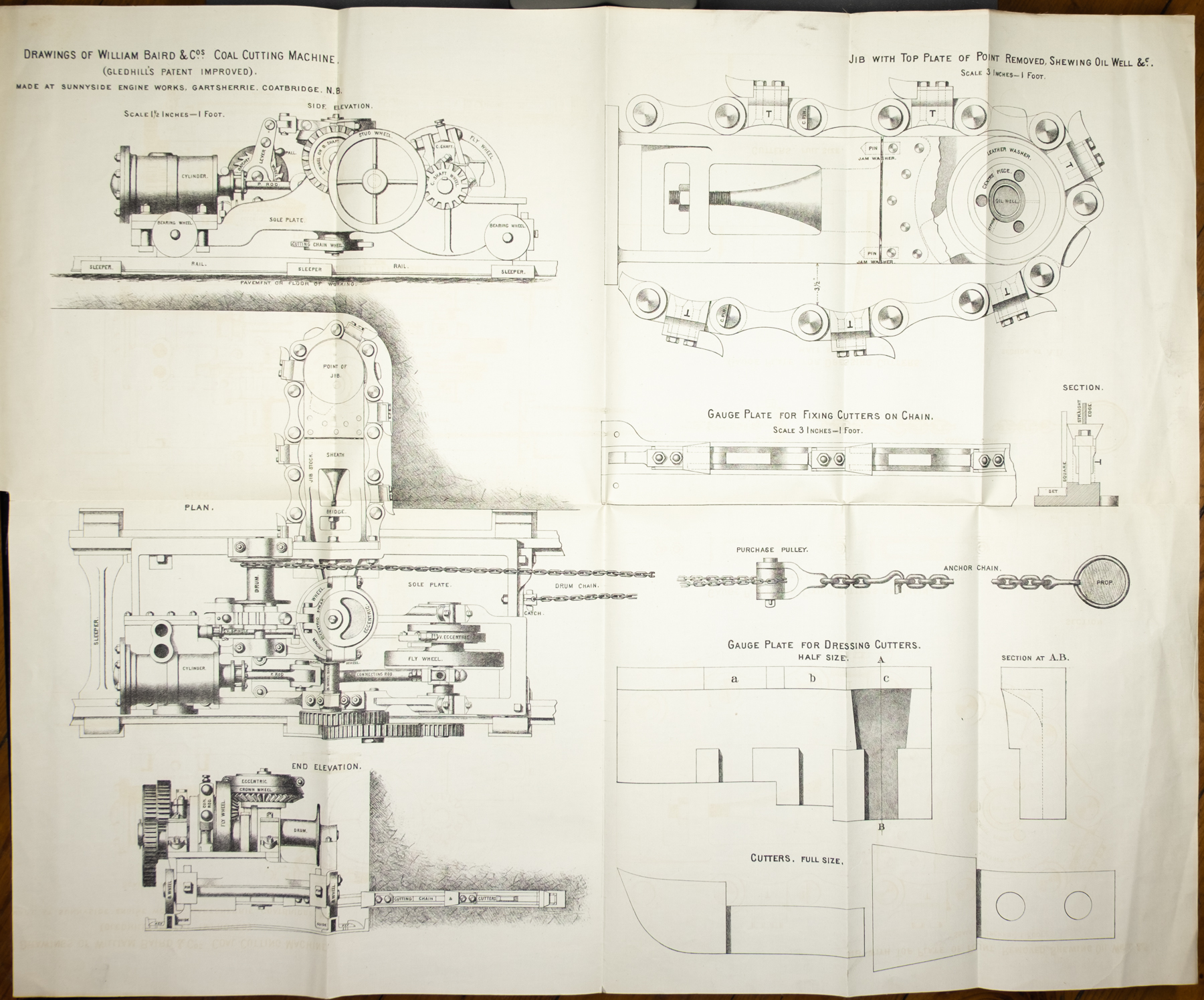
In fact, the building had quite a history before it was taken over by Lamberton. It was here from around 1870 that the ironmasters William Baird and Company built their revolutionary ‘Gartsherrie Coal Cutter’. This was the first mechanical coal cutter to use cutting teeth mounted on a chain. Although not a success, the Gartsherrie cutter set a template for coal cutting machinery for decades to come.
Lamberton’s
Lamberton made machinery for the iron industry and, later the steel industry such as rolling mills. It also came to specialise in building hydraulic machinery.
Around 1875 the Sunnyside Engine Works was leased by engineers David Gray & Co whose chief product was ‘Hope’s Excelsior Stone Breaker’. This machine was promoted at various agricultural and Highland shows. However, in March 1880 the Sunnyside Engine Works and its contents were advertised for sale by William Baird and Company. By this time the works already had a connection to the nearby railway line.
Perhaps in order to buy the building, Gray took on a partner to create the new firm of Gray, Lamberton and Co. However, by 1883 Gray had left the partnership with the firm becoming known as Lamberton and Co. Over time expanded the site with a boiler works to the east.

Lamberton’s made rolling mills for steelworks as near as the Summerlee & Mossend Iron Company’s works in Bellshill (1888) and as far as the Ebbw Vale Steel Works in South Wales (1938). The letterhead below gives an idea of the range of equipment they made:
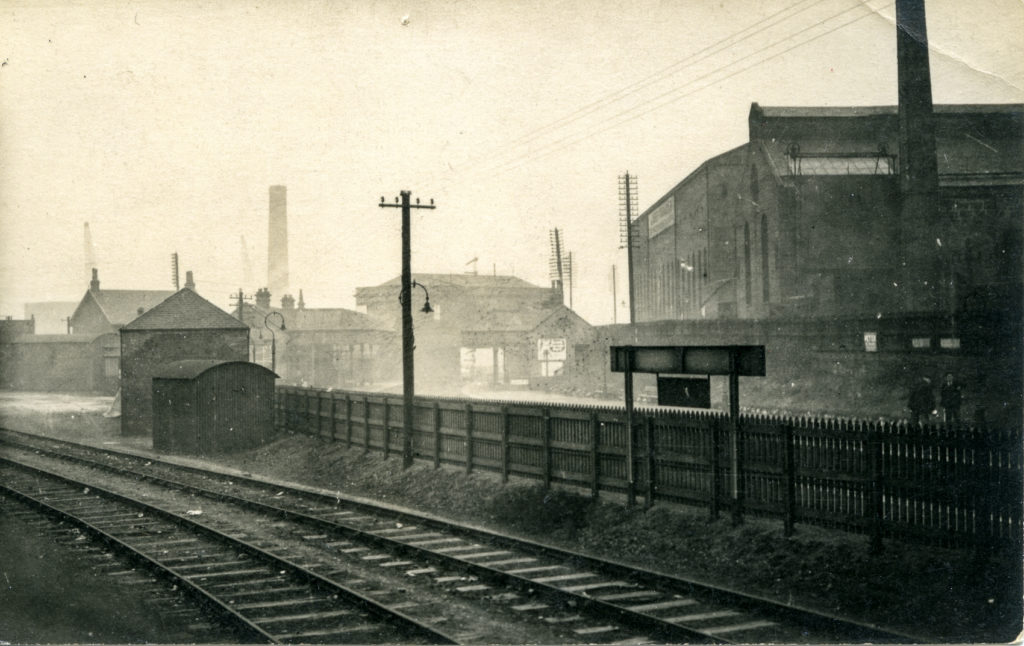


The steel reinforcements you can see on the side of the building supported huge ‘wall-creepers’, horizontal & vertical planing machines that were fixed to the wall inside.


Lamberton Robotics
By the late 1970s Lamberton was struggling. The steel and metalworking industries which it had supplied were in decline and the company was forced to change direction.
The company directors set up an internal thinktank in 1979 and one of their ideas was to build large scale robots. A financial backer was found and in 1981 the company set up a subsidiary called Lamberton Robotics Ltd. The first robot was built in 1982 along with the first telemanipulator for fast handling of heavy loads in the foundry industry. By 1985 the business had developed two ranges of robots: heavy duty robots that could handle loads of up to 4,000 Kg and smaller machines that could deal with loads from 100 to 4,000 Kg.
Lamberton Robotics went into liquidation in 1994. Happily though, the factory (now Category B listed for its historic importance) is still an engineering works, occupied today by Proserv.
If you worked for Lamberton’s we would love to hear from you!