
When it comes to the spooky or the supernatural, North Lanarkshire is not the location we associate with ghosts and spooky tales. It has a long history, which is mainly based on its iron and coal heritage. Full of hard-working men and women who face many of life’s real hardships more than mythical ones. In contrast, when we take a look at the other side of Lanarkshire, the South appears to have their fair share of fairies and ghosts. From haunted castles to grey and black ladies, even a ghostly bishop all providing scary stories and frights, especially when it comes to Halloween So, I wondered does North Lanarkshire really have nothing that will chill our bones this hallow eves? And what customs do we still carry with us? Do we not have any real ghosts or things that go bump in the night to give us a fright?
The Beginning
So, what is Halloween? In Scotland, Halloween is celebrated on the 31st of October each year. It has a few traditional names that come from Celtic origin, one being Samhain, which is one of 4 seasons in the Celtic calendar. It is a time of harvest and is believed to be the time of which the boundary between the living and the world of the dead becomes thin. It is also a celebration of summer ending into a darker and colder phase when crops were harvested and winter preparation began. In Gaelic, the word for Halloween translates into Oidhche Shamhna (night of Samhain) and in certain areas it is also known as All Hallow eve. We have celebrated this for centuries always around 1 November but now is fixed in culture as 31st October
Celebrating
Most people, every year, especially those with children and those who love Halloween and even those who don’t, are bombarded by the local supermarkets advertising products. There’s excited request from children to go trick a treating as soon as the 1st of October arrives. Every year thousands of us dress up, carve pumpkins, buy some sweets, a few decorations, and maybe some nuts and apples too. But why?

Image: Mirror Pics (public domain)
Costumes for kids today can be anything from superheroes to the latest pop star but traditionally costumes were homemade and always scary. Witches or monsters the uglier the better. Dressing children up as something scary was a way to blend in or scare away the ghouls and unwelcome spirits that were able to travel on All Hallow eve wandering around the town looking for children to take back with them.
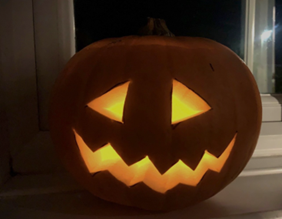
Each year up to 30 million pumpkins are sold in the UK for Halloween. Pumpkins are more common now as lanterns but only became popular in the UK from 1990’. Originally an American tradition which is more popular due to the ease in being able to carve them. Traditionally before pumpkins Scotland used nips; hard vegetables harvested and carved into lanterns with candles put in. These lanterns normally had scary faces carved into them to protect and scare away unwanted fairies, ghouls, and ghosts.
At parties, apple bobbing or also known as dooking for apples was a fun game for kids or a fortune telling parlour game for adults. There are many variations: apples were put in a bowl of water or tied to string and covered with treacle. All used for fun, sometimes nuts could also be used in games for fortune telling fun. And children attending parties were given sweet for party tricks and performances.


North Lanarkshire’s Spooky Bits
So, where are the spooky bits for North Lanarkshire, I started where I always do within the Summerlee Museum collection, at first glance there are no stuffed bats or ghosts in the mine. No creepy wrapped mummy in the café. All I found was only normal mummies at a book bug and some yummy lentil soup and cakes in the café. However when I started to research the collection itself, I found a few things that would make frighting accessories.

Image: Hartwood Hospital (Wikipedia)
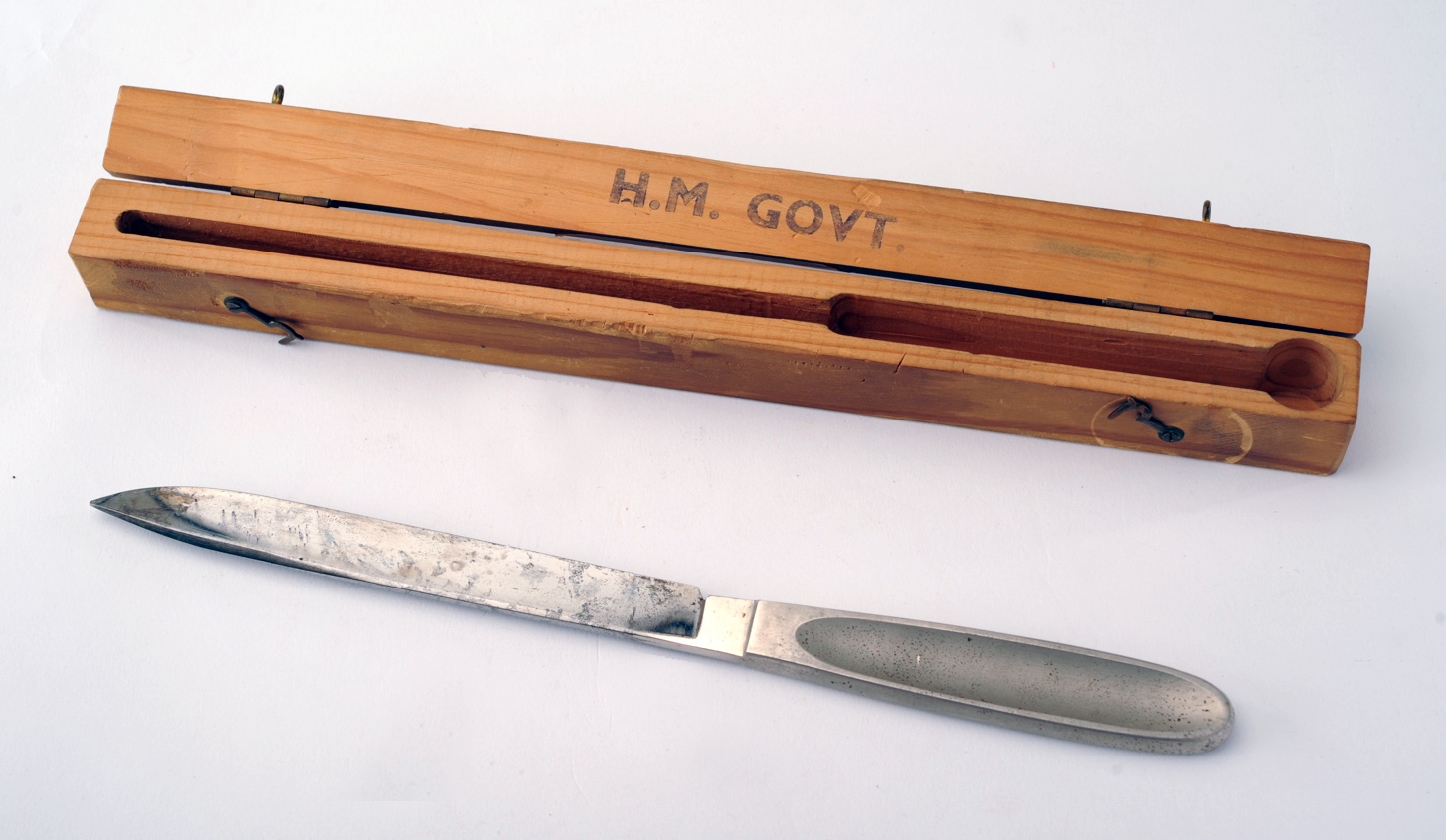
One of the first things I found was artifacts from Hartwood hospital, located in Hartwood village. The hospital opened in 1895 and was a self-sufficient institute for the mentally ill; it had farms and gardens maintained by the patients alongside staff. During its time Hartwood hospital also housed some criminally insane patients. It was also known for becoming the first place in Scotland to perform lobotomies while electric shock treatment was also an ordinary form of treatment. With the conditions and quality of care of patients being questioned we saw a change in the 1980s to more community care for patients being established and finally becoming a more prominent way of care for those with mental health conditions. The hospital doors finally closed in 1998 and now lies derelict. The collection has a few things from the hospital, but this amputation knife gives a sense of abode along with it creepy abandoned grounds I certainly would not spend the night there.
Vampires
The second spooky connection I found is in Airdrie; home for many years to Scottish author, Emily Gerad. Emily who was born in 1849 and lived in Rochsoles in Airdrie. During her upbringing she was able to travel and was 1 of 4 children. Her sister Dorothea was also a writer and born in Monklands, they both collaborated on many articles and books.

Her books are credited with being the inspiration for one of the most famous vampires to have ever been created, Bram Stoker’s “Dracula”, which has become a universal staple in Halloween costumes, films, and decorations.
Emily was mostly known as a travel writer. In 1869 she married a polish officer, and in her thirties, they took up a position in Transylvania. During this time she learned the customs of the local people and wrote about everything from weddings to local food. It was exploration of local superstitions that enticed Bram Stoker’s imagination. From strigoi which could cause illness, to Nosferatu creatures who turned people into vampires and could only be killed with a stake. Her article “Transylvanian Superstitions” dated 1885 and then her book “Land beyond the Forest” published 1890, helped shape the Vampires we know today in his classic story.

The Land of Beyond
Her books are credited with being the inspiration for one of the most famous vampires to have ever been created, Bram Stoker’s “Dracula”. Which has become a universal staple in Halloween costumes, films, and decorations.


Witches and Devil Dogs
Our last tale is of a lady called Maggie Ramsey in the collection we hold many historical books one of them being The Book of Airdrie published in 1954 by Jackson and company
The book is a retelling of local history told by the locals and features a few spooky tales, the most well- known being about Maggie Ramsey.
There are several variations of the tales about Maggie from being a muttering broken-hearted lover wandering the country, putting curses and killing people.to a married woman whose husband went to war.
The things we do know that seem to be consistent from the books and newspapers is that she lived in 1800, she was a speal wife/ fortune teller and was married. Her husband Tam was taken to join the navy by the government. It’s also recorded she was an excellent field worker who could work the fields as good as man and had vast herbal knowledge.
The tales goes, Maggie was so good a fortune teller she ended up excommunicated by the church, so no good Christian could speak to her. There was gossip that she spoke to herself at the side of roads while collecting herb for potions which made people fearful. To make money Maggie resorted back to field work while her husband was at sea. It’s during one of these occasions she was better against another worker to finish first. The other said he could see a man helping her and called her a cheat on closer inspection of the man, helping Maggie had hoofs for feet and because no one else could see him. It was decided by the local gossips that she was league with the devil.
Maggie husband Tam soon returned they moved to next town of Coatbridge for a fresh start. It’s here when an unfortunate storm that took Tam life and demolished their house, that Maggie spooky tale really was cemented. After the storm Maggie had completely vanished to be found nowhere. Some state that more than a month later her body found in the burn sitting on what some called a stone chair guarded by a black devil dog which she was known to have but others said it was a devil dog guarding her body.


Book of Airdrie, pages 225 & 257
Many a child has been warned that bad behaviour will result in the witch of the Auld North Burn would getting them. And there is lots of variations and stories of a witch wandering the fields.
Are we scared yet?
So, as we can see North Lanarkshire does have a few spooky connections. The people of North Lanarkshire like the rest of Scotland have celebrated Halloween for centuries. From the food and parties, we attend, to why we dress up all can be found in practices and traditions from the past. They have a long line of beliefs and were used to protect and guard us from the other side. While also saying goodbye to the lighter part of the year. It is also clear to see that there are many places and people who have had vast influence, and those tales and stories are very much alive. I bet we all know of one white lady or spooky place we went as children and the thrill of the fear of passing an old house with a witch in it. The fear and the joy of Halloween is very real in North Lanarkshire If you’re looking for some spooky things to do this year, check out the NLC website
What’s On at North Lanarkshire Heritage Centre
About the Author
Written by Sheryl who is a Digital Collections Volunteer with the Curatorial Team. Sheryl has a Humanities Degree and specialises in Archaeology ansd museum research.