
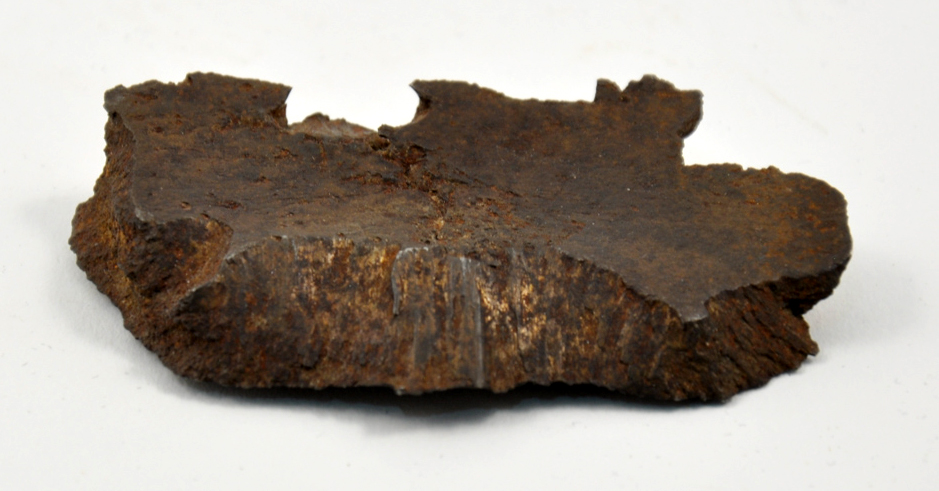
When I found this object in Summerlee Museum, of a piece of shrapnel that survived the Clydebank Blitz, I felt I needed to find out more about this important event in Scottish history. I had only ever just heard about the ‘blitz’ and I wanted to learn more.
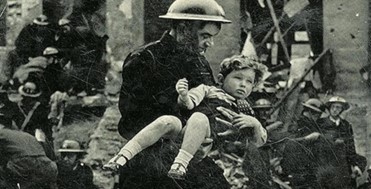
In researching the history, I found out so much that I did not know about this pivotal event in the history of Clydebank and Scotland as a whole. I felt it was important to write this story to provide the same information to anyone else who did not know enough about it.
What ‘Blitz’ means and why Clydebank was targeted
I wanted to firstly explain 1. what ‘blitz’ means and 2. why Clydebank as an area was targeted.
‘Blitz’ is short for the German word ‘Blitzkrieg’, which when translated means ‘lightning war’. The Germans when fighting on land as part of this tactic combined the use of many tanks, large groups of soldiers, and artillery which pierced through their enemies defences, allowing them to strike deep into the enemy territory allowing a quick German victory.
In addition, the ‘Luftwaffe’ the German air force used bombs as well as missiles, to destroy areas of business, and trade, targeting factories, to make it impossible for the British to make weapons to use against them, which is what happened in Clydebank. The Blitzkreig method was very successful for the Germans in the first few years of the Second world war. Through using the Blitzkrieg method the Germans, led by Hitler’s command, truly believed the war would be over quickly with them being the victors.

Image: West Dunbartonshire Council
Now to completely understand why this area was targeted we need to look back at World War One. During these years The Clydeside was known as the ‘workshop of the world’. Glasgow was viewed as a very high-profile target for the Nazis bombing due to it being one of the biggest sites of shipbuilding in Britain during the early 20th century. Additionally, many of the factories in this area produced ammunition that the British soldiers could use against the Germans. Therefore, putting an ultimate end to the production in these factories would be a great success for the Germans. Additionally, Hitler wanted to use these bombings to cause extreme terror to these citizens and break down their morale, making them flee and leave their jobs in factories behind.

Two burned-out Corporation trams, in the aftermath of the Blitz in March 1941. Image: West Dunbartonshire Council
What Happened
The bombings took place over two nights, the 13th and 14th of March 1941.
On the first night the 13th of March 1941, German bombers specifically targeted the factories along the River Clyde in an attempt to stop their production. These factories would be in production every single day of the week in order to keep up with demand of the British army. The Germans’ targets in Clydebank were John Brown & Company’s shipyard, Beardmore’s engine works, The Royal Ordnance, Arnott Young, Rothesay Dock, Tullis Engineering and the armaments factory in the Singer Sewing Machine works. Singer’s lost a lot of their timber, and other factories suffered damage. What really helped the Germans this night unfortunately was the bombings took place on a clear night, so the pilots could clearly make out the targets that they were aiming at.

Glaswegian civilians pass bombed tenement houses in 1941. A woman pushes a pram laden with suitcases. iwm.org.uk/history/the-blitz-in-photographs
On the second night, the 14th of March 1941, the bombers came back to specifically target the workers’ homes. The bombing raid on the 14th of March lasted over seven and a half hours. One of Adolf Hitler’s main goals was to demoralise the workforce, so the workers homes were targeted and destroyed by the Germans in the hope that they would flee from the area and leave the factories without workers unable to produce ammunition to use against them. Hitler felt strongly that if the people of Britain saw their homes being destroyed and their families being killed or injured, they would give up fighting against them and ultimately let Germany take over and win the war.

Damage to Dalmuir, West Dunbartonshire
Image: Clydebank Library Local Studies Collection
What was the Aftermath?
Over the space of two nights 528 people were killed, 617 were seriously injured. 4,000 of the town’s 12,000 homes were destroyed, 4,500 were severely damaged and 3,500 suffered mild to serious damage. Only 8 houses remained untouched, 35,000 were made homeless. Many schools and churches were destroyed also. Out of the 50,000 residents of Clydebank, 48,000 fled for safety. However, some found shelter with people they knew in Glasgow such as their family and friends, and the authorities evacuated many people in buses and provided them with accommodation in Renfrew, Lanark, and Dumbarton. By the 17th of March 1941, 11,350 who had been made homeless had been given accommodation.

Kilbowie, 1941. Image: Clydebank Library Local Studies Collection
Industrial production was badly affected by the large number of dead and injured workers as well as the evacuation of the town, creating extreme difficulties in getting any workforce into the workplace. A report shown below created by the Civil Defence Regional Commissioner on the 3rd of April included an assessment of the impact on industrial production in Clydeside.

Official assessment of damage to industrial production in Clydebank
by Civil Defence Regional Commissioner, 3 April 1941.
National Records of Scotland, HH36/5, Report Appendix B, p.3 National Records of Scotland
How Clydebank Recovered
The blitz was devastating to the whole community of Clydebank. In the very short-term, the Germans had achieved what they wanted. The factories were destroyed, and the workers left Clydebank to find homes somewhere else. This for a while completely stopped production in every factory. However, the effect that occurred throughout the community was the opposite of what was intended by Hitler. Rather than divide the community and instill panic and fear in the citizens of Clydebank, it instead wholly strengthened the community’s will to survive and resist the enemy. After the workers talked with their employers and the Government, they came back to Clydebank to restore the area. Most stayed in churches or bomb shelters. Only the Strathclyde Hosiery Company was completely destroyed. The others managed to restart their operations and get back to work. Production would return to its normal rate, but it is inarguable the scars left on the people of Clydebank would stay for decades to come following the blitz. This sentiment can by summed up by one citizen of Clydebank who stated:
“I remember even years after the Blitz, the sound of an aeroplane, people would stop in the streets and look up, then look at each other, nothing needed to be said”.- https://www.tommckendrick.com/code/blitzpage2.html
About the Author
Written by Emily Carstairs, a social science graduate with a keen interest in social history.