
The Highland Games: A Brief History
The Highland Games are rooted within Scottish history and identity. The games are key in celebrating Scottish and Celtic culture. It is believed by some that the games go as far back as the migration of the Scotti from Ireland to Scotland and that they have hence forth been ingrained in the Scottish Clan system. What we do know for sure, however, is that they date back as far as the reign of King Malcolm III (1058-1093) where we find our first historical reference of the games. The oldest and longest running free games are the Ceres Games held annually in Fife. They date back to the Battle of Bannockburn in 1314 when Robert the Bruce is said to have given the village a charter to hold the games and a market.
The aftermath of the Battle of Culloden with the Highland Clearances and Act of Proscription saw an end to Highland and Clan way of life. However, despite this oppression, the games have survived.
Shotts Highland Games
During the 1900s, as Highlanders began to move and settle in the Lowlands for work, they brought with them the traditions and events, such as the Highland Games.
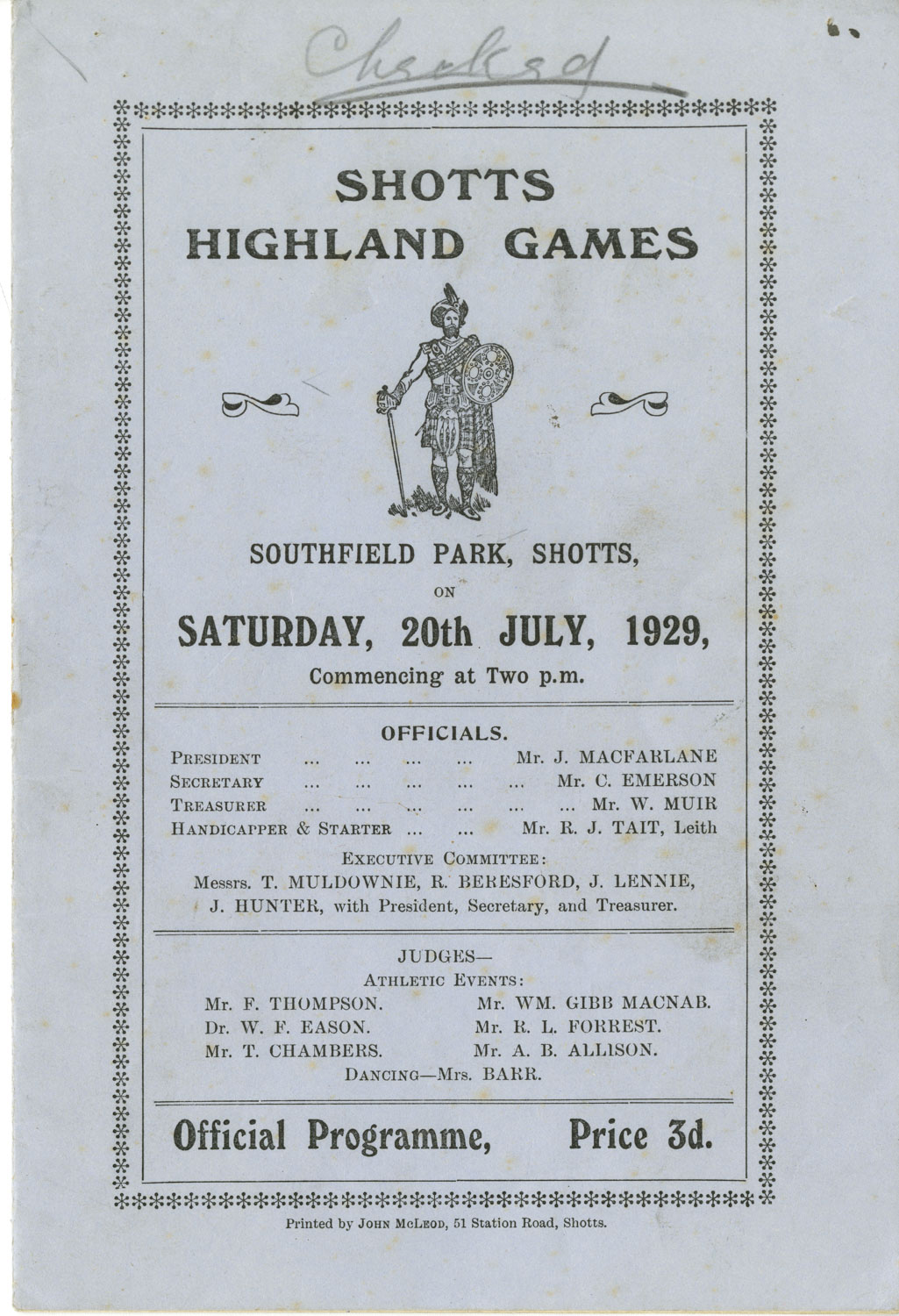
On 29th May, 1950, at the old Shotts Miners’ Institute, a meeting was held and the first in the annual Shotts Highland Games was organised. The games were set to begin on the 6th September 1950 and were paid for by local businessman, James Hamilton Anderson, whom it cost a grand total of £5. Highland games had been held previously in Shotts, one pamphlet being from the 1929 games, however, these were the first official and annual ones.
Events at the Shotts Games included such activities as Pipe Band Championship, Highland Dancing Championships, and athletics. The highland dance competitions would include such events as the sword dance, the highland fling, Seann Triubhas, and the Strathspey Reel. Athletics would involve tossing the caber (a large tapered pole) and throwing 16 lb. Scots Hammer. Seann Triubhas is a highland dance that is believed to have its origins rooted in the Act of Proscription and its repeal in 1871. The first half of the dance is said to represent despair in having to wear uncomfortable trousers and the attempt to kick them off. The latter half of the dance is the celebration of being able to wear the kilt again.
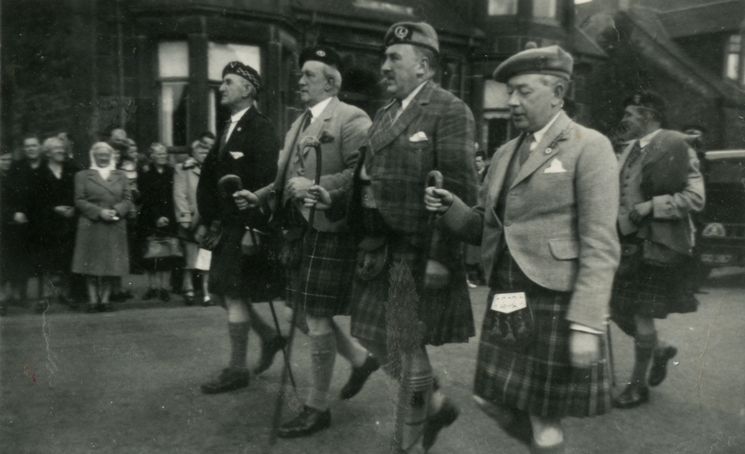
The Shotts Highland Games also included, alongside the sporting activities, the Chieftain’s Parade. The parade welcomed the Chieftain to the games and officially opened the event. This was particularly important in times where clans and chieftains were a staple of Scottish society. From the games, the Chieftain was able to asses which of the men were the fittest and strongest.

Unfortunately, due to several reasons, the Shotts Highland Games has ceased. However, many other games take place in the surrounding areas and even take place across the water in America, all celebrating Scottish Highland tradition.
About the Author
Written by Digital Collections Volunteer Bryony Chapman. Bryony has a BA (Hons) in Ancient History and an MSc in Museum Studies. Her main area of interest is Roman life and influence in Scotland.