
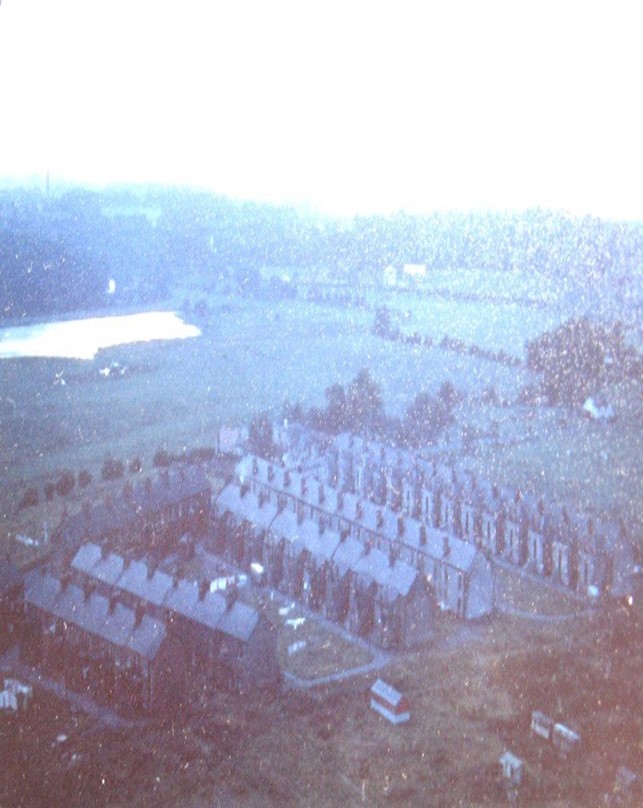
This is a story about the mining village of Bothwellhaugh that is an incredibly important part of the local and social history of the towns of Motherwell, North Lanarkshire and Hamilton, in South Lanarkshire. I came across this photo of the village in the Local Studies’ collection and wanted to learn more about this village that no longer stands. It is a place I believe many locals may not know a lot about the history of.
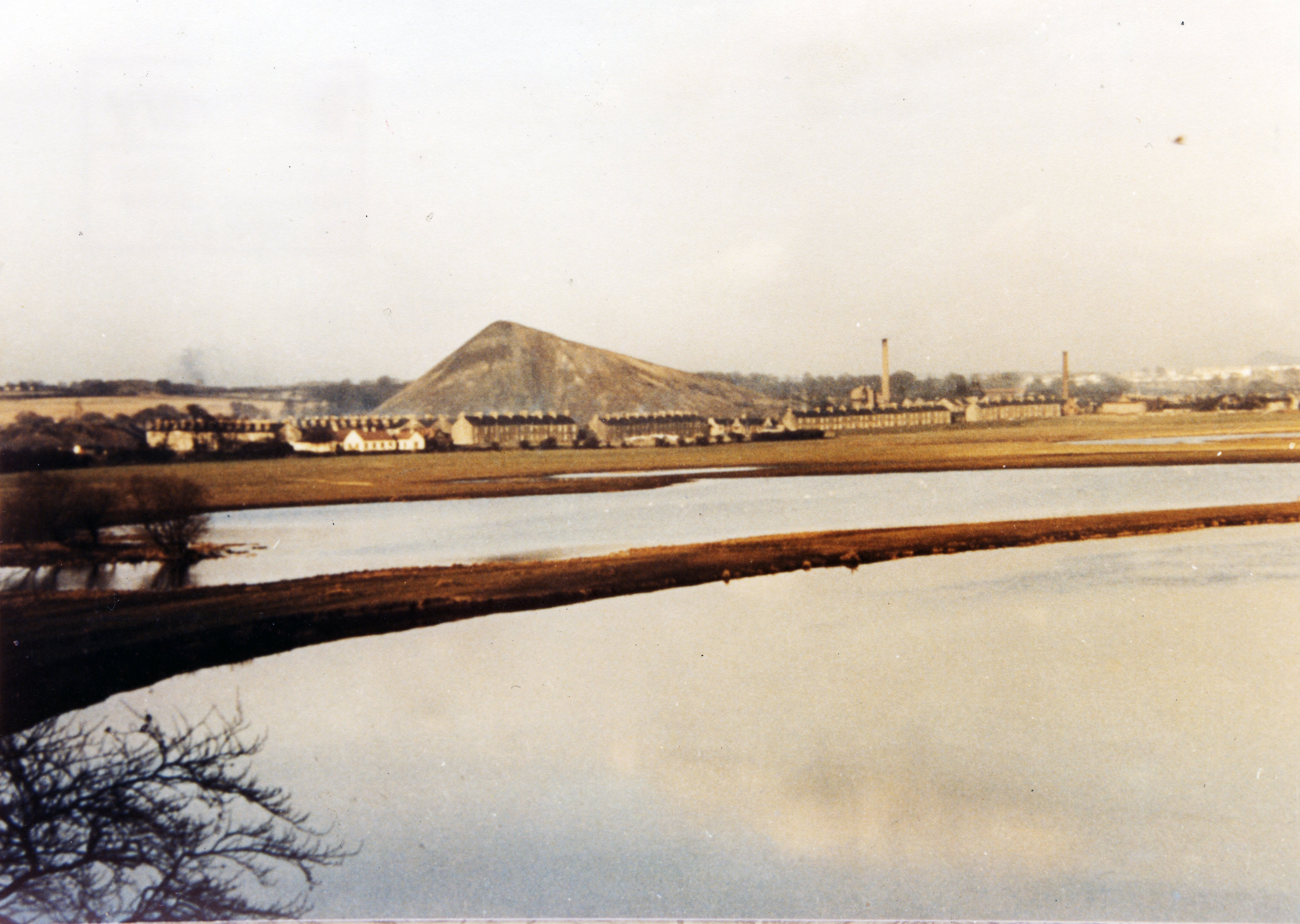
History of Bothwellhaugh
The building of the village of Bothwellhaugh was ordered by the Duke of Hamilton, who desired a commission of coal mines in Hamilton. The village was built around an already standing farm and its buildings. It was built by the mine operators of the Bent Colliery Company Ltd. The village became known locally as ‘The Pailis’, due to being located so close to Hamilton Palace, the home of the Duke of Hamilton, and his family. The village became operational in 1884.

Hamilton Palace Colliery
It became one of the biggest mining villages in the Clyde Valley. There were two churches, two schools, a Miner’s Welfare Association, a co-operative shop, and 450 homes, and allotments. What made the mining village different from others though was there were no pubs, as both the Duke of Hamilton and the mining company did not allow the sale of alcohol in the village. There were 1,400 workers employed at the colliery, producing around 2,000 tonnes of coal per day.

Map of colliery and village
Mining under Hamilton Palace
This colliery was responsible for the mining under Hamilton Palace in 1915, as the miners could exploit a rich deposit of coal which lay below it. Sadly, this led to the demolition of the building. The trustees of the Duke had been advised by the workers that the digging for coal under the building would damage and ultimately destroy the structure of the palace. So, with the approval of the Duke, they decided it was best to demolish the building in 1919. The whole building was demolished by 1932.

Hamilton Palace before its demolition
Picture credit: Country Life Picture Library

Palace interior, 1919
Picture credit: Country Life Picture Library
The demolition of the Palace was a tragic loss to Hamilton, as was a great loss of a local historical building. It was one of a kind and unlike any other building in Scotland. It was known as the grandest stately home in Britain. The palace had been home to the Dukes of Hamilton for 300 years. Hamilton Palace’s final keeper was Lieutenant Alfred Douglas Douglas-Hamilton, the 12th duke of Hamilton’s fourth cousin.
Closure of pit and demolition of village
The pit eventually closed in 1959. This was due to major flooding in the pits that run under the river Clyde. It would be too large a cost to pump out all the water and repair the mines, so the pit shut. The closure was soon followed by a fast decline of the village, and loss of the community, with many houses being left empty. The remaining population was evacuated in 1965, and the village was demolished in 1966. Many people were rehomed in Hamilton, Motherwell and Bellshill, however some emigrated to America and Australia.

Plaque in memory of the village
What stands on the site today?
The area lay as it was until it was flooded in the early 1970s, to create Strathclyde Country Park and Strathclyde Loch, and the M74 motorway was created immediately to the west of the site. Where the waste heap of the village once sat is where M&D’s theme park is located today. The village is commemorated today by a memorial cairn, and memorabilia and displays in the Countryside Ranger Service Visitor Centre in Strathclyde Park.
It was incredibly interesting learning more about this village and it was clearly an incredibly important part of the development of the town of Hamilton as it stands today.
About the Author
Written by Digital Collections Volunteer, Emily Carstairs, a 4th year Social Science undergraduate student at Glasgow Caledonian University, who has a keen interest in social and local history.