
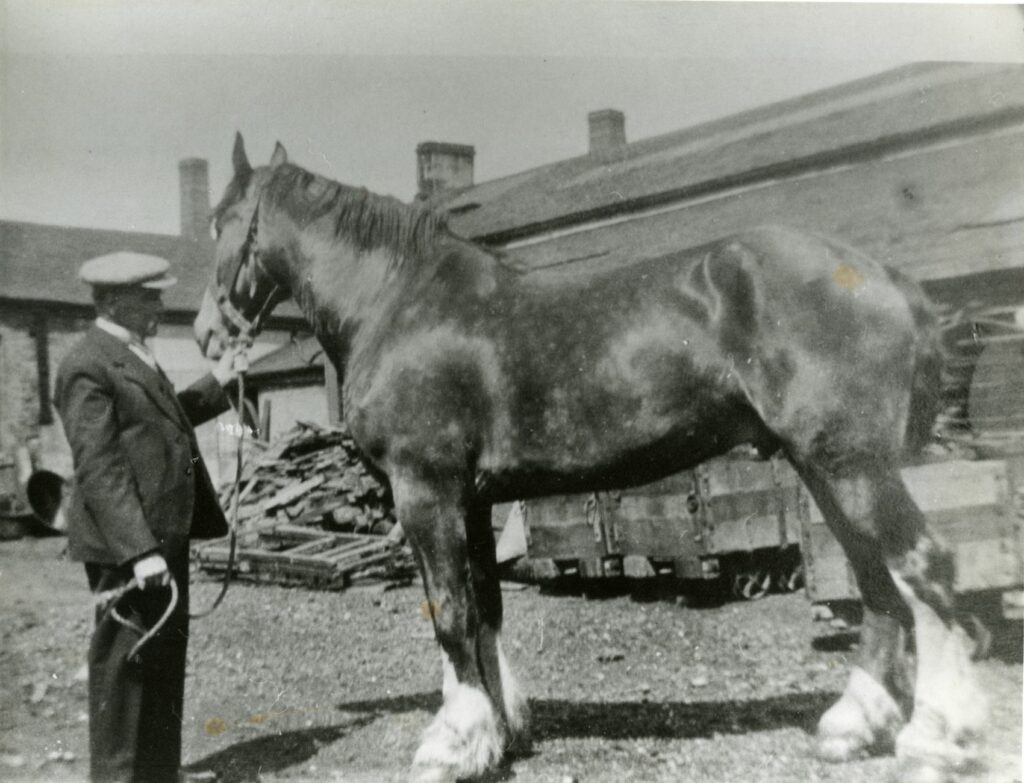
One of the most popular exhibits at Summerlee Museum is the reconstructed mine, which recreates coal mining in the 1810s and 1930s. However, a century or more ago, the Summerlee Iron Company owned many mines in Lanarkshire and beyond. The firm’s tentacles extended as far as Prestongrange in the east, and eventually to Spain.
Summerlee Iron Works in Coatbridge went into production in 1837. It was one of a new generation of more efficient factories producing pig iron using the Hot Blast Process.
Lanarkshire’s ironworks had an insatiable appetite for raw materials: for every ton of iron produced the furnaces needed 3 tons of iron ore and 5 tons of coal. The blast furnaces were lit 24 hours a day, only allowed to cool down for repair or during a slump in demand.
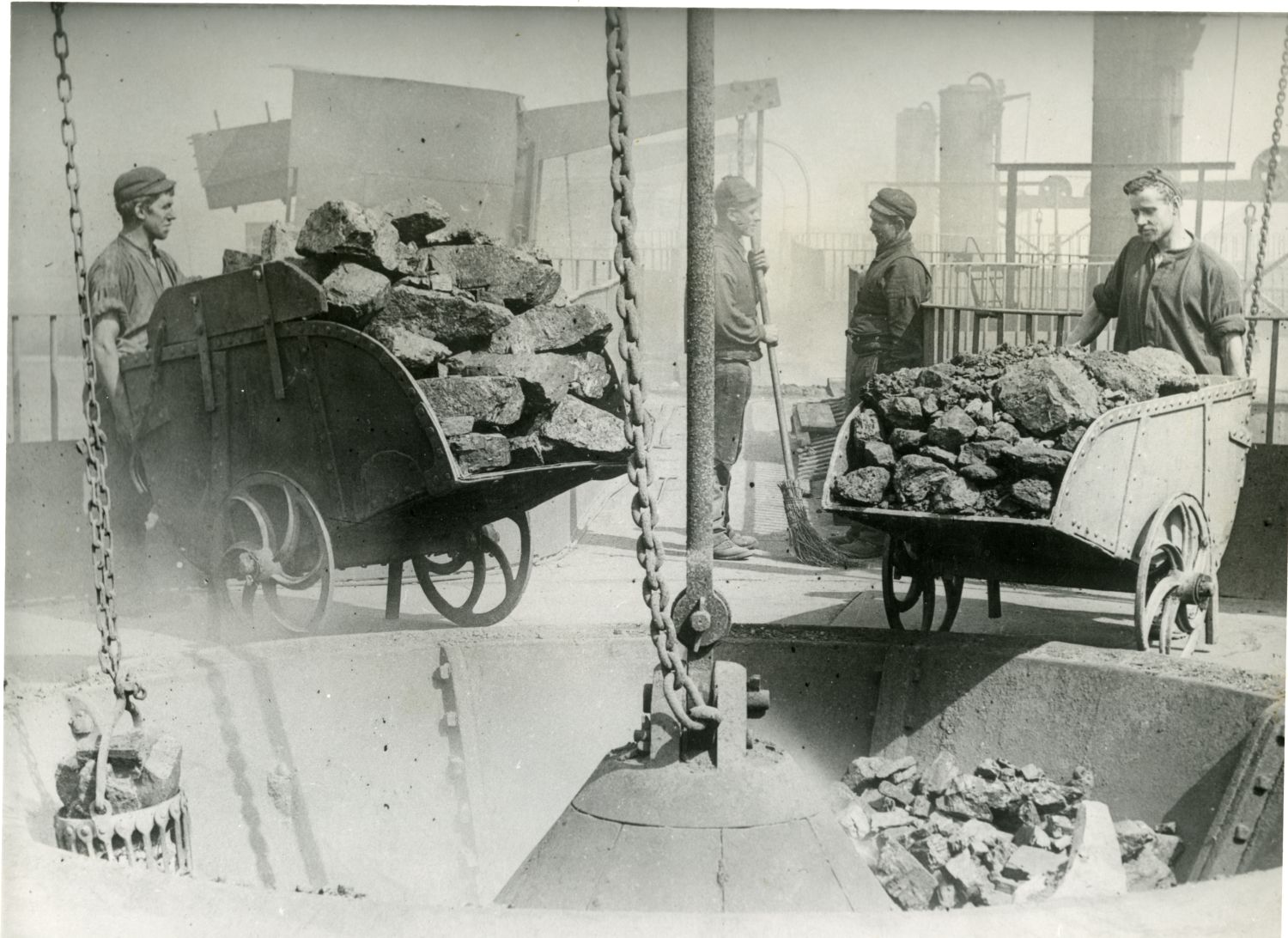
Coal was important not just as an essential ingredient in the furnaces but also as fuel for steam engines. Iron ore consisting of nodules of iron was dug, often from the same mines. The mines sometimes also dug fireclay which could be made into firebricks for lining furnaces, stoves, pipes and chimneys.
My father was the chief colliery engineer. He travelled round all Summerlee collieries doing repairs. His base was here. Anything that needed repaired that had to be brought back to the workshop was brought back here. And my father and his squad worked on them here.
David Smillie (born 1920, interviewed in 1990)
The Summerlee Iron Company in its various guises (starting as Wilsons and Co in 1836) owned mines across Scotland as far east as Prestongrange in East Lothian. The early mines were small in scale and often short-lived but as mining, surveying and drainage technology improved bigger mines were possible.

The owners of the works, Wilsons and Co and later the Summerlee Iron Company bought or opened new mines as the capacity of the ironworks increased. The company’s archive was destroyed in a fire so it is not always easy to find out which mines were owned by Summerlee and when.
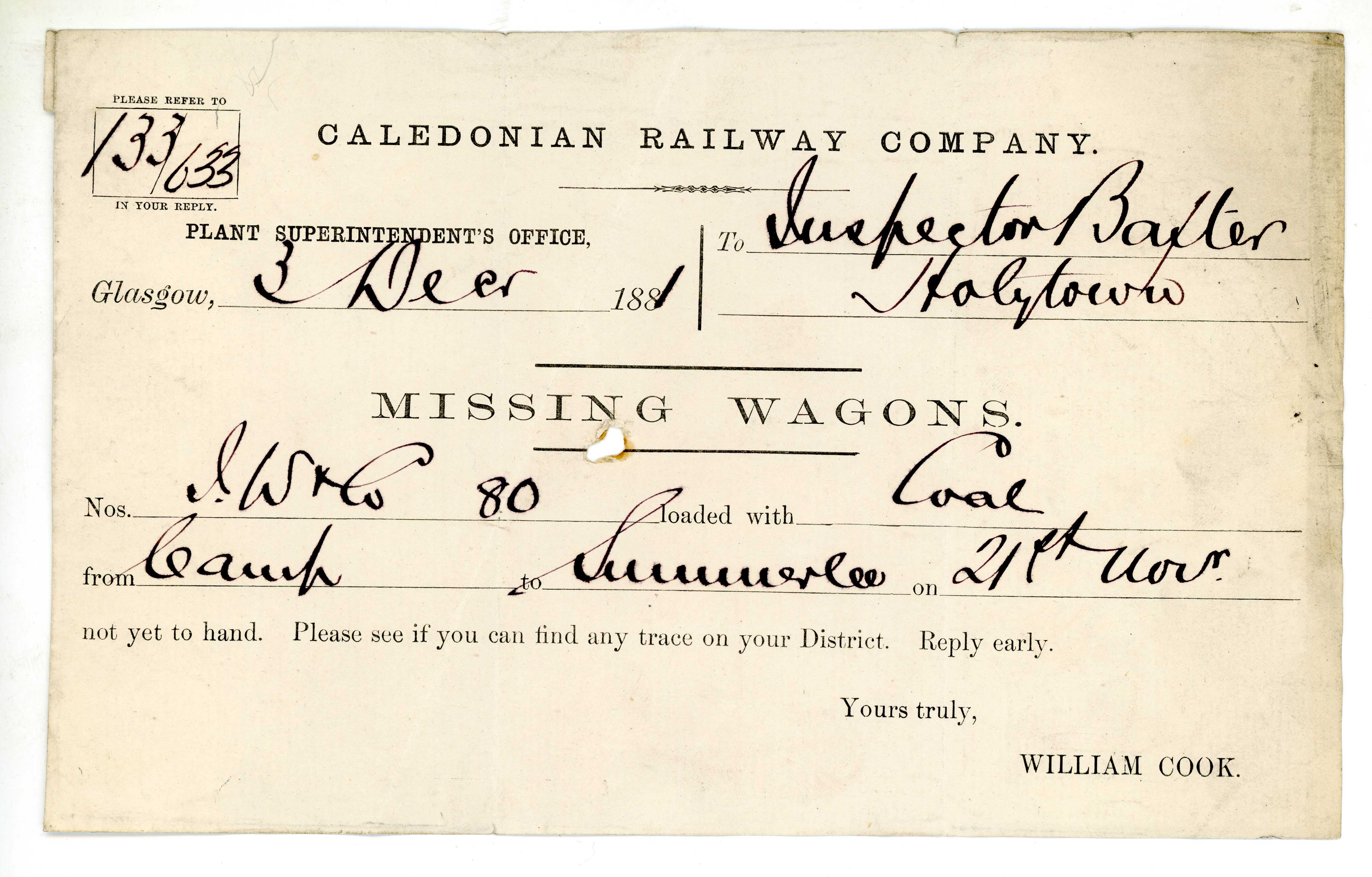
The coal mine exhibit that you see at Summerlee Museum today isn’t an original mine but is a reconstruction showing mines from two different eras, the early 1800s and the 1930s. When Summerlee Iron Works occupied the site, the area of the mine exhibit was covered by railway sidings for wagons bringing in the raw materials.
The Summerlee Iron Company’s mines gradually closed as they were worked out. In 1934, after the ironworks closed, the firm sold most of its mining interests, leaving only two collieries: Prestongrange in East Lothian and Bardykes near Blantyre. These latter two mines were nationalised with the rest of the coal industry in January 1947 and continued in production into the 1960s.
Below is a list of the mines that we know were owned at one time or another by the Summerlee Iron Company or one its related businesses:
1. Near Coatbridge
Summerlee
There was a mine at Summerlee before there was an ironworks. It opened sometime before 1825 and was then bought by Wilsons and Co when they set-up the Summerlee Iron Works. We don’t know the location of all of the early pits.
In 1836 the new company leased part of the Drumpellier estate to establish a new mine, Station Pit which was next to the Caledonian Railway station (now Coatbridge Central) on West Canal Street. The underground workings stretched northwards to the west of the railway and a brickworks was added in 1899.
Rochsolloch

Coal mines on the Rochsolloch Estate from the 1st edition Ordnance Survey map, surveyed 1859 (map courtesy of the National Library of Scotland).
Coal was mined here, between Coatbridge and Airdrie, for the Summerlee furnaces early on due to the high quality of the coals.
Dundyvan
This relatively small ironstone mine was owned by Wilsons and Co from 1833 to 1866 when they sold it to the Drumpellier Coal Company. In 1864 it was recorded as having only 15 workers.
Drumpellier

One of the company’s bigger collieries, drumpellier had a workforce of 80 in 1864. In 1898 four men were killed by an underground explosion when coal dust was ignited by shot-firing.
Kirkwood

This screenshot from the 1896 2nd edition Ordnance Survey map shows the mine to the south of the Rutherglen & Coatbridge Branch railway line (map: National Library of Scotland).
The Summerlee Kirkwood Colliery Nos.1 and 2 pits were sunk in 1869. These were to the north of the existing Kirkwood Collieries. Mitchell Street now runs through the site of the pithead.
Souterhouse
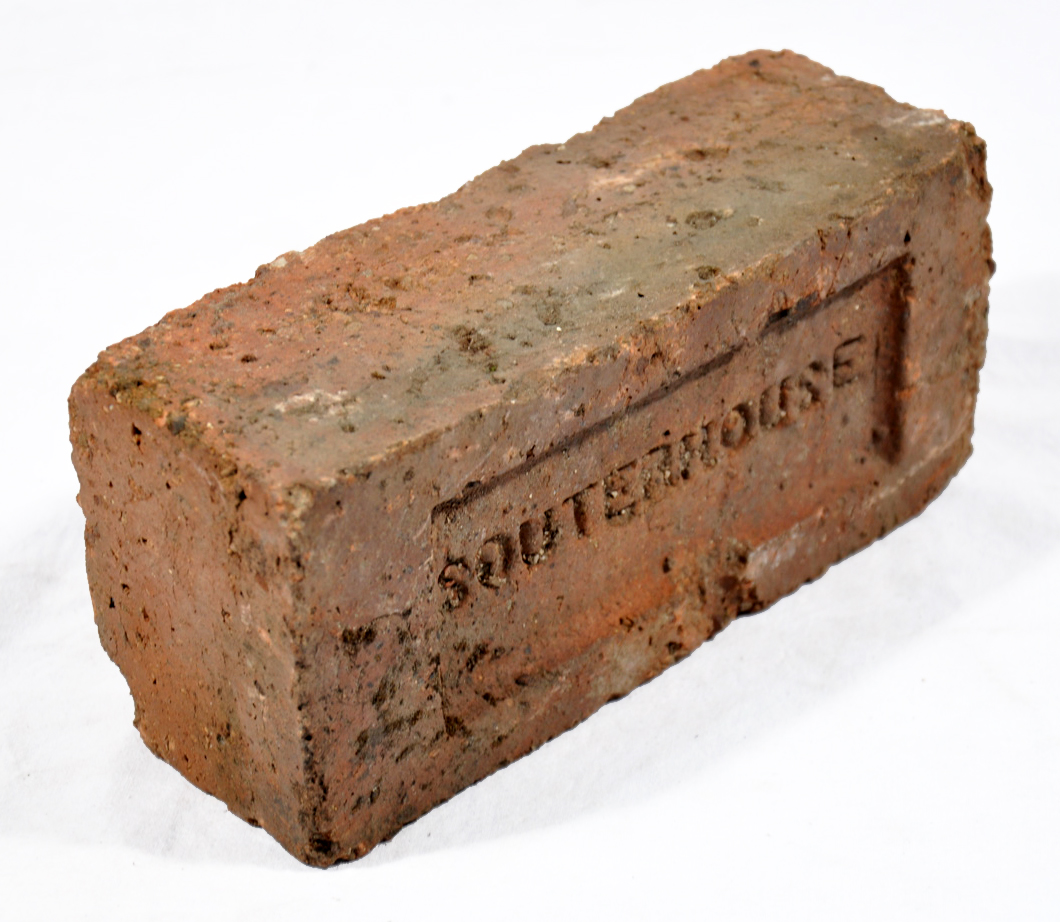
This coal mine in Old Monkland employed 34 people in 1864. By the 1890s there were two pits with a brickworks between them. The area is now a sports field north of Croy Road, Coatbridge.
Whifflet
Both coal and ironstone were dug in this mine which in 1864 employed 24 people.
Hattonrigg

Hattonrigg Colliery in the 1890s, with the Summerlee & Mossend Iron Company’s Mossend Iron & Steel Works to the east (National Library of Scotland).
This mine to the north of Bellshill supplied the Summerlee & Mossend Iron Company’s nearby Mossend Iron & Steel Works. In 1910 it employed 705 people, including surface workers.
2. Northern Lanarkshire and Glasgow
Muirhead
The company opened ironstone pits about a kilometre north-west of the village of Greengairs at an unknown date to mine the Blackband ironstone found along the Cameron Burn. Summerlee abandoned these small workings in 1857.
Blackhill
These small ironstone pits were spread out around the countryside near Baldmuildy.
In 1873 the Summerlee Iron Company opened Blackhill Colliery pits no.7 and 8 to mine coal too. A brickworks was added in 1899 and was sold in 1933 (the colliery probably closed at that time), continuing until around 1980.
The colliery was the scene of a disaster in 1926 when a fire broke out while the mine was closed during the General Strike. Two of three men carrying out essential maintenance, Thomas Alexander and Robert McGeachy, died from smoke inhalation. Two pit ponies also died.
3. The Clyde Valley
Bardykes

Sunk in 1874 by the ironmasters Merry & Cunningham, this colliery to the north of Blantyre was closed in 1905. In 1908 the mine, also known as Spittal Pit, was reopened by the Summerlee Iron Company and it was to be the last of the firm’s former mines to close, in 1964.
An Anderson Boyes coal cutting machine bought in 1910 for use at Bardykes Colliery is now on display at Summerlee Museum:

Orbiston

Orbiston Colliery in the 1890s. The mine was next to the Caledonian Railway line (National Library of Scotland).
Dykehead Colliery, Larkhall
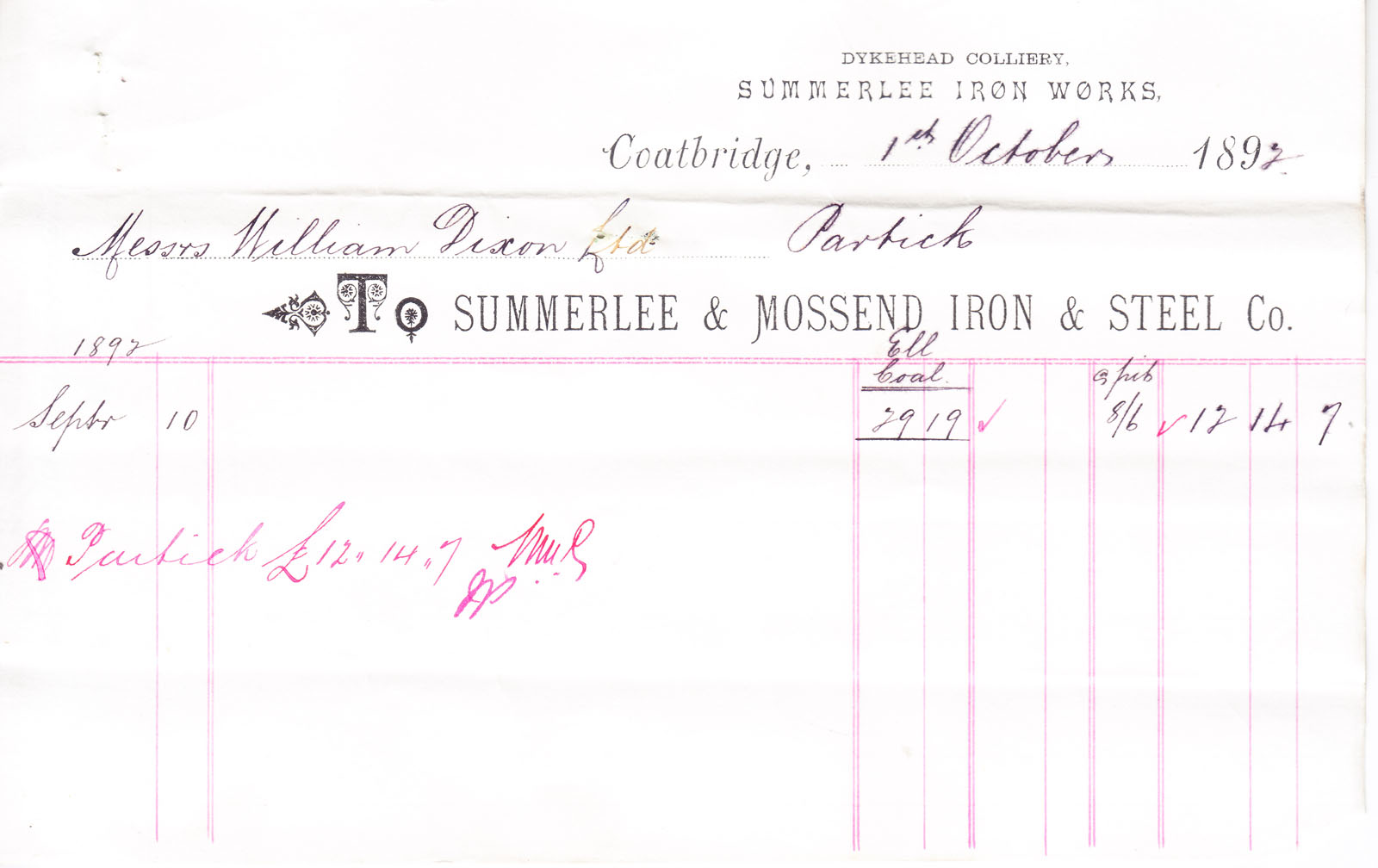
Opened by Wilsons and Co in 1857, Dykehead Colliery was near Larkhall in what is now South Lanarkshire. The road leading to the pithead is still known as Summerlee Road.

Dykehead Colliery was just to the north of Larkhall (National Library of Scotland).

In this closer view you can see the rows of workers’ housing close to the pit head. Summerlee Cottage still stands and the street it stands on is called Summerlee Road (National Library of Scotland).
Eastern Scotland
Prestongrange

Prestongrange Colliery in the 1890s. The site is now occupied by Prestongrange Museum (National Library of Scotland).
This colliery on Scotland’s east coast had been sunk in 1830. It and the associated brickworks were acquired by Summerlee in 1895. Summerlee expanded both the mine and brickworks. The pumping equipment was improved and the cast iron beam of the Cornish pumping engine that had been installed in 1874 was strengthened by a large brace that was made at the Summerlee Iron Works.
The mine continued after Nationalisation and didn’t close until 1963. Unusually, some of the mine and brickworks buildings, including the Cornish engine, the bathhouse and a brick kiln survive. They are now part of Prestongrange Museum.
Spain
In the 1870s the Summerlee Iron Company started mining iron ore in Spain. This was because local sources of ore were largely exhausted and the recent arrival of mass steel production required pig iron made from a higher grade of ore as a raw material.
In 1877, the company had a ship built to transport ore from Bilbao to Glasgow. The SS Summerlee was an iron-hulled schooner which had both sails and two steam engines.
The SS Summerlee had a troubled history: in 1881 the ship ran aground off Ailsa Craig and the crew had to jettison almost half the cargo of iron ore in order to re-float it. Two years later, the Summerlee collided with and sank another British-registered ship in Bilbao. The ship ran aground again in 1886, off Bilbao. This time the Summerlee couldn’t be moved and had to be scrapped.