
Introduction
Henry Houldsworth (1774-1853) was one of the most remarkable figures of the Industrial Revolution, whose life tracks the story of Scotland’s industrial transformation. However, he and his family also had deep links to slavery in the USA and the Caribbean.
Houldsworth made his money in the cotton industry, first in Manchester and then after moving to Glasgow in 1799 where he owned two cotton mills, joined by a third in Airdrie. The cotton came from plantations where it was grown and picked by enslaved people of African origin. The money from this trade enabled Henry to found the Coltness Iron Works in 1836.
Henry Houldsworth (1774-1853)

Henry Houldsworth of Coltness (‘Old H.H.’) by Sir John Watson Gordon.
The third of eight children, Henry was born into a farming family in Nottinghamshire. He became known within the family as ‘HH’.
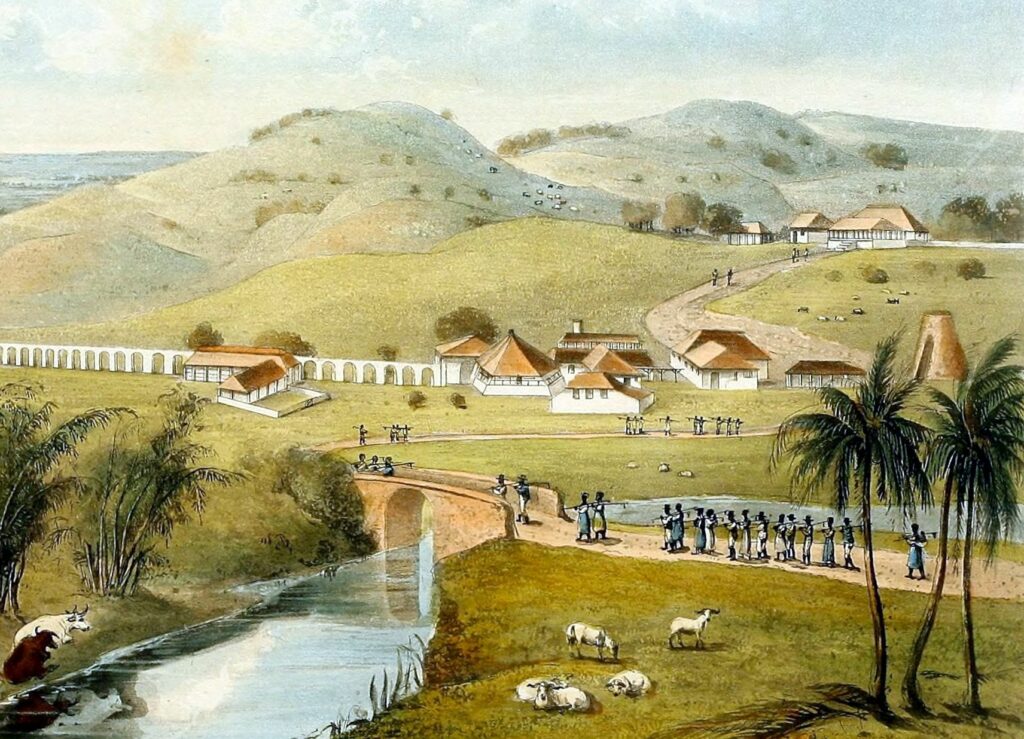
The Houldsworths already had slavery connections before HH entered the textile trade. His uncle John (1727-1787) emigrated to the British colony of Jamaica where he became a tax collector, despite being apprenticed as a coppersmith and plumber. Jamaica was chiefly used to grow sugar to feed growing demand in Britain and elsewhere. The sugar was grown on plantations using enslaved people who had been, or whose relatives had been, forcibly transported from Africa.

Trinity Estate, St Mary’s, by James Hakewill – Original: Hakewill, (1875), A Picturesque Tour of the Island of Jamaica (Boston Public Library, via the Internet Archive).
It seems that John’s mother had inherited property there and was able to help him. Mr J Houldsworth is recorded as Deputy Postmaster for Martha Brae, Trelawny Parish in 1784 (1784 Jamaica Almanac – Public officers (jamaicanfamilysearch.com)).
At the time of emancipation in 1834, an Elizabeth Houldsworth was awarded £937 0s 5d as owner of the Braemar sugar estate, St Mary Parish, Jamaica (claim no.475), where she owned 45 enslaved people. This may be HH’s youngest sister (b.1784, known to be alive in 1866). She owned the estate from at least 1820 (at which time over 25,000 people were enslaved in St Mary’s Parish alone), although it is unknown whether she acquired the estate via the Houldsworth family or through marriage. She still owned Braemar estate and also Richmond Hill estate in 1840.
Henry and his brothers were to become wealthy through the cotton industry, which was based upon the labour of enslaved people. In the late 1700s technological improvements transformed cotton production by automating the spinning process. However, the growing and harvesting of cotton were still very labour-intensive and cotton was planted and harvested in the south of the newly independent United States of America and the Caribbean using enslaved labour.
The Historian Cait Gillespie writes:
Cotton and slavery were cyclically entwined. By the time Houldsworth started spinning, Manchester’s mils were fed with raw cotton from slave-labour plantations in the West Indies (namely Grenada and British Guiana), Brazil, and increasingly the southern states of the United States. Slavery also stimulated the development of new production and finishing techniques in Britain’s cotton mills. Atlantic tastes differed to those in Europe, and manufacturers had to adapt and develop their textiles, experimenting with colour and pattern to ensure products met the approval of diverse buyers, which included West African traders, British colonialists and enslavers, and First Nations people.
Gillespie, Cait, with Dr Stephen Mullen, North Lanarkshire’s Historic Connections to Atlantic Slavery, Modern-day Legacies and Memorialisation (University of Glasgow, 2025).

Houldsworth Mill in Stockport was built for Henry Houldsworth, nephew of ‘HH’ in 1865. Its grand architecture reflects the family’s wealth. Image: CC-BY-SA-2.5.
Manchester became the centre of the new cotton boom so the Houldsworth brothers found themselves in the right place at the right time to benefit from it.
In 1792, eighteen-year-old Henry bought his first spinning machine, a Mule. This had been invented by Samuel Crompton in 1775. Henry paid for it with a loan from his eldest brother. He and another brother, Tom began spinning in the spring of 1793 and having spun 87 lbs of yarn went immediately to Glasgow to sell it. This was where Henry saw how the expanding city was turning from linen production (which used locally-grown flax) to cotton. He saw an opportunity.
About 1799, Henry, who had frequently visited Scotland for the purpose of selling yarn, withdrew from the Manchester concern, and established himself in Glasgow. And about the same time William, whose only object was to assist his brothers, withdrew, and a younger brother entered the Mill, whose ability coupled with ‘Tom’s’ experience and steady application, soon extended the business, and established the high reputation for first quality Yarn which the House enjoys to this day.
Philip R Faulkner (son-in-law of HH).
HH first moved to Woodside Cotton Mill to teach the spinning of ‘fine numbers’. The mill had recently been established by William Gillespie of Bishopton. It stood beside the old Woodside Corn Mill on the River Kelvin. The site is just south of the car park by Kelvinbridge Subway Station.
In 1801 Gillespie sold the mill to HH who expanded it. However, Henry couldn’t generate the power that he needed from the waters of the Kelvin. He built a big mill powered by steam engines on Cheapside, in the growing village of Anderston. It was said to have been the largest power-loom factory in or near Glasgow. By 1831, between the two mills Henry had 45,096 spindles. In Scotland only one owner, Robert Thomson of Camphill had more.
When he first arrived in Glasgow HH lived at Woodside, a house next to the mill but he then moved to Whitehall House, a mansion in Anderston, then onto Cranstonhill. This became a family home for over forty years as Henry’s youngest son, John lived there after him. There is still a Houldsworth Street there today. The historian Cait Gillespie describes the family’s luxurious life at Cranstonhill (including a zoo) and adds that, ‘his wealth also brought political power. He was Provost of Anderston between 1824 and 1831. Henry was also active in greater Glasgow’s business networks, an early member of the Glasgow Chamber of Commerce, as well as chairman of the Glasgow Association of Master Cotton Spinners lobbying group.’ (Gillespie, Cait, with Dr Stephen Mullen, North Lanarkshire’s Historic Connections to Atlantic Slavery, Modern-day Legacies and Memorialisation (University of Glasgow, 2025))
HH’s move into the iron trade was driven by practicality. He had started the Anderston Foundry for making and repairing the machinery for his mills but it proved to be profitable on its own.
Airdrie Cotton Works (Goldie’s Mill)
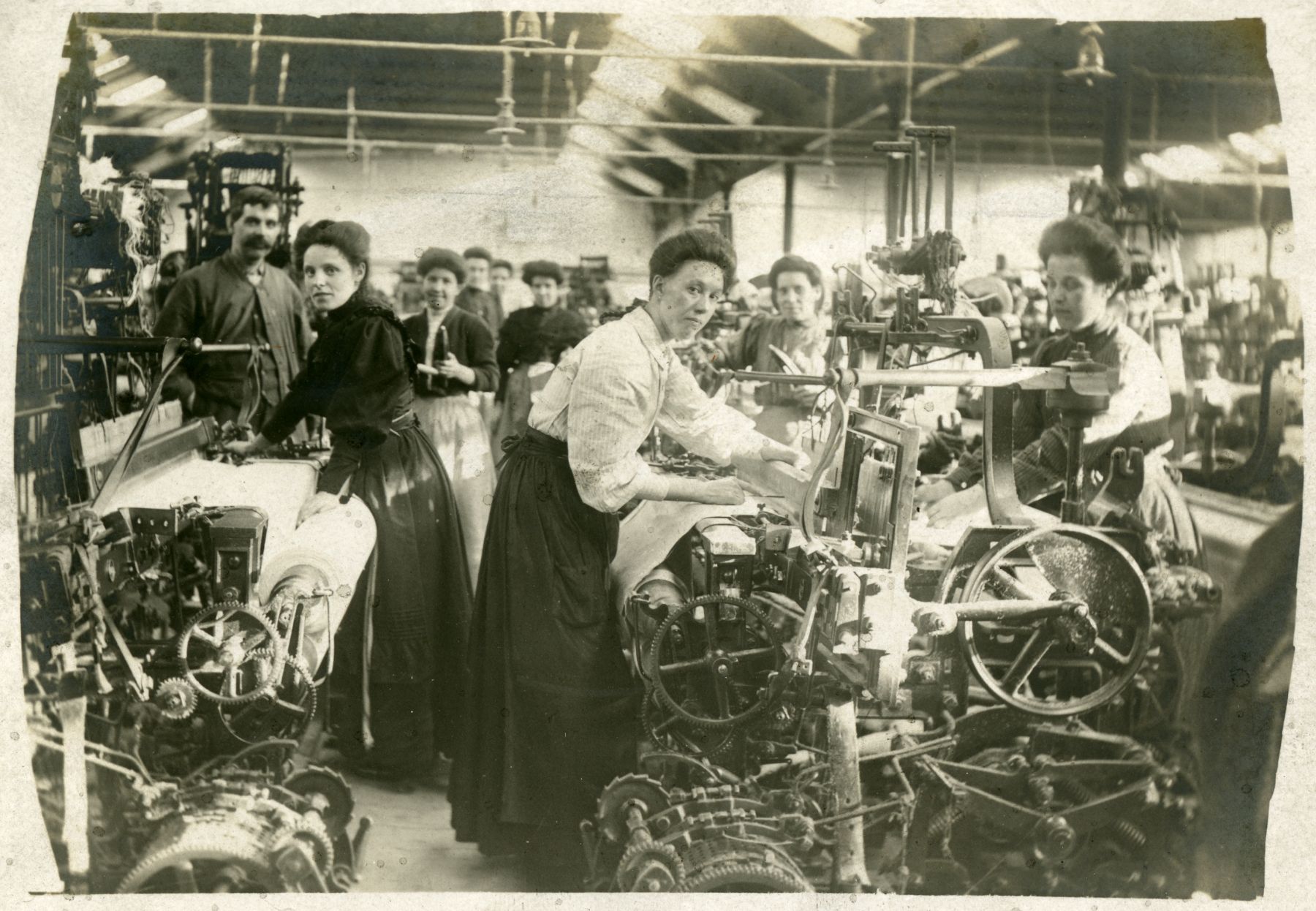
At the start of the 1830s Henry partnered with David Chapman of Glasgow and Mr McLaren of Balfron to open his third mill, this time in the weaving town of Airdrie. The mill had steam powered machinery for both spinning and weaving. By this time the cotton industry was in decline and Henry would soon leave it behind. However, the money he had made there would play an important role in North Lanarkshire’s industrial development.
When in 1866 the owners of the Airdrie Cotton Works donated £50 towards the erection of the Airdrie Public Hall on Hallcraig Street it was under the name of John Houldsworth & Co.
Thomas Goldie was appointed the works manager in 1859. He would go on to buy the factory in 1878, after the abolition of slavery in the US. The mill closed in 1923.
Coltness Iron Works
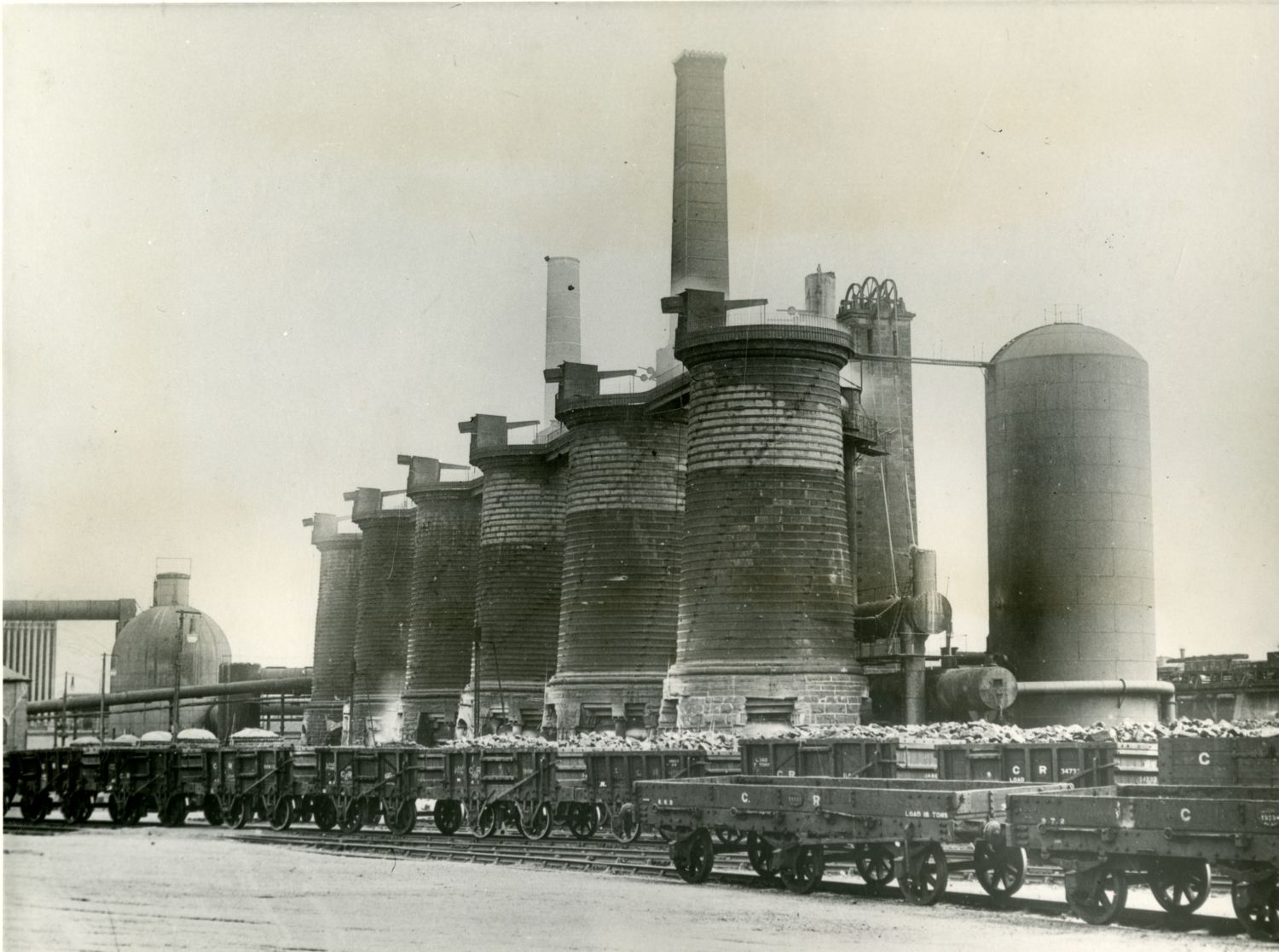
Cotton spinning in Glasgow was on the wane so HH sold his two Glasgow Mills and the third at Airdrie, but kept the Anderston Foundry.
In May 1836 Henry’s brother Tom bought the Coltness estate near Wishaw from the trustees of Sir James Stewart Denham for £80,000.
Tom didn’t live at Coltness or develop it and it seems that he bought the estate purely as an investment for HH to increase in value. Henry began to develop the estate’s plentiful mineral resources, building blast furnaces. It was Henry who moved into Coltness House and he would stay there for the rest of his life. Tom died in 1852, the estate passing to William F, who then disponed it to HH (William F died in 1854).
David Chapman, previously one of HH’s partners in the Airdrie Cotton Works was a partner in the new business. In this way, the proceeds from slavery helped establish one of the biggest iron and steel manufacturers in Scotland. Henry Houldsworth was also one of the driving forces behind the completion of the Wishaw and Coltness Railway, which was crucial for the success of his new ironworks.
Houldsworth built new housing for his workers, in the process founding new communities as workers moved to the area around Newmains. As Gillespie writes of Wishaw, ‘between 1841 and 1851 the town’s population had doubled to over 4,100 people.’ (Gillespie, Cait, with Dr Stephen Mullen, North Lanarkshire’s Historic Connections to Atlantic Slavery, Modern-day Legacies and Memorialisation (University of Glasgow, 2025))
HH’s last enterprise, at the age of 72, was the Dalmellington Iron Works, another substantial pig iron works, this time at Waterside in Ayrshire. It opened in 1846 and was run alongside the Coltness Works.

Dalmellington Iron Works, Waterside, Ayrshire, from a picture postcard around 1900.
HH’s eldest son, also called Henry, managed cotton mills in Manchester. When HH died the younger Henry inherited Farnsfield, the great works at Manchester as well as the Coltness Estate. The new laird of Coltness would die in 1868 but the family maintained their interests in the company, even after the ironworks closed. As late as 1964, when the business became Coltness Industries the Chairman was named as Lt Col J F H Houldsworth.
The Houldsworth family are memorialised today in Wishaw. In 1877, James Houldsworth bestowed eight acres of land to the people of Wishaw which became Houldsworth public park. In this way he became seen as a great benefactor of the town. The family name continues to be commemorated through, among others Wishaw’s Houldsworth Centre, a community hub which opened in 2015.