
This is a story by Sheryl, one of our Digital Collections Volunteers about how one postcard can lead to finding a fascinating connection with women from her local community.
When looking through the collection I saw this post card-
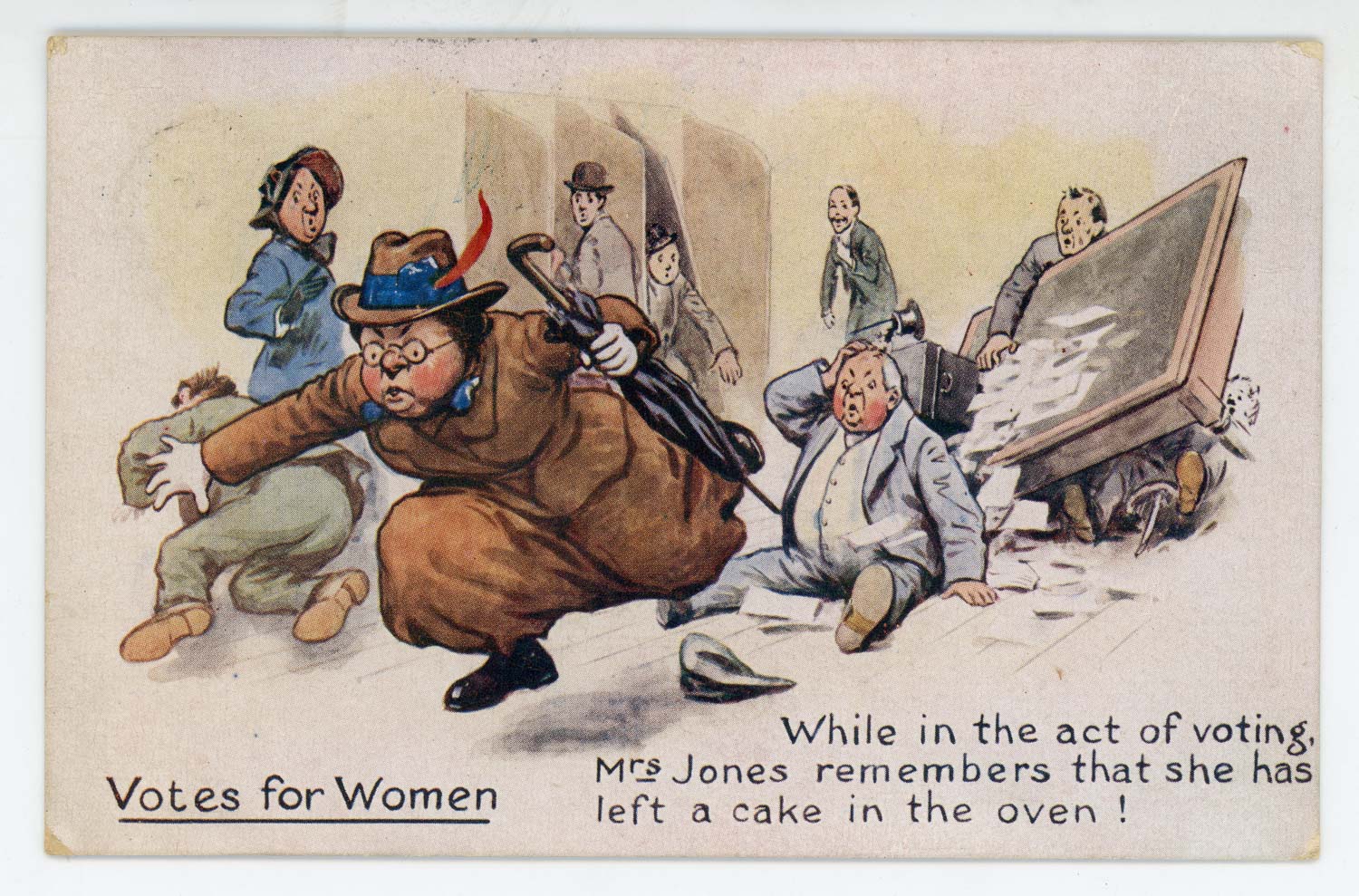
When I first looked at it, it made me laugh, the lady is funny looking and an easy joke to follow. When we read the description above, we realise it is part of anti-suffragette propaganda. Its job is to make fun women who wanted to vote. Many of us would find the idea that women couldn’t vote funnier than the postcard itself. Voting today is something we all take for granted.
The postcard made me think. Are there any local suffragettes? The first image of suffragettes that I think of come from films and TV. Mostly black and white images of women who lived in London, protesting/ chaining themselves to fences, or comedy characters, not someone from Scotland or even near me.
So, I did another search of the collection and found a petition by a suffragette in the 1900’s. The petition is by Margaret Maxwell asking that the torture of forcible feeding of women while in prison be stopped.
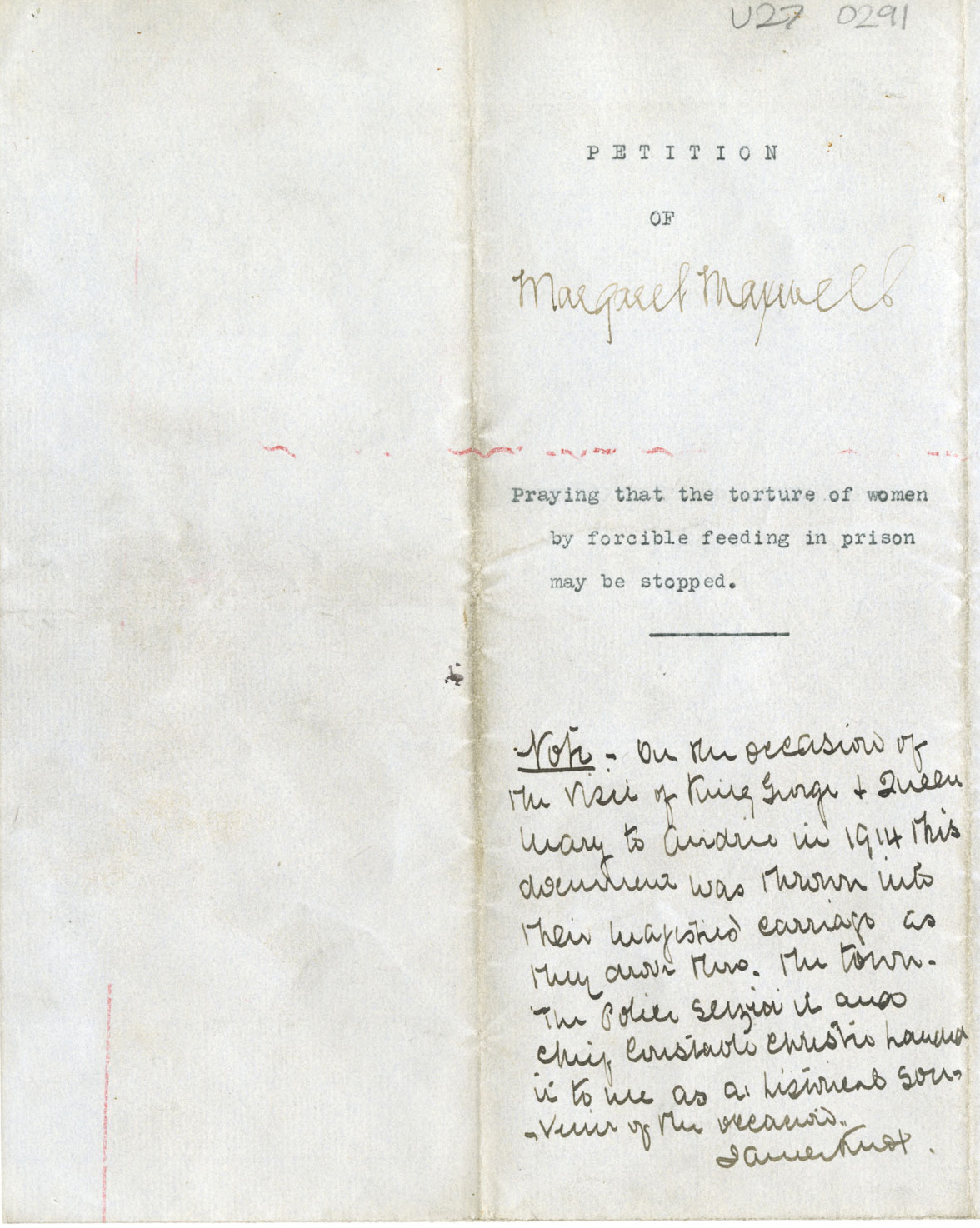
Not a lot known about Margaret as a person, but we do know that in 1914 she threw this petition into King George V and Queen Mary’s royal car while they were visiting Airdrie.

So, if women were protesting in Airdrie, I wondered if anyone from my hometown Bellshill, was involved in the movement too. I then searched the national archives, local papers and the suffragette’s data base where I found not one, but two suffragette women connected to Bellshill.
Local Suffragettes
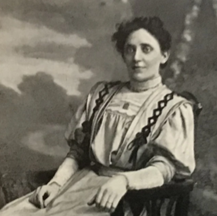
Amy Sanderson was born Bellshill in the 1800’s. She was part of the Women Social and Political Union (WSPU) and then the Women for Freedom League (WFL).

Image courtesy of London School of Economics Library
During the early part of 1900’s she, toured the country giving talks, attending rallies, protests and wrote various articles and letters to newspapers. She was involved in the Brown March which saw many women walking from Edinburgh to London.
Amy was also arrested twice. One of which she spent time in Holloway Prison (London). Once released she spoke about her time there to help the cause. She is pictured here wearing a Holloway brooch, given to acknowledge her time in Holloway prison. Her arrest picture is also in the Museum of London. After the vote was won, Amy continued to fight for women’s equal pay and voting rights around the world.
The second woman is De Courcy Lewthwaite Dewar. She was a metal work artist who was part of the Glasgow Girls. In the 1900s Dewar was also part of suffragette movement, and she contributed by designing banners for various groups, one being the WFL, the same group Sanderson was involved with.

Although not born in Bellshill, Dewar and her sister Katherine, ran Harkness House in Mossend, Bellshill. She has a significant connection to the area. Harkness House was for women and unemployed men, helping them with woodwork, crafts, and to fund further education for those in need during the 1930’s.
Dewar can be seen on film at Harkness House during a visit from Prince of Wales (who would go on to be George VI). It is believed it to be the only first-person footage of any of the Scottish suffragettes. movingimage.nls.uk/film/1512 The house in Bellshill went on to help hundreds in the community and various articles in local papers mention the house success and great things it achieved.
I think this shows how a simple thing like a postcard can lead us to find out so much more like these to women who played a part in our communities and the suffragette movement as well.