
Public railways arrived early in North Lanarkshire. Within a few decades of the 1826 opening of the Monkland & Kirkintilloch Railway the new public lines and many private railways serving mines and factories meant the area had one of the densest railway networks anywhere. No surprise then that many engineering firms turned to building railway locomotives and rolling stock.
Such was the demand for industrial locomotives that even a small town like Airdrie, which until the early 1800s had relied on weaving for its prosperity, became a centre for their construction.
Airdrie ‘Pugs’
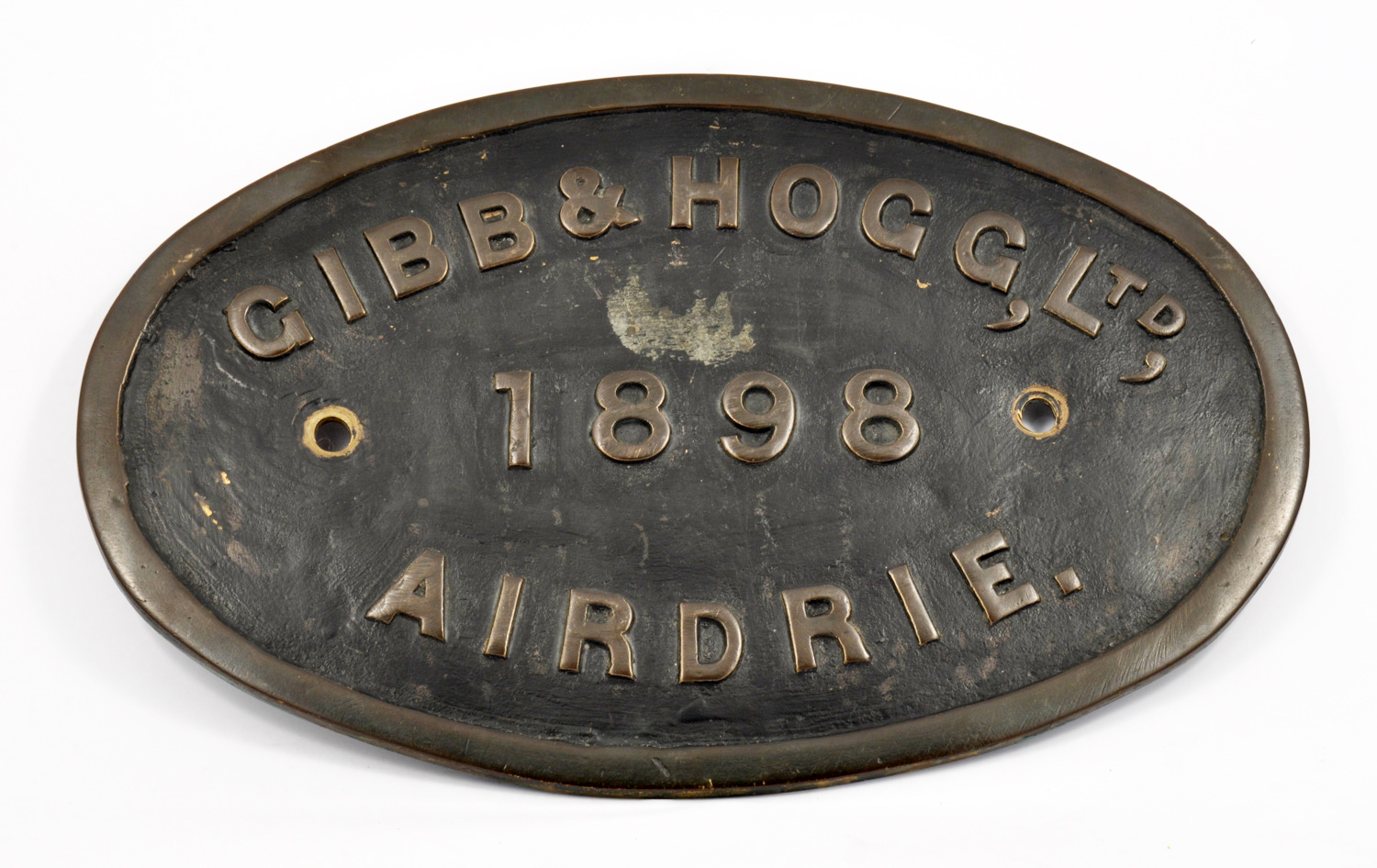
Small industrial steam locomotives, known as ‘pugs’, were used for shunting wagons on private railways and sidings belonging to mines and large factories such as iron and steel works.
Airdrie firms built at least 100 small industrial locomotives. According to a 1944 article in the Airdrie & Coatbridge Advertiser, half of these were constructed by Dick & Stevenson with another 20 or 30 by the Airdrie Iron Company, about 20 by Gibb & Hogg, 7 by G Inglis & Co and between 2 and 6 by Martyn Brothers.
The firms mentioned above were all general engineers who also happened to build steam locomotives. Any reasonably large engineering works or foundry that could make machine tools and boilers was well-placed to branch out into locomotive construction.

The locations of Airdrie’s locomotive builders in the 1890s The underlying map is courtesy of the National Library of Scotland.
Dick & Stevenson

This firm had a long history, starting as a foundry in 1790 and expanding on the same site on Wellwynd to become the Airdrie Engine Works.
The location had a downside in that the factory was on a hill, some distance from the nearest railway line. Newly-built locomotives had to be transported by road (sometimes literally under their own steam!) down Bell Street and along Stirling Street to be put on the tracks at Hallcraig.
Dick & Stevenson produced the very first Airdrie-built locomotive in 1864. By 1890 the firm had built at least fifty locomotives – in fact one source claimed that in that year their one hundredth loco was under construction (‘New Monkland Parish: Its History, Industries, and People’ by John MacArthur, p.343) – but the works closed that same year. Dick & Stevenson’s locomotive patents were then acquired by another Airdrie firm, Martyn Brothers (see below).
Airdrie Iron Company

This Airdrie Iron Co. maker’s plate is from a water tank used in a Penicuik paper mill. It is dated 1889.
Established in 1860, this company took over the Standard Works on Mill Street, to the north of Hallcraig Street. Fife-born James Adamson established the company. He had originally come to Airdrie to work in the shale oil industry but instead turned to ironfounding. He was joined around 1869 by an engineer called Telford Martin and the firm branched-out into engineering and boilermaking, coming to specialise in oil and gas plant.
The firm built a variety of machine tools, pumps and other machines and components. Its first locomotive rolled out of the factory in 1869 and customers they supplied with locos included the Glasgow Corporation Gasworks.
By 1890 the Airdrie Iron Company had over 100 employees but it went out of business in 1913.

An example of the kind of machine tools the Airdrie Iron Co. built. These shears were used for cutting-up scrap in a steelworks. They are on dislay at Summerlee Museum, on loan from Glasgow Museums.
The company went out of business around 1913 and the works was turned into a municipal depot.
Gibb & Hogg
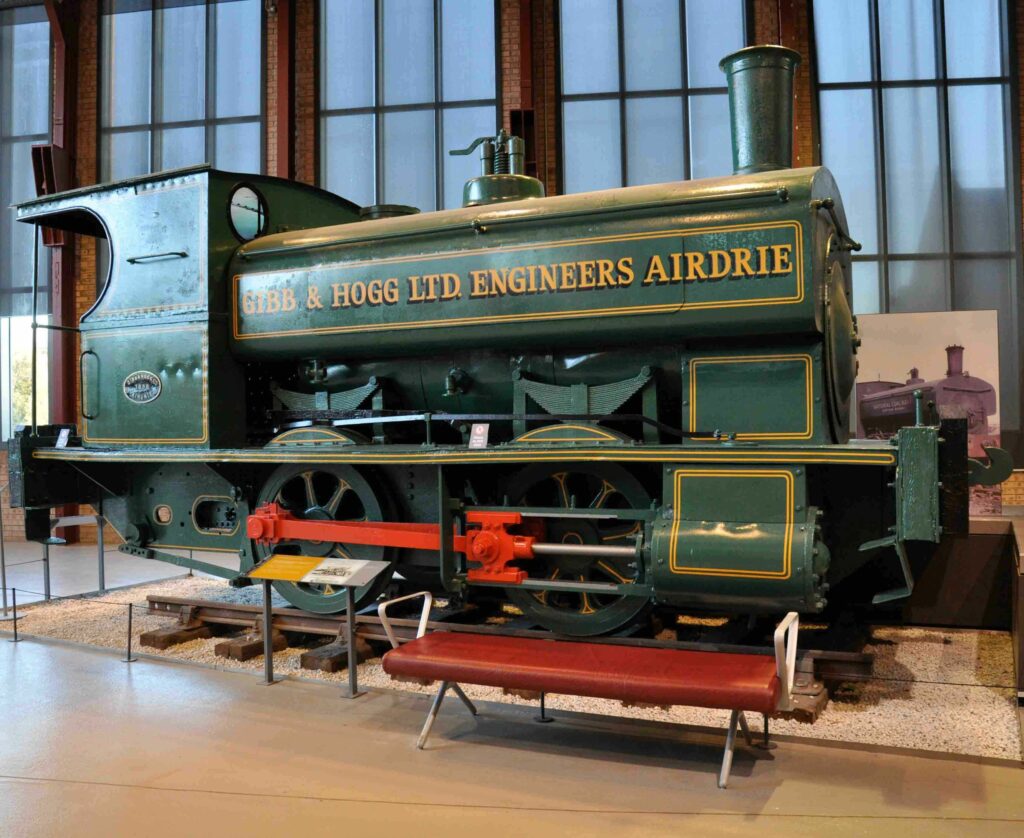
Only one Airdrie-built locomotive survives today, a colliery pug built by the firm of Gibb & Hogg in 1898.
These engineers were established in 1866, initially on Wellwynd right in the middle of town. After only three years they built a new factory, the Victoria Works at Gartlea on a site close to the North British Railway. The location of the works is now the Airdrie Retail Park cark park. Here Gibb & Hogg built machine tools such as steam hammers and steam boilers for land and marine use. They also made small industrial locomotives, possibly prompted by the company buying the patterns and drawings of the Kilmarnock locomotive builder McCulloch, Sons & Kennedy when it closed down in 1890. As a result, Gibb & Hogg’s locos bore a strong resemblance to those from the Kilmarnock firm.
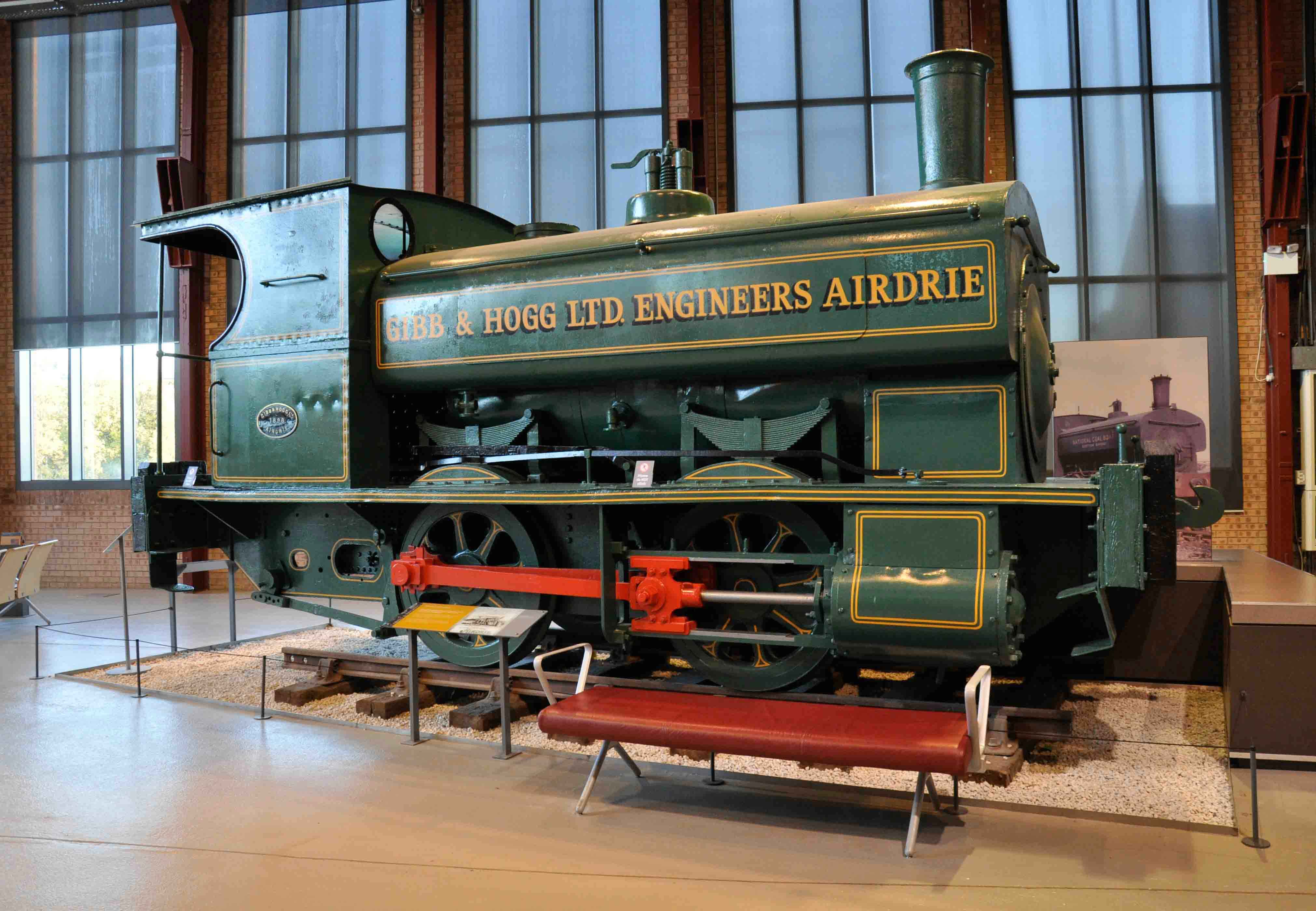
Gibb and Hogg went out of business in 1911.
G Inglis & Co
Gardner Inglis (1856-1924) from Cambusnethan started out as a pattern maker and engine fitter before founding his Airdrie engineering and boiler-making business in 1885. The firm traded from its Albert Engineering & Boiler Works to the south of the town.
In the early 1900s Mr Inglis patented a type of marine boiler. The company was still trading in 1922 but presumably went out of business soon afterwards, perhaps with the death of Mr Inglis.
Martyn Brothers
This engineering firm built only a handful of colliery tank locomotives after acquiring Dick & Stevenson’s engine patents in 1890. You can see photographs of the foundry on Historic Environment Scotland’s Canmore website.
By the outbreak of the First World War in 1914 this remarkable local industry had all but ended. Today no-one is alive to recall the days when steam engines trundled through the streets of Airdrie. Can you tell us more about any of the firms mentioned? We would love to hear your stories and see your photographs: you can email us at museumcollections@northlan.gov.uk