
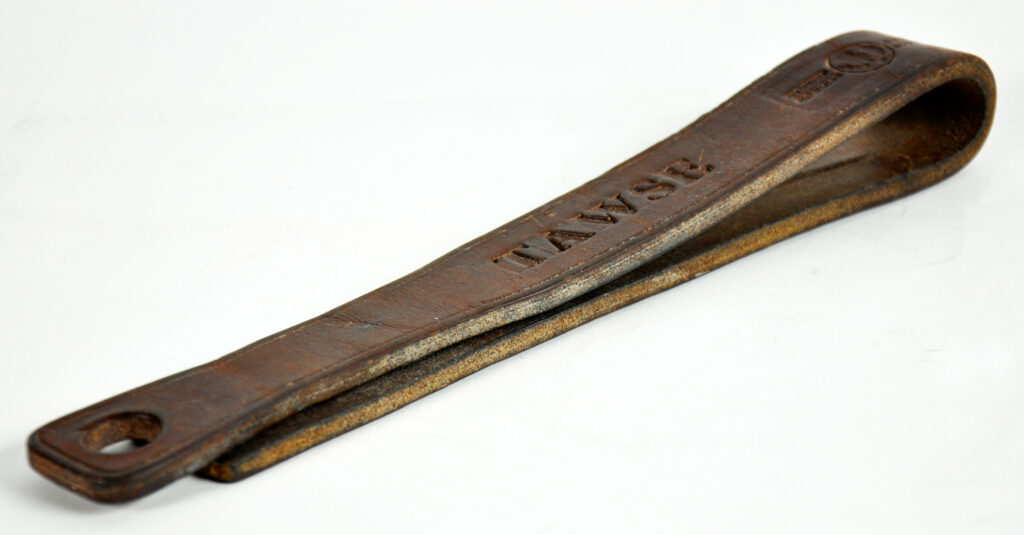
In the modern day, the idea of using violence to instill obedience in children and to punish them is, to many people, unconscionable. Barbaric as a form of discipline and archaic as a tool for teaching. Yet, it was not all that long ago that this was a norm in schools and the home.
Corporal punishment (physical punishment) was the done thing, and while there were exceptions who opposed its use, they tended to be in the minority. The belt, the cane, the ruler, and the tawse can seem a world away but there are still many around today who experienced that world. Certainly, some parents and grandparents can still recount tales from their schooling and childhood where violence was used and accepted as a method of punishment.
In Scotland, it was the leather tawse that was used in schools. The tawse was a firm piece of leather with one, two or even three slits at the end of the strap, and was used to physically discipline pupils – a punishment and a deterrent until it was banned in 1987. While students throughout the rest of the UK were punished by the use of belt or cane, Scottish teachers favoured this whip-like device.
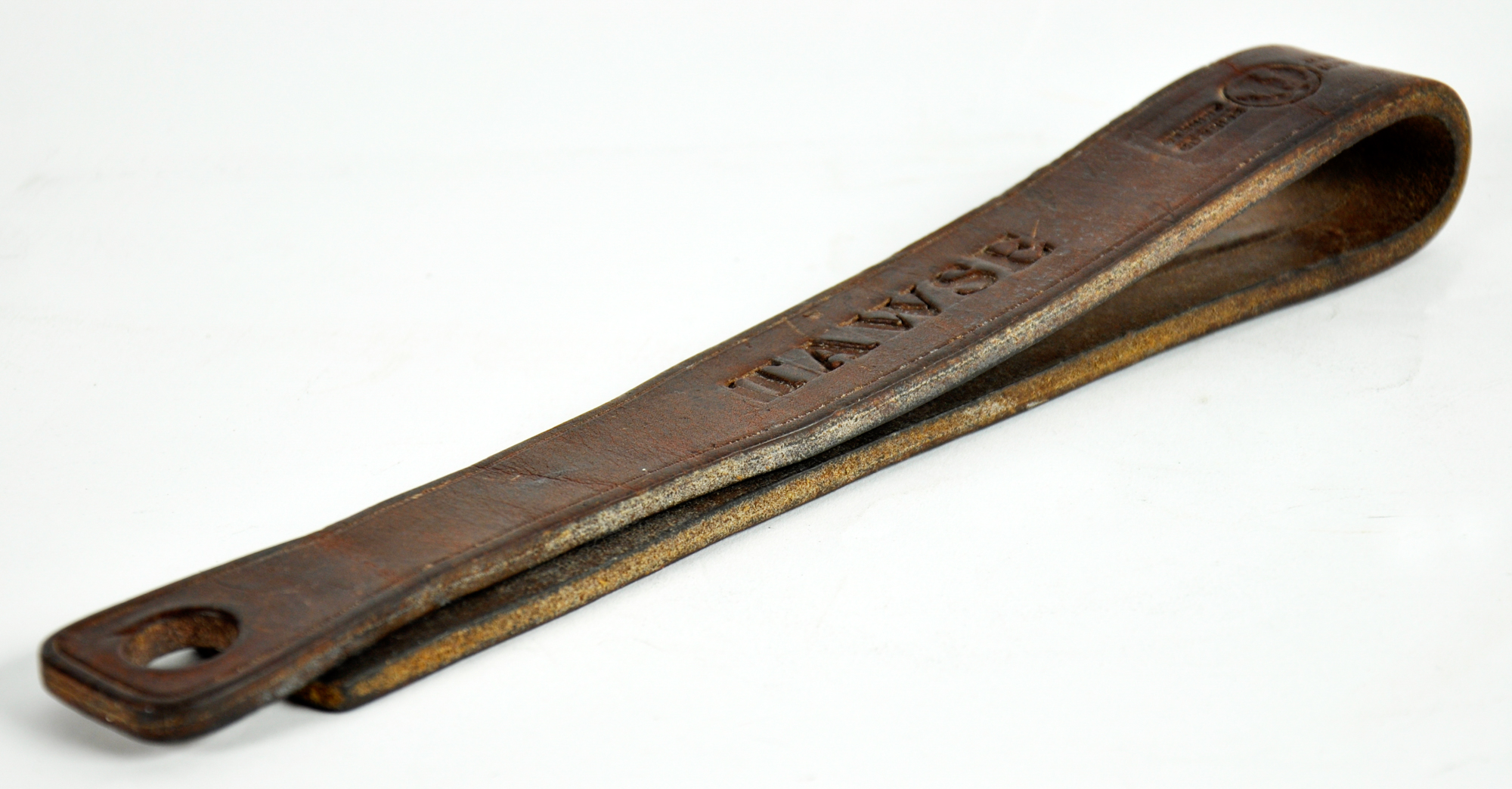
This tawse in the museum collection was purchased in 1977 to replace a belt stolen from the language teacher’s desk in Airdrie Academy, and last used sparingly at Dalziel High School in 1981-82.
Corporal punishment across the UK was a frequent occurrence, and not just for disobedience or poor behaviour. The use of physical punishment was varied and far-reaching – for example, it was used in cases where pupils did not understand what they were taught in lessons, or for pupils who answered a question incorrectly. Of course, there would have been differences in how it was used and its frequency depending on the teacher and the school but the overall picture is bleak.
Society…not just schools!
By mainstream modern standards and beliefs, it’s natural to be shocked this was allowed. However, by the standards of the time, this was a normal and sure way to raise respectful, well-rounded people (or so the thinking went), and the school was just an extension of society as a whole.
Physical discipline was accepted in schools because for many it was used in the home. As educational policy expert Professor Lindsay Paterson explains, “The threat of physical violence was present in schools but then it was present in families, it was present in communities, it was present through the church…The schools simply saw themselves as reproducing that – ethics were to be instilled partly by the threat of violence.” It was much more rare if parents did not agree with or enforce physical discipline.
Generally harmless and great for discipline? Not so fast…
Yet as much as this was seen as normal and even beneficial by many at the time, Stories from people who experienced this discipline system paint another picture. Reoccurring themes people recall from having the tawse or belt used on them are feelings of pain, shame, humiliation and a feeling of being powerless against people who enjoyed inflicting violence. To understand its effects, we need to hear from those who experienced it. Below are two small testimonies and it is not to argue that everyone experienced the same feelings, however, they are useful for giving a different view than was presented at the time.
Reverend Bill Brown recalled his schooling in Scotland and explained that he got belted one day for spelling Canada with a small ‘c’.
He says: “It led to a mini breakdown. It was almost like a mental breakdown. The consequence of which was that I became withdrawn. I missed a couple of years of school.”
Ms Jean Stirling recalls that she was late one morning due to the bus but she was to be disciplined just like everyone else. She remembers her “mounting terror” as she watched other children receive the tawse for being late. “There was a specific technique to receiving the belt, requiring the victim to hold both hands out, palms upward and one hand supporting the other. The belt was not designed to draw blood but rather…to hurt”. She went on to share the feelings of shame and humiliation it brought.
The end of the tawse
It was not societal pressure or large numbers of people protesting that brought an end to the tawse. It was the action of two Scottish mothers, Grace Campbell and Jane Cosans, that brought an end to corporal punishment in state schools. Angry at the use of physical discipline in schools where they could not request their children be exempt as they did not agree, they took their cases as far as they could and eventually won in the European Court of Human Rights.
Their continued fight did not make them popular. The Campbells had a neighbour who refused to speak to them for 20 years because of their campaign and once, they came home to find graffiti sprayed over the front of their house. Occasionally, a brick was thrown through the lounge window. They were seen more as pariahs than activists, however, with their successful campaign, the use of the tawse and any other form of corporal punishment was finally banned in state schools in 1987, with Scottish private schools following over 10 years later in 1998.
About the Author
Brooklyn Braeger is a graduate of the University of Glasgow with a History MA (Hons) and a Modern History MSc. She is a Volunteer Digital Collections Assistant within the Curatorial Team, North Lanarkshire Council Museums & Collections.