
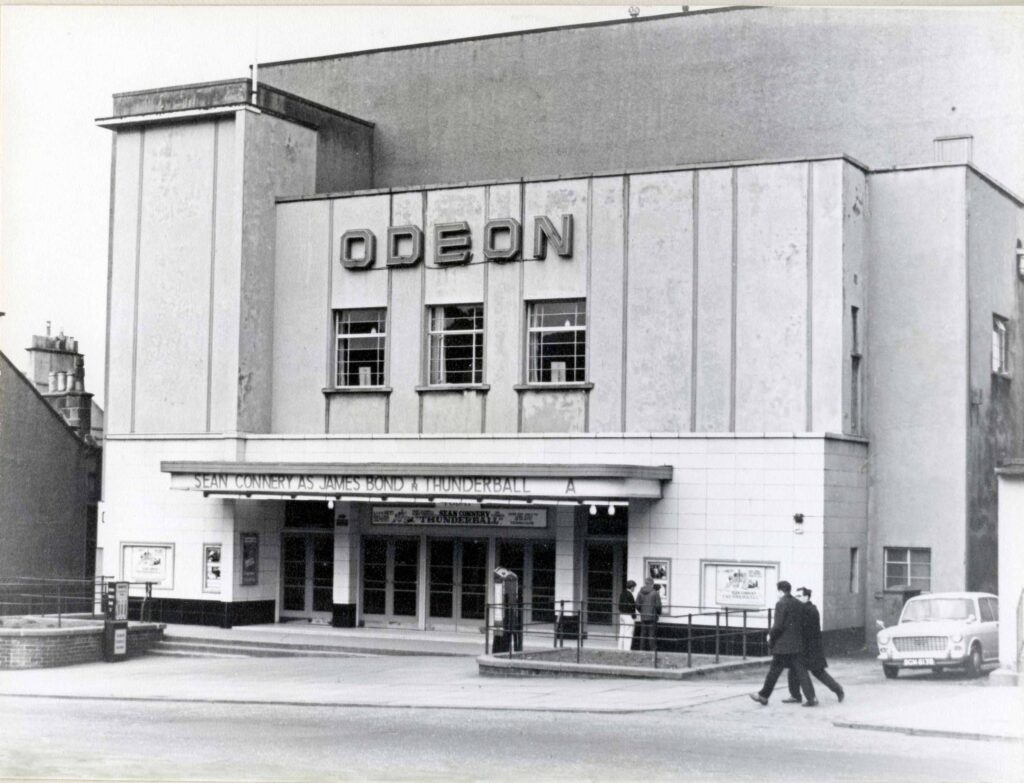
One of the most beloved forms of entertainment, going to the cinema to watch new movies, was established as a popular pastime well over a century ago. First, travelling picture shows gained popularity in the late 1800s, then entrepreneurial individuals began to set up their own makeshift theatres locally – many of which would come to be banned, due to the safety risks involved in running fire-prone projection equipment alongside crowds in enclosed spaces – and before long urban and rural populations alike were flocking to the cinemas. For a list of North Lanarkshire’s early cinemas, follow this link!
Theatres became so central to social life that visiting cinema cafes came to be seen as “a sign of refinement” by the 1930s, becoming “havens for ladies meeting for a lengthy chat.”[i] The pictures were such a beloved recreation for children and adults alike, that in 1943 the first Children’s film clubs were introduced. But did everyone in society have equal access to the cinema? Were these public venues safely designed and operated? Such are the questions explored here.

CINE-1240 Pictures advert sign ‘Don’t Take Your Wife For Granted’
Lanarkshire cinema proprietor George Singleton explained that his father, in the earliest days of cinema, would make a theatre out of “any hall you could tie a screen or a sheet at one end and crank a projector at the other. The risks that were taken were enormous,” he recalled, and described “a packed hall full of people smoking cigarettes, throwing butts anywhere, despite the presence of highly inflammable liquids.”[ii] Silver nitrate film was the primary fire hazard in cinemas, even long after the safer cellulose acetate film alternative was made available. Film producers preferred the look of the dangerous silver nitrate film and were loath to change, even if it meant endangering audience’s lives. The projection equipment that film was fed into would have generated enough heat to set nitrate film alight – and if fire wasn’t dangerous enough, the “smoke produced by burning nitrate film is highly toxic, containing several poisonous gases and can become lethal”[iii] if too much is inhaled. Eventually, laws and regulations began to be introduced to combat these dangers.

Cinematography Act 1909, Licence To Use A Cinematograph, NLC Local Studies
In 1909 the Burgh of Motherwell and Wishaw Cinematograph Act was passed, making it a legal requirement to have a license to show films using cinematic equipment. A license was only granted to “buildings with isolated fireproof projection boxes, solid steel or concrete frames and adequate fire exists.”[iv] The conditions of the Act mandated that “all the exit doors shall be fitted with automatic bolts and indicated by the word “Exit” being clearly and distinctly marked and illuminated; all passages, staircases, and lobbies shall be kept lighted to long as the public are present; the public shall be allowed to leave the premises by all exit doors, which must open outwards.”[v]

CINE-1313 Exit sign
Remembering his father’s first proper cinema in 1910, Singleton said “it must have been a Marvellous experience for people in those days to come in to the cinema and to a world of plush seats and warmth and glamour.”[vi] Singleton described how in the late 1920s and into the 1930s “housing conditions were very poor, and people were very glad to come in to the cinema to escape.”[vii] Shouldn’t all members of society, including those with disabilities, have been welcome to enjoy such luxury?
While plenty of scholars have discussed the early popularity of cinema in Scotland, less attention has been paid to the audience accessibility aspect of cinema. Sound was introduced to the movies here in 1929; before then Deaf people or those with hearing loss/hard of hearing would have missed out on the orchestral accompaniment to the film, but not the dialogue. Brief subtitles sometimes appeared in silent films, and Singleton recalled the communal act of reading this text aloud for the benefit of those with limited or basic levels of literacy, as well as for blind or partially sighted cinema goers. Once silent films were replaced with ‘the talkies,’ a new form of accessibility was carved for blind or partially sighted people while at the same time depriving those viewers who were deaf or hard of hearing, as listening to the dialogue became essential to understanding and enjoying a film.
Combining “Alexander Graham Bell’s invention of the electronically amplified sound for the telephone and Thomas Edison’s invention of the carbon transmitter, which allowed sounds to be converted into electrical signals, travel through wires and be converted into sounds again at the other end” allowed for the first electronic hearing aids in the early 1900s.[viii]

CINE-477 Fortiphone hearing aid
In the 1930s, The Odeon Theatre opened in Motherwell, with an advertisement reading: Deaf Aids: for those patrons whose hearing is impaired Deaf Aids are provided in the Theatre free of charge. Later, Ron Evans of Chester’s ABC Regal Cinema said “there was a deaf aid system in the cinema where a person with hearing problems would be directed by the usherette to one of a number of seats were that person could plug in [their] personal hearing aid, and one of us would go down to the stage and switch on the amplifier that powered it. Two wires were run from the amplifier to the projection room, and a microphone was connected to the amp on the stage.”[ix]
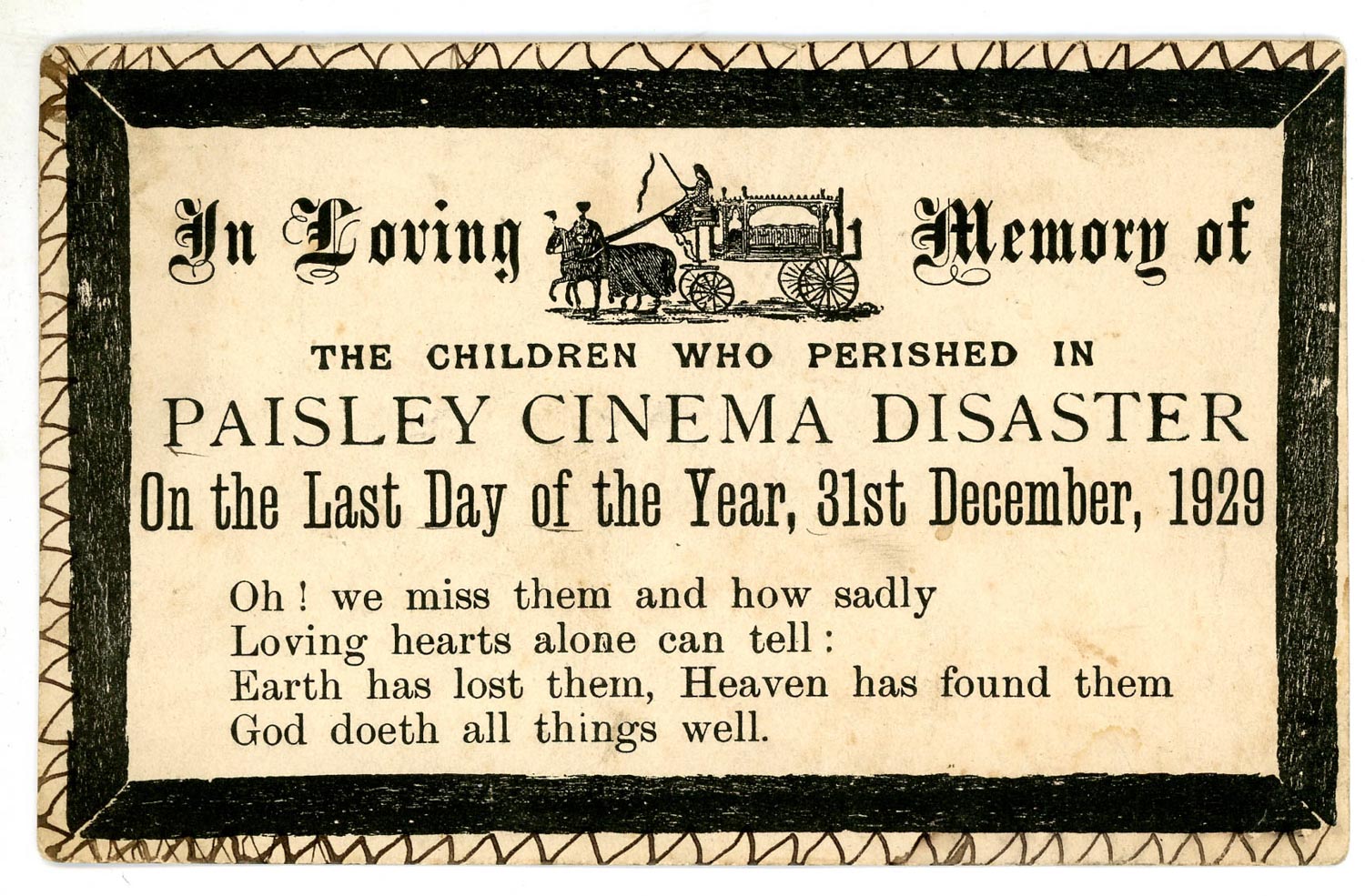
In addition to considering disabled audience accessibility is the question of how safe the physical layout of a cinema was, and whether these fire-prone buildings really were ‘fit for purpose.’ The 1929 Glen Cinema disaster in Paisley, where 71 children lost their lives on Hogmanay in the panic to exit a smoke-filled theatre – due in part to the external locking of the main doors, meant to keep out latecomers who hadn’t paid their fees – proves that questionable safety regulations were in place on cinema premisses. The Glen was repurposed from a town hall to a cinema, with long wooden benches that could not be moved from their rows. To evacuate, children needed to take multiple small sets of stairs leading down to the rear entrance. Tragically, these exit doors opened inwards rather than outwards, resulting in the crush that took these children’s lives. The youngest victim to this horror was under a year old; many in the audience were brought by older siblings, while their parents prepared New Year’s celebrations at home.
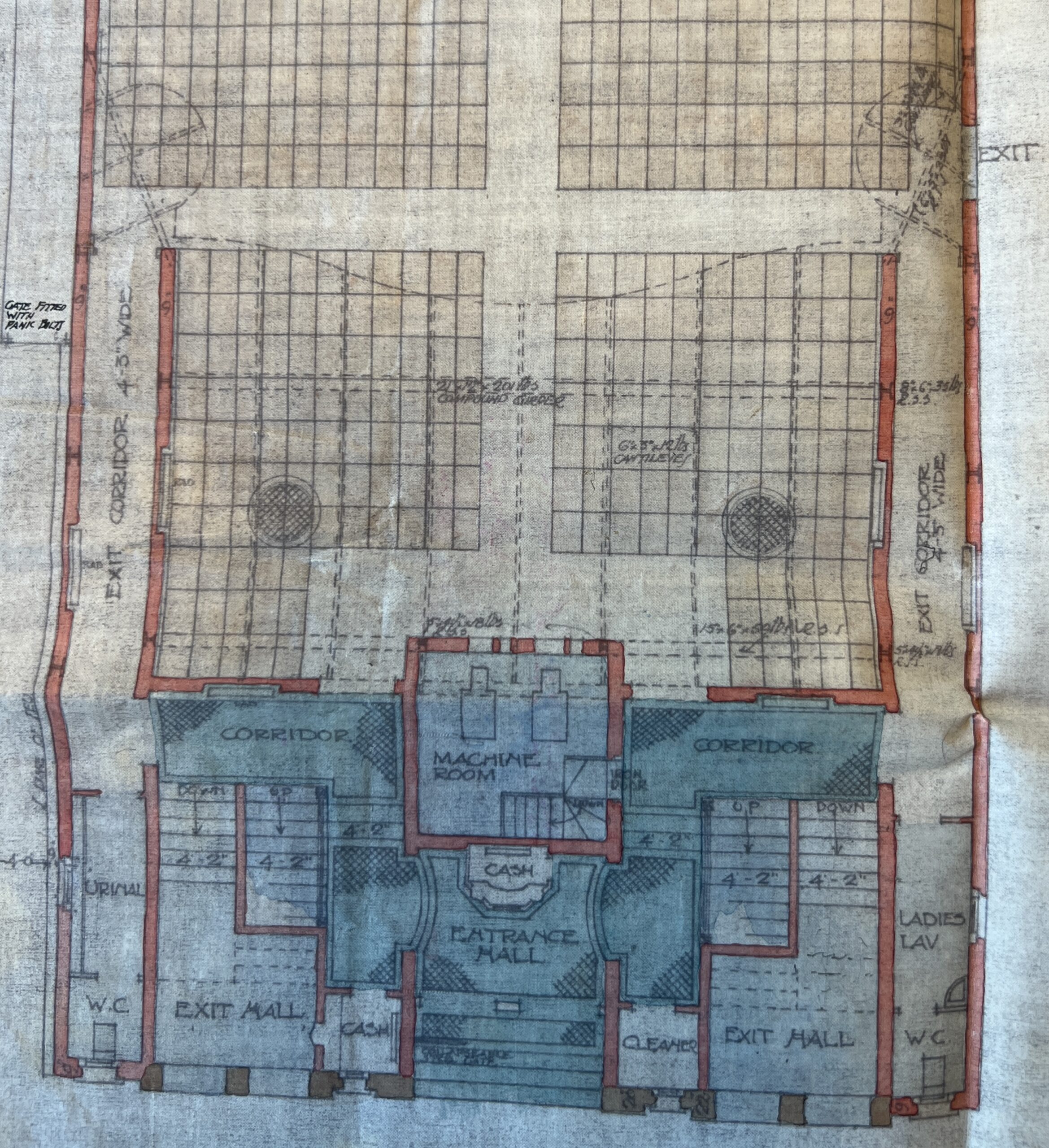
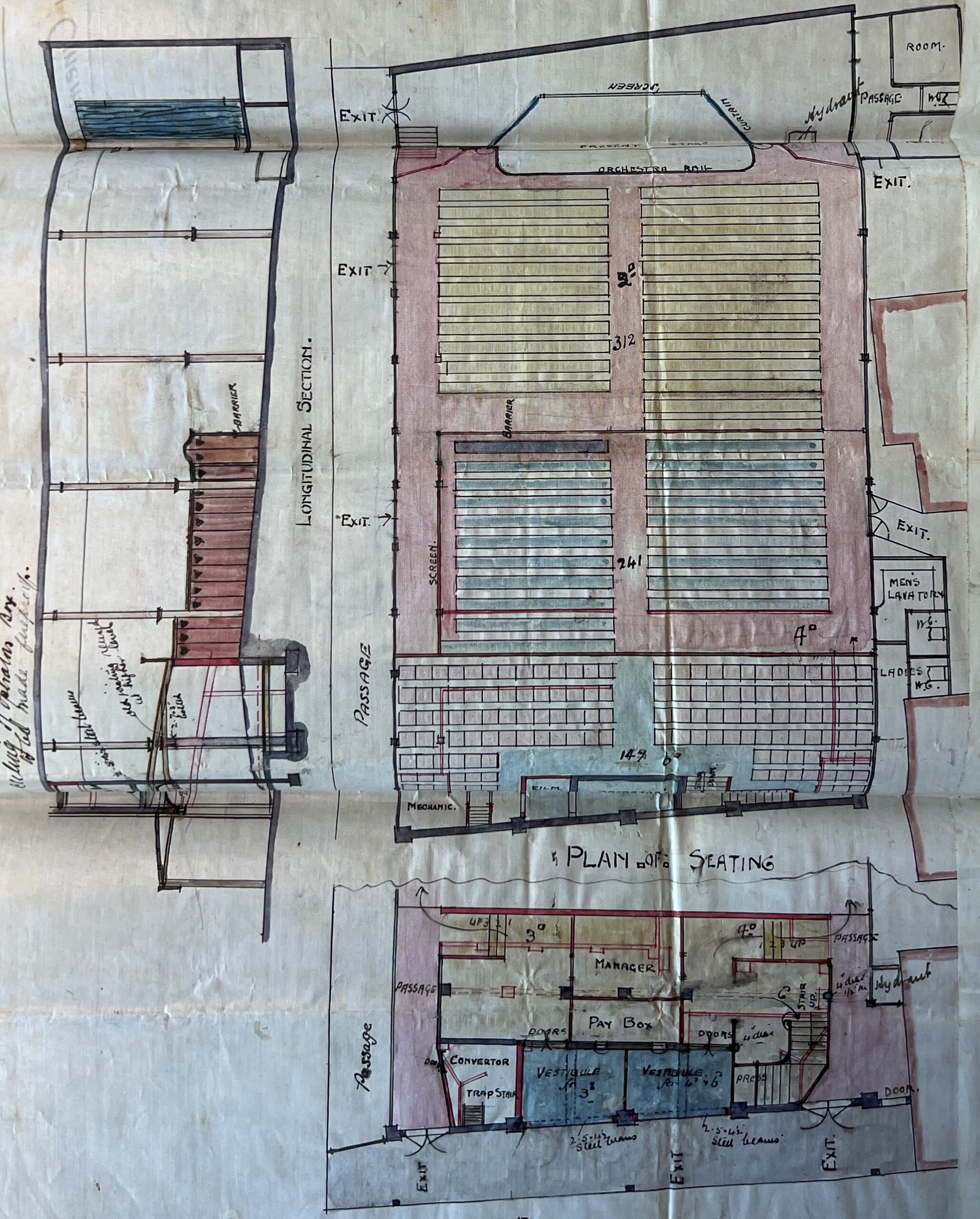
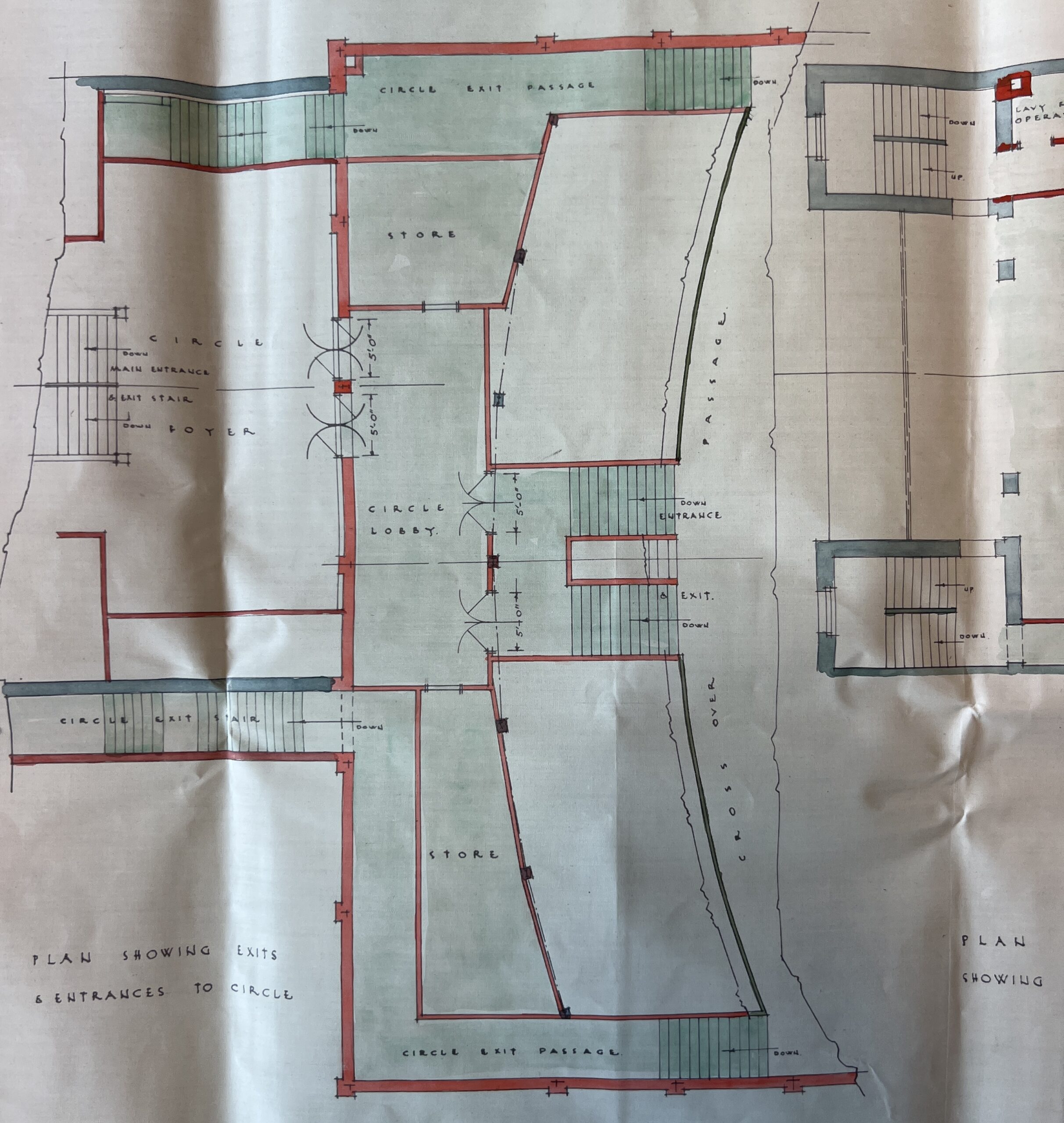
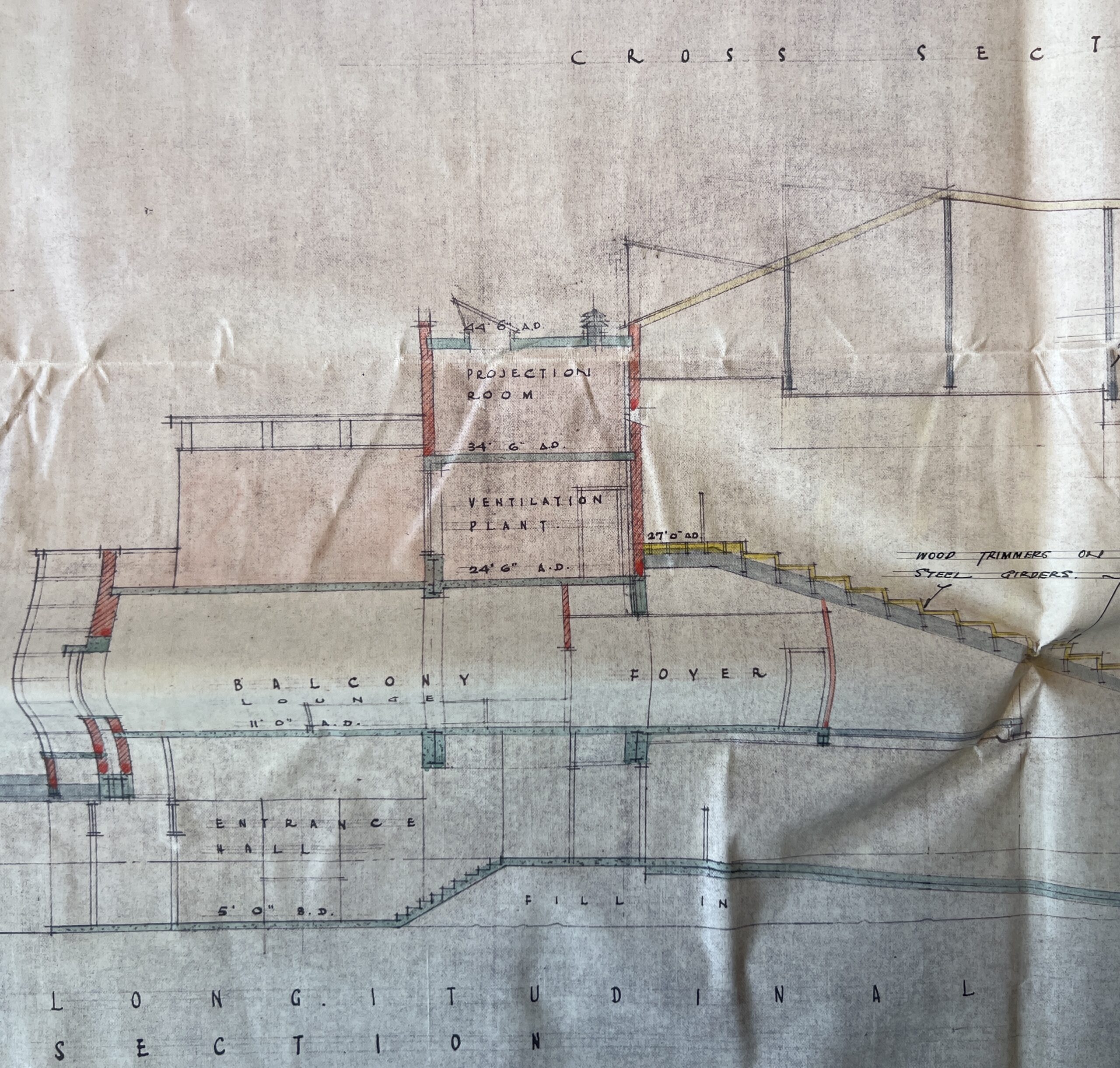
To explore this avenue of research, it is helpful to consult the Local Studies and Archives held at North Lanarkshire Heritage Centre, where the original blueprints and building plans for North Lanarkshire cinemas are kept. From these plans it is possible to determine where the projectionist equipment (the primary fire-hazard) was situated in relation to common areas or closed in quarters, as well as where the exits were located and how wide the aisles were. It is also possible to distinguish between ramping and staircases, which speak further to the issue of accessibility when considering disabled audiences.

CINE-1080 – 1082 Exit sign, wire brush & barrier rope
The earliest Motherwell cinema building plan introduced here is for the Motherwell Cinema House, designed in 1912. The theatre had at least six exits, which helped it to pass safety inspection, but it also had several staircases (including one called a ‘trap stair’) which would not have been easily accessible for disabled people.
-

- Wishaw Cinema Building Plans, Reference Number UJ/1/07/9/00906
-

- Motherwell Cinema Building Plans, Reference Number: UJ/1/07/9/01786
-

- ‘The Cinema’ Building Plans, Reference Number: UJ/1/07/9/02439
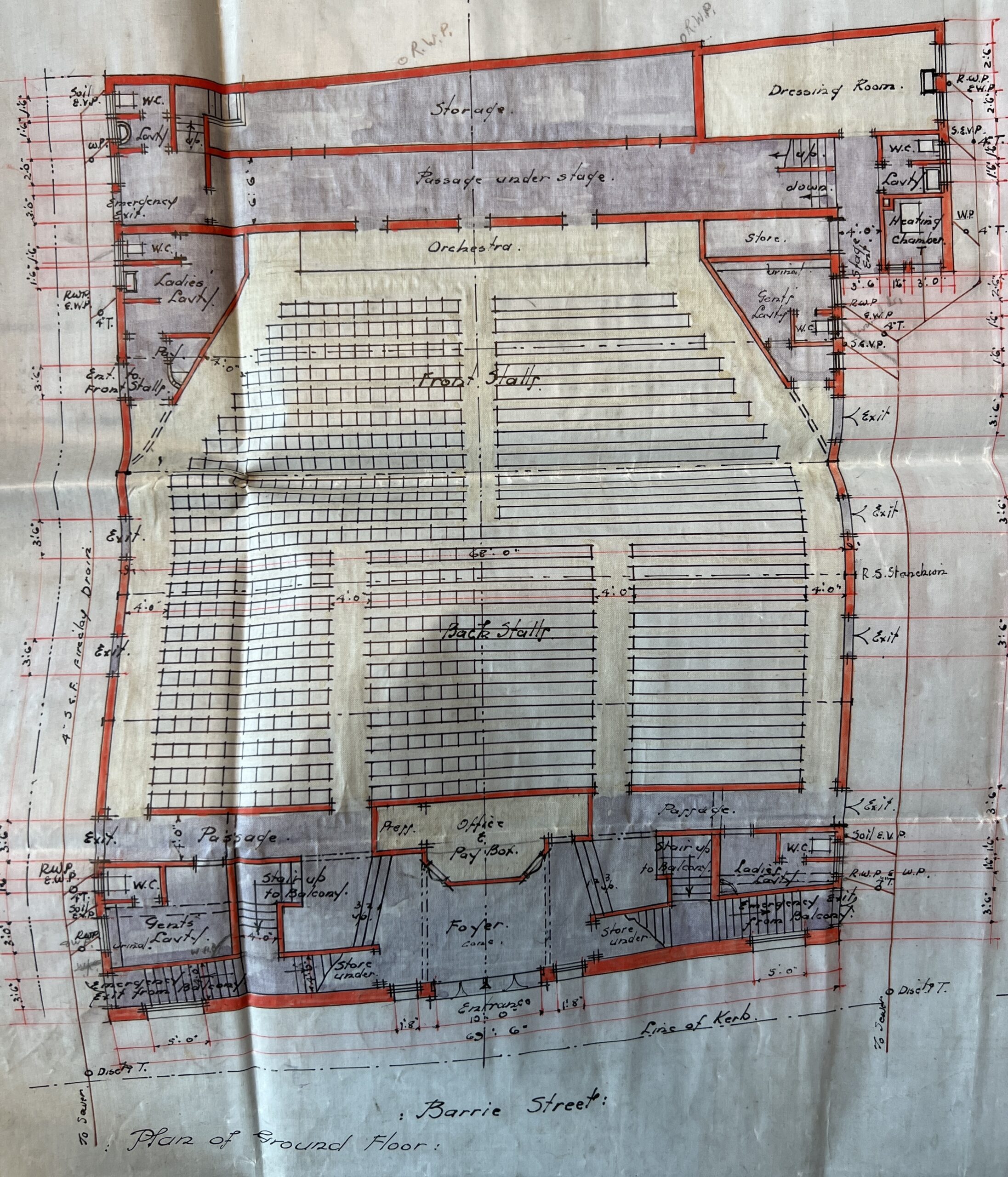
Next, consider the 1919 plans for Wishaw Cinema, which had fewer exits, more staircases, and a ‘gate fitted with panic bolts.’ The 1934 plans for a building called simply ‘The Cinema’ were the first to show an emergency exit directly from the operating room where dangerous equipment was used. The Cinema was designed with plenty of exits, but the multiple flights of stairs would still have been an accessibility issue.
-

- The Regal Cinema Building Plans, Reference Number: UJ/1/07/9/02485
-

- The Odeon Cinema Building Plans, Reference Number: UJ/1/07/9/02590
-

- La Scala Cinema Building Plans, Reference Number: UJ/1/07/9/02925
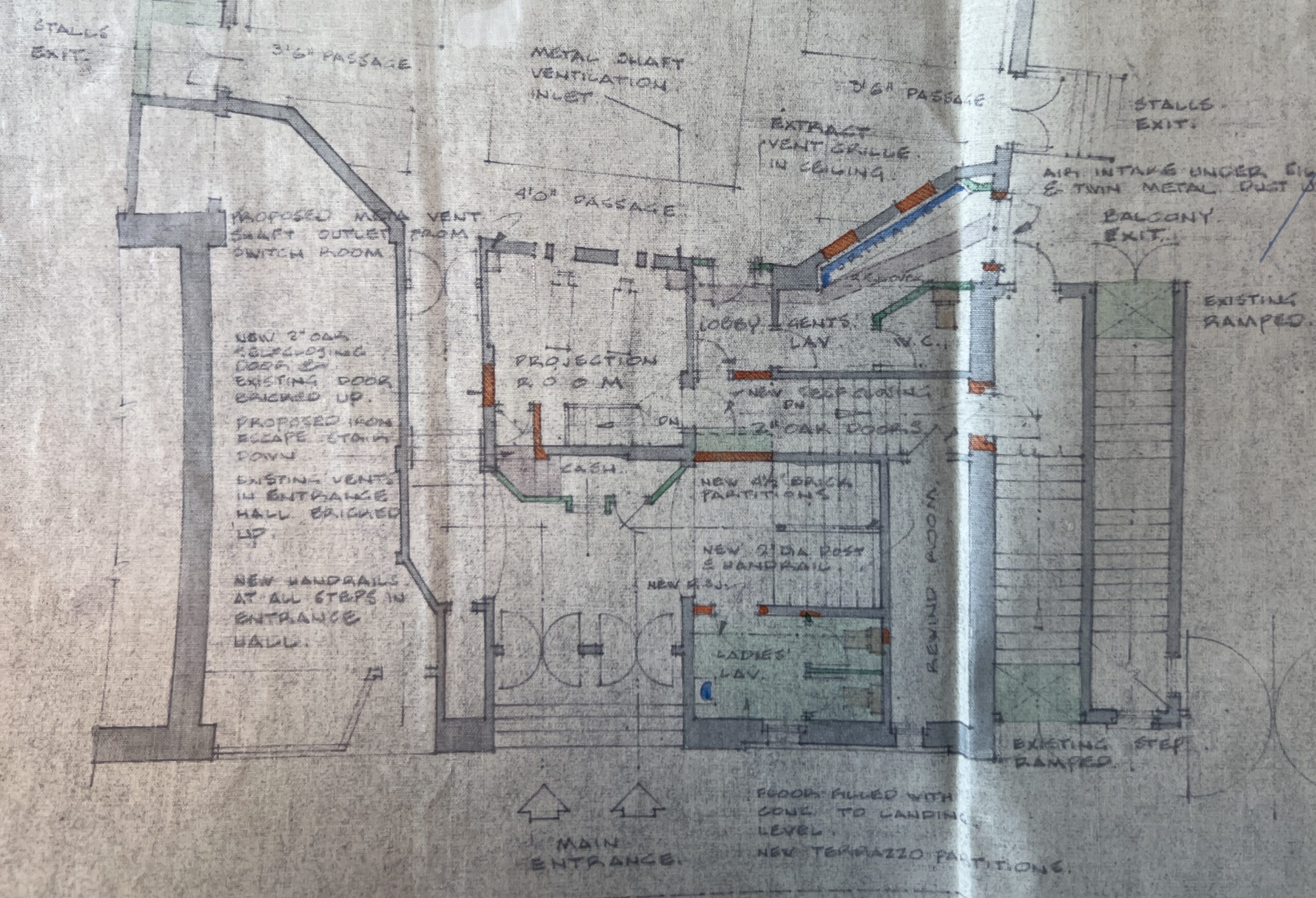
One year after The Cinema, plans for The Regal were drawn up, with more staircases than any of the theatres before it. It is especially significant that many of the building’s exits were located at the end of a flight of steps, which is a safety concern for evacuating crowds regardless of mobility concerns. The Glen Cinema disaster, partly a result of the building’s poor exit plans, occurred six years prior to the drafting of this plan, but does not seem to have had any influence upon it. Two years after that, in 1937, came plans for the Odeon, which was again filled with stairs and did not appear to have many exits. Notably, the projection suite was located right above the main exits, which could have proven disastrous in the event of a fire. Only one out of the six cinema building plans consulted made any mention of including ramps and railings instead of staircases: the La Scala Cinema, designed in 1947.
The 2006 Disability Equality Duty stated “that certain public bodies will be required to actively promote equality of opportunity for disabled individuals,” and bore “implications for cinemas which must make ‘reasonable adjustments’ to give access to people with disabilities.”[x] In 2010, The Equality Act added a requirement for “public authorities to make reasonable adjustments for disabled people to avoid disadvantage and is clear that reasonable adjustment includes provision of information in an accessible format. Public authorities are also under a duty to promote equality.”[xi] The phrase ‘reasonable adjustment’ remains problematic because it is not explicitly clear, and leaves room for interpretation; nevertheless, this is an important legal acknowledgement of public responsibility to accommodate people with disabilities that did not exist for an entire century before, during which cinemas operated without these laws. Nitrate film reels continue to be a safety concern today in museum collections, where they must be stored very carefully. Nitrate decomposes over time and releases flammable gas as it does so; furthermore, the dust this material disintegrates into is subject to auto-ignition.[xii]
Even tragedies such as the Glen Cinema disaster did not have a significant impact on the standardisation of cinema safety regulations. Generating an income and serving capitalist interests were generally prioritised by cinema proprietors above the safety and accessibility of their venues – which audiences risked regularly, for the sake of escapist entertainment.

Sara Spitz has been conducting her placement with North Lanarkshire Council focusing specifically on our cinema collection. She is completing her Masters in Museum Studies at the University of Glasgow. Alongside her studies, she volunteers at the National Museum of Rural Life in East Kilbride.
Bibliography
[i] Bruce Peter, Lanarkshire’s Legendary Cinemas. 1999. Page 28.
[ii] Notes from interview with Mr. George Singleton (Mr. Cosmo) and his son Mr. Ronald Singleton: 29th August 1986.
[iii] “Film Base,” Wikipedia, December 20, 2023, https://en.wikipedia.org/wiki/Film_base.
[iv] Peter, Lanarkshire’s Legendary Cinemas, 3.
[v] Burgh of Motherwell and Wishaw. Cinematograph Act, 1909. License to Use a Cinematograph.
[vi] Transcript: Cassette Ref. 8/60 Interview with: George Ronald Singleton.
[vii] Ibid.
[viii] Soledad Zárate, Captioning and Subtitling for D/Deaf and Hard of Hearing Audiences, Library.oapen.org (UCL Press, 2021), https://library.oapen.org/handle/20.500.12657/51813. Page 31.
[ix] Ron Evans, “History of Chester Cinemas ~ ABC Regal,” Chester Cinemas, https://www.chestercinemas.co.uk/abc-history/.
[x] Reena Bhavnani, “Barriers to Diversity in Film: A Research Review” (UK Film Council, August 20, 2007), https://www2.bfi.org.uk/sites/bfi.org.uk/files/downloads/uk-film-council-barriers-to-diversity-in-film-2007-08-20.pdf. Pages 30-31.
[xi] The Scottish Government, “Principles of Inclusive Communication: An Information and Self-Assessment Tool for Public Authorities,” Gov.scot (The Scottish Government, September 14, 2011), https://www.gov.scot/publications/principles-inclusive-communication-information-self-assessment-tool-public-authorities/pages/8/.
[xii] “Film Base,” Wikipedia, December 20, 2023, https://en.wikipedia.org/wiki/Film_base.