
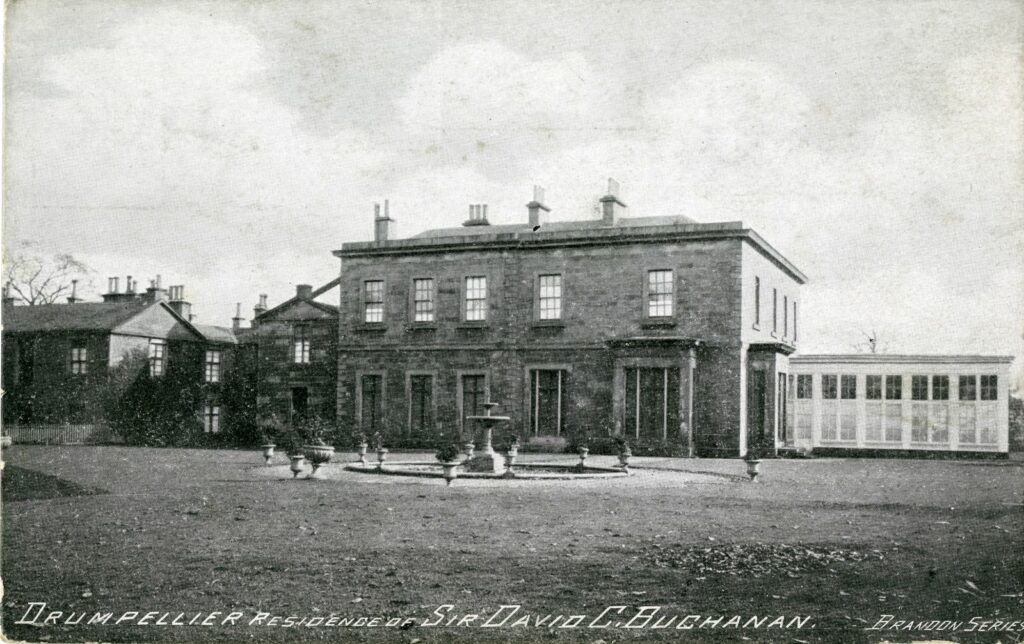
The Buchanan Family hailed from Drumpellier, North Lanarkshire with their seat at Drumpellier House and estate, purchased in 1735. Despite the house itself being demolished in the 1960s, the physical legacy of the Buchanan Family is still significant throughout North Lanarkshire, Glasgow and beyond. Remembered for their mercantile success in the import and export of Chesapeake Tobacco; street names, schools, parks, canals, and even health centres now bear the name Buchanan, or the legacy of their financial investment and philanthropy. What is omitted from this substantial, tangible legacy, however, is the Buchanan Family’s active and pervasive involvement, and indeed extensive benefit from, the Trans-Atlantic Slave Trade.
The Buchanan’s accrued their wealth through the mercantile trade of tobacco. Alongside sugar, coffee and cotton, tobacco was one of the main commodities produced by enslaved labour and subsequently transported to ports throughout the British Empire, including Glasgow. In 1707, The Treaty of Union gave Scottish merchants access to English colonies abroad, something which Andrew Buchanan 1st of Drumpellier (1691-1759) took full advantage of, purchasing plantations in Virginia, USA. He became subsequently known as one of the Virginia Dons. What resulted, were multiple generations on the Buchanan family involved to differing degrees in the sale and export of tobacco, and by definition, also in the Atlantic Slave Trade.
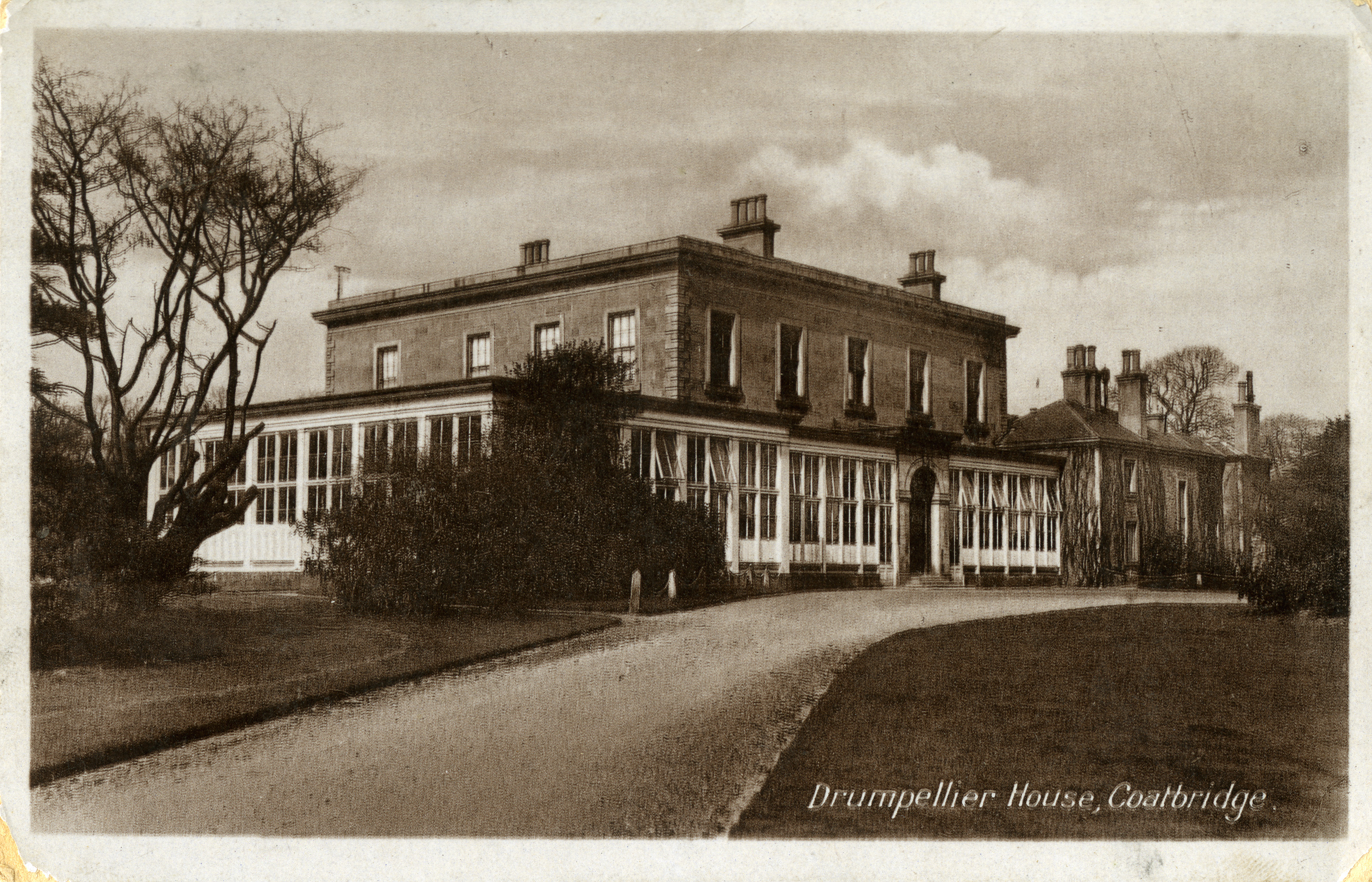
It is important to note that despite the differing degrees of direct involvement with the triangular trade through tobacco, and later philanthropy by members of the family, the Buchanan name is, and should be made synonymous with Scotland’s involvement with Slavery. Indeed, the Buchanan Family were not involved in the Atlantic Slave Trade on a surface level – rather, they were involved deeply and at various stages; most notably through the owning of ships destined for the Caribbean, and the owning of enslaved people in the Americas. These enslaved people were exploited to pick and prepare tobacco that the Buchanan’s then sold and profited from back in Glasgow.
Cait Gillespie’s research into wealthy, North Lanarkshire families and their ties to Slavery found that the Buchanan’s owned several ships which regularly sailed to the Caribbean and Americas. Indeed “[b]y 1735, Andrew Buchanan, Brothers & Co. owned at least three ships (the Glasgow, Buchanan and Prince William), the purchase of which required significant capital outlay, and offers an idea of their resources at the time.”[1] These ships are detailed as traveling to locations like London, Virginia and Jamaica. It should also be noted that Drumpellier Estate, the Buchanan’s family seat was bought in the same year, showing just how profitable the trade of tobacco (and all that came with that trade) was at this time.
It is also possible that these three ships were used as Slaving ships. Gillespie’s research finds that around the same time, three ships named the Glasgow, Buchanan and Prince William were also used as slave vessels. However, it should be noted that no direct link has been made between these ships, and them being owned by the Buchanan’s by the Slave Voyages Database. It is significant, however, that a known slave ship was anointed with the Buchanan name.
Even if ships owned by the Buchanan’s haven’t explicitly been linked to the transportation of slaves, the Buchanan family definitely owned enslaved people. Although very rare to know the names of these enslaved individuals, North Lanarkshire Council Archive, which holds the Buchanan Family papers, has two separate documents listing names of enslaved individuals. This is what Gillespie rightly calls “an uncomfortable crease in the historical record.[2]”
The first ‘crease’ appears in the form of a wanted poster. On the 16th of April 1739 a note was placed in the Daily Advertiser noting the escape of an enslaved man named Coffee:
“About 22 Years of Age, who goes by the Name of Coffee, about five Foot seven Inches high, with a round Face pretty full of Pimples, in a Sailor’s Habit, with blue Jacket and Waistcoat, a check’d Shirt, Canvas Trowsers, and a Pair of new Shoes, with Brass carv’d Backs; he speaks very good English.[3]”
As Gillespie points out, it is often in these wanted adds for runaways that detail of enslaved individuals is revealed. We know what Coffee wore, his height, his age, and most importantly, that he escaped. Coffee ran away from a ship called the Buchanan whose owner was Neil Buchanan of Hillington (1698-1744), younger brother of Andrew Buchanan, Provost of Glasgow (1740-42). A point should also be made around ‘Coffee’s’ name. He was named after a commodity, who’s worth and profit was used to justify the enslavement of thousands of individuals like himself. A cruelty which I suspect was not lost on him. It is unknown whether Coffee was ever found, but this unknown allows us to speculate that he indeed liberated himself, and was free.
The second group of documents notes the transferal of enslaved people as payment of a debt. Between 1795 and 1801, David Carrick-Buchanan kept receipts detailing the buying and selling of enslaved individuals, several of them children. One document dated 9th October 1801 shows David Carrick-Buchanan buying a group of 16 individuals.[4] There are 10 children on the list; the youngest is 1 year old. The fates of named individuals such as Nancy, Tam and Sally are unknown beyond this document. Again we see how deeply the Buchanan Family were involved in the Atlantic Slave Trade; not merely for profit, but that they also subscribed to the view that the enslaved were not in fact people, but rather pieces of property to be traded.
Slavery derived profits, generated by exploitative tobacco production, allowed the Buchanan family to make large investments back in Scotland, particularly in Glasgow. Indeed, many other Scottish ‘Tobacco Lords’ came back to Scotland and put their wealth into property. As historian T.M. Devine observes, Glasgow was dominated by what he calls a ‘tobacco aristocracy’. In 1778, only churches and some manufacturers rivalled the power and amount of real-estate occupied by the tobacco lords and their land.[1]
Using the profit acquired from the forced labour of enslaved people, the Buchanan’s built Virginia Mansion in Glasgow, naming the house in testament to their colonial connections. The mansion was eventually sold to another ‘Virginia Don’ Alexander Spiers of Elderslie in 1770. Although the mansion no longer exists, Virginia Street remains. Furthermore in 1760, Andrew Buchanan (the nephew of Andrew Buchanan 1st) who was also partner in the companies Buchanan, Hastie & Co, and Andrew Buchanan & Co, two of the most powerful Virginia-based trading firms, bought even more land in Glasgow which eventually became Buchanan Street. Buchanan Street still exists, running through the heart of central Glasgow, and now gives its name to a Glasgow subway station amongst other things.

Buchanan Galleries by Thomas Nugent (CC 2.0)
Beyond Glasgow and into the family’s seat in North Lanarkshire, the investments followed. During the time of ‘canal fever’ (1760s-1770s) the Buchanan’s invested money in North Lanarkshire infrastructure, including the Monklands Canal, a section of which ran past the Buchanan’s seat at Drumpellier to better exploit the estate’s coal. One of the remaining parts of the canal now runs through the Summerlee site.

Summerlee Museum as seen from the Monkland Canal
In 1866, the Carrick-Buchanan’s also gifted six acres of Drumpellier estate to the people of Coatbridge. This gifted land was a dedicated public park with the aim of providing a less polluted leisure space, away from the nearby Gartsherrie Ironworks. This philanthropy was immortalised in verse by the working-class poet Jane Hamilton, also known as the Langloan Poet.
“HAIL! noble mind, that formed the liberal plan:
Hail! generous heart, that on the working man,
With kindly courtesy, this day bestowed
A valued boon; while thousand bosoms glow’d
With grateful feeling. May thy high intent
And noble purpose to its full extent
Be blest and gratified. Thy willing aid
Both past and present, be it ever paid
With honour, by the class whom thy design
Is to improve—to elevate—refine.
May high success attend thy every plan
To raise the status of the working man.”
– Address to Colonel David Carrick Robert Carrick Buchanan, Janet Hamilton
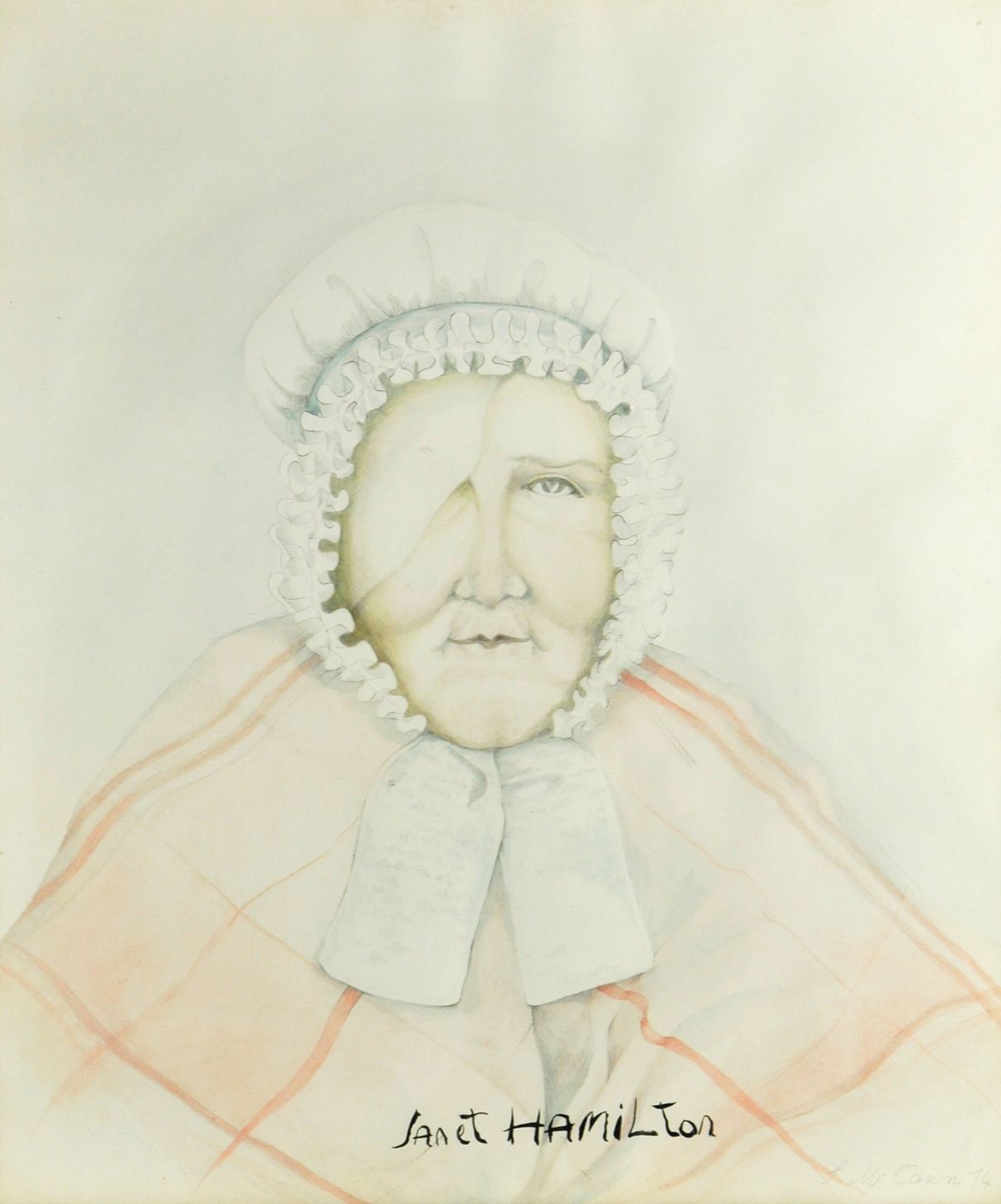
Note the different between this paternalistic provision for the working class of Coatbridge i.e. supplying cleaner land, previously only the reserve of landed gentry (and only given at the gift of said gentry), and the subsequent memorialisation of this act in poetry, versus the involvement in a trade that saw millions of enslaved trafficked and worked against their will and in horrendous conditions. Is it the former that has persisted around the memory of the Buchanan family in North Lanarkshire. The latter is decidedly and concerningly hidden.
It is important to recognise what is in a name, or indeed an investment; Virginia Street, Buchanan Street, the Monklands Canal, Drumpellier Country Park and the other affiliated sites of Buchanan’s wealth and memory may now only be seen as orientation points for many city-goers, but they are legacies of a tobacco trade fuelled by the forced labour of enslaved people which underpinned the rise of Glasgow as the second city of Empire in the 1700s. At Summerlee, the very canal that runs through the museum site was encouraged and partly funded by a family that had accrued vast wealth by the exploitation of enslaved people, some directly owned by the family themselves. Follow the canal, the money, and the philanthropy, and you reach the Atlantic, Scottish-owned ships trading in enslaved people and the fruit of their labour, and plantations in the Americas.
The legacy of the Buchanan’s of Drumpellier is one that needs revisiting in the memorial landscape of Glasgow and North Lanarkshire. Instances of local philanthropy, and investment in infrastructure, should not cloud the substantial involvement in the Atlantic Slave Trade. If the name Buchanan is synonymous with Glasgow, a subway station, a canal, then the name, and the sites themselves are also synonymous with the enslavement of people in the Americas and Caribbean.
[1] James Gibson, The History of Glasgow, From the Earlier Accounts to the Present Time…, (Glasgow: Rob Chapman and Alex Duncan, 1777), pp. 210-11.
[2] Gillespie, Cait, with Dr Stephen Mullen, North Lanarkshire’s Historic Connections to Atlantic Slavery, Modern-day Legacies and Memorialisation (University of Glasgow, 2025). P.48
[3] Runaway Slaves Database, ID: r0557, [accessed 19 June 2024].
[4] North Lanarkshire Council Archives, U1/29/17/5
[5] Devine T.M., The Tobacco Lords: A Study of the Tobacco Merchants of Glasgow and their Trading Activities c.1740-1790, Edinburgh 1975, 11.