
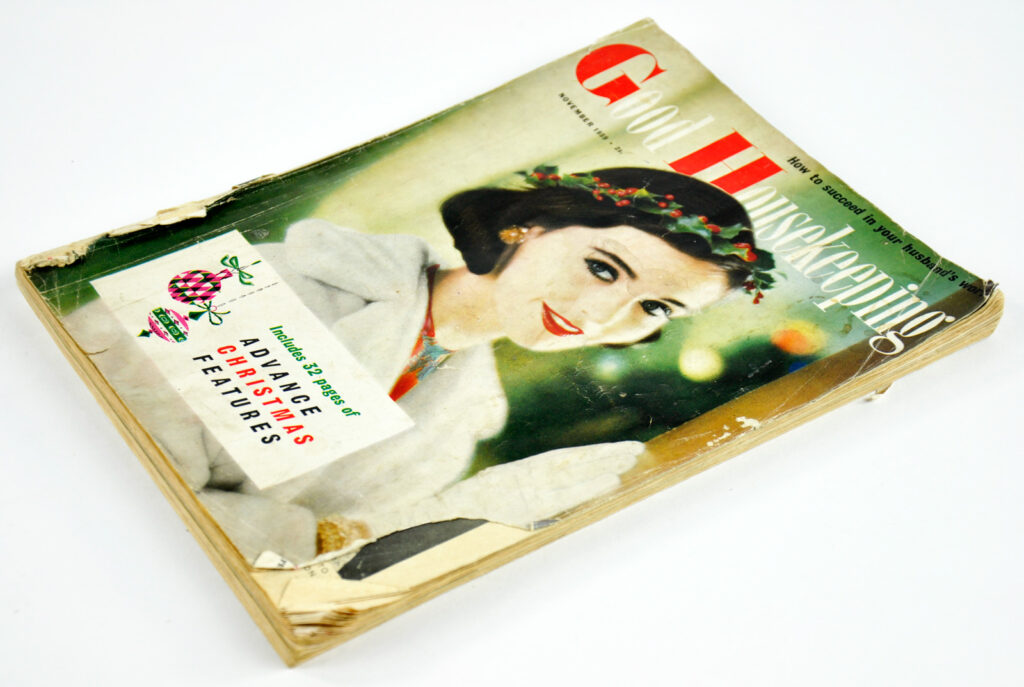
A Long History
Magazines are snapshots of social history. The first is considered to be Erbauliche Monaths-Unterredungen, a German literary and philosophy magazine running between 1663 – 68. The modern magazine has its roots in the pamphlets and ballads published following the Western invention of printing in the 1400s. However, publications similar to magazines have been identified in ancient times, especially in China.
The term “magazine” simply means a collection of written articles. They might provide some news commentary as well as providing entertainment and shaping readers’ attitudes towards culture, the arts, and lifestyles. Magazines often have themes and target specific audiences.
Early magazines targeted people who were educated and who had enough money to buy them. Affordable magazines boomed in the 1800s, particularly following the rise of mass literacy. By the end of the 1800s, magazines mainly provided amusement as the public was eager for a supply of entertainment and odd bits of information. The 1900s brought a huge increase in advertisements, often limiting the power of editorial decision making.
The Company Magazine
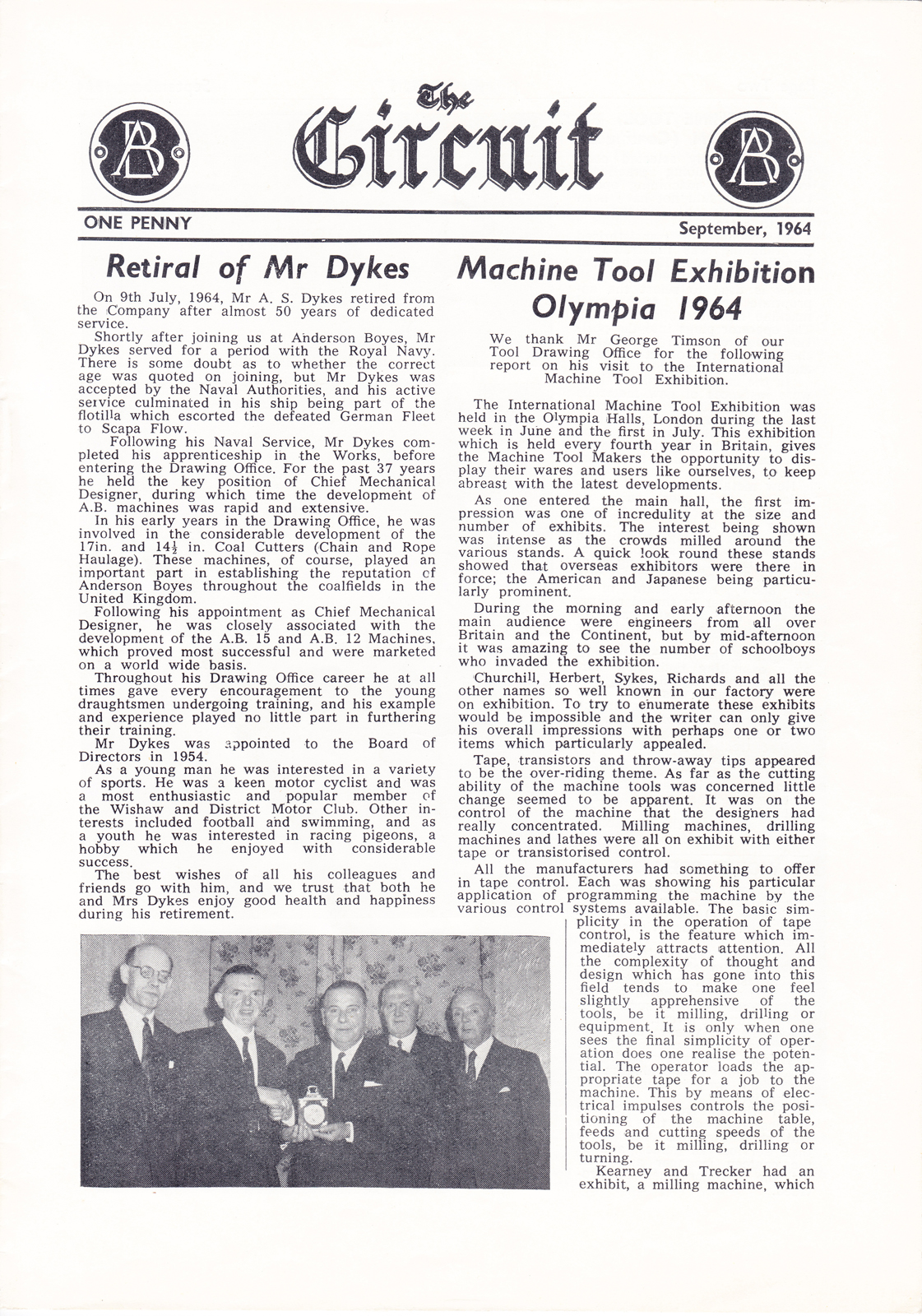
Company magazines are interesting pieces of social history because of the way they try to build a collective identity amongst employees. The Circuit was the in-house magazine for Anderson Boyes, a successful mining machinery company based in Motherwell.
The Circuit sells the Anderson Boyes as a company which cares about its employees as individuals by publishing their marriages, family holidays, achievements, and retirements. Appearing in the magazine would have given workers social status within the company. In this 1964 edition, employees are influenced to interact with the company beyond the workplace, with emphasis on presentations, competitions, outings, and activities like golfing and gardening.

Anderson Boyes Company Magazine, 1964, page 10
Mining machinery was clearly a male-dominated industry, as the magazine features images of employees being successful family men. Unlike other industrial magazines which counted on copies being taken home and read by children and wives, The Circuit does not target non-company readers. As an in-house magazine, the publication lacks adverts for other companies or products. Instead, it sells the Anderson Boyes itself as an attractive lifestyle.

Anderson Boyes Company Magazine, 1964, page 7
ABC Film Review
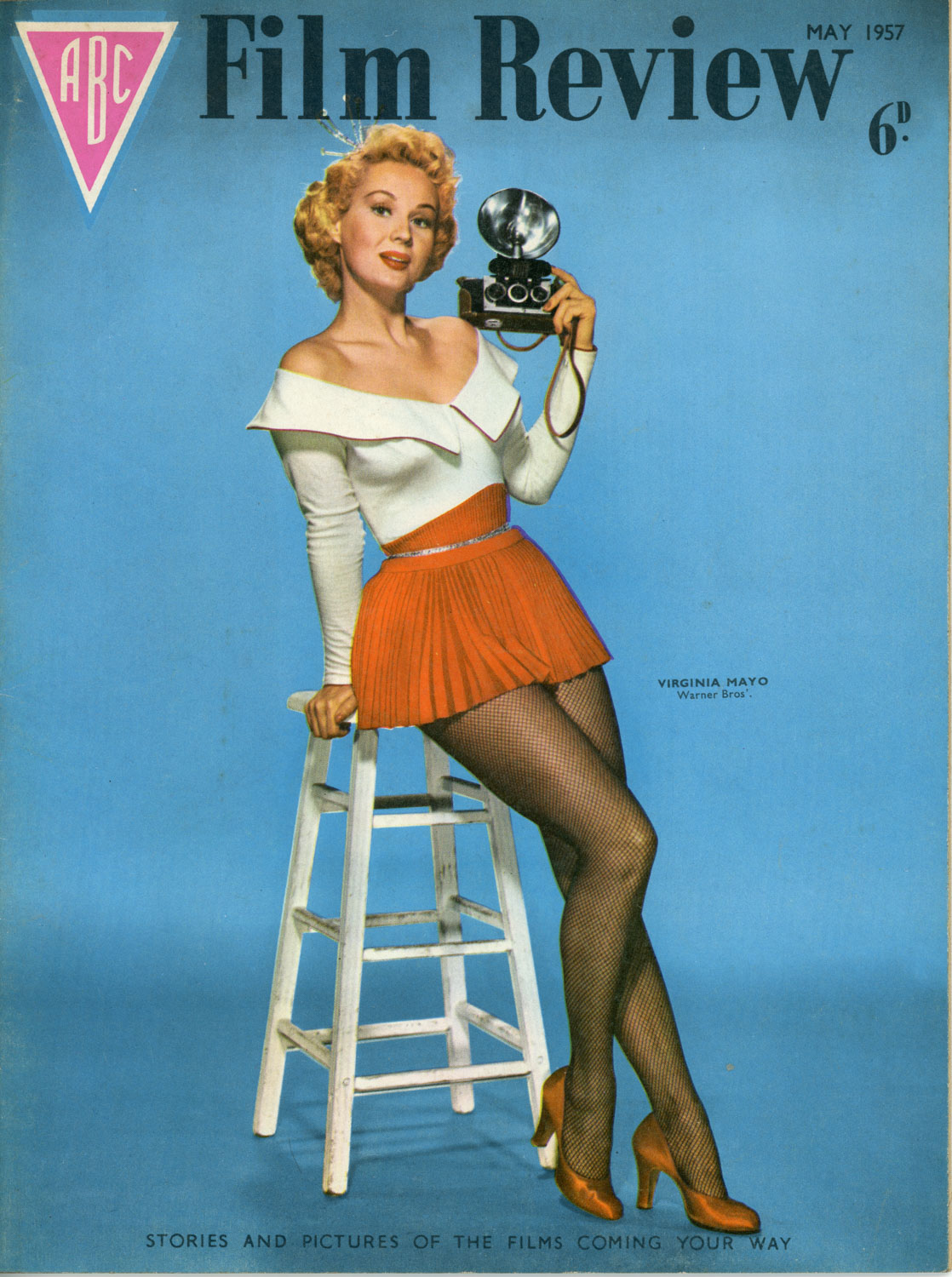
After the First World War, cinemas were the most popular entertainment. Yet by the 1950s, more than half of American households had televisions and the rest of the world would soon follow.
The ABC Film Review magazine launched in 1950 and ran until 2008. It initially reviewed films shown by the ABC cinema chain, founded by Scottish lawyer Joseph Maxwell, before rebranding as Film Review in 1972 to include films shown in Rank cinemas. The Rex Cinema in Motherwell was part of the ABC circuit. The magazine was initially only available in cinemas, but by the 1990s it could be bought in newsagents.
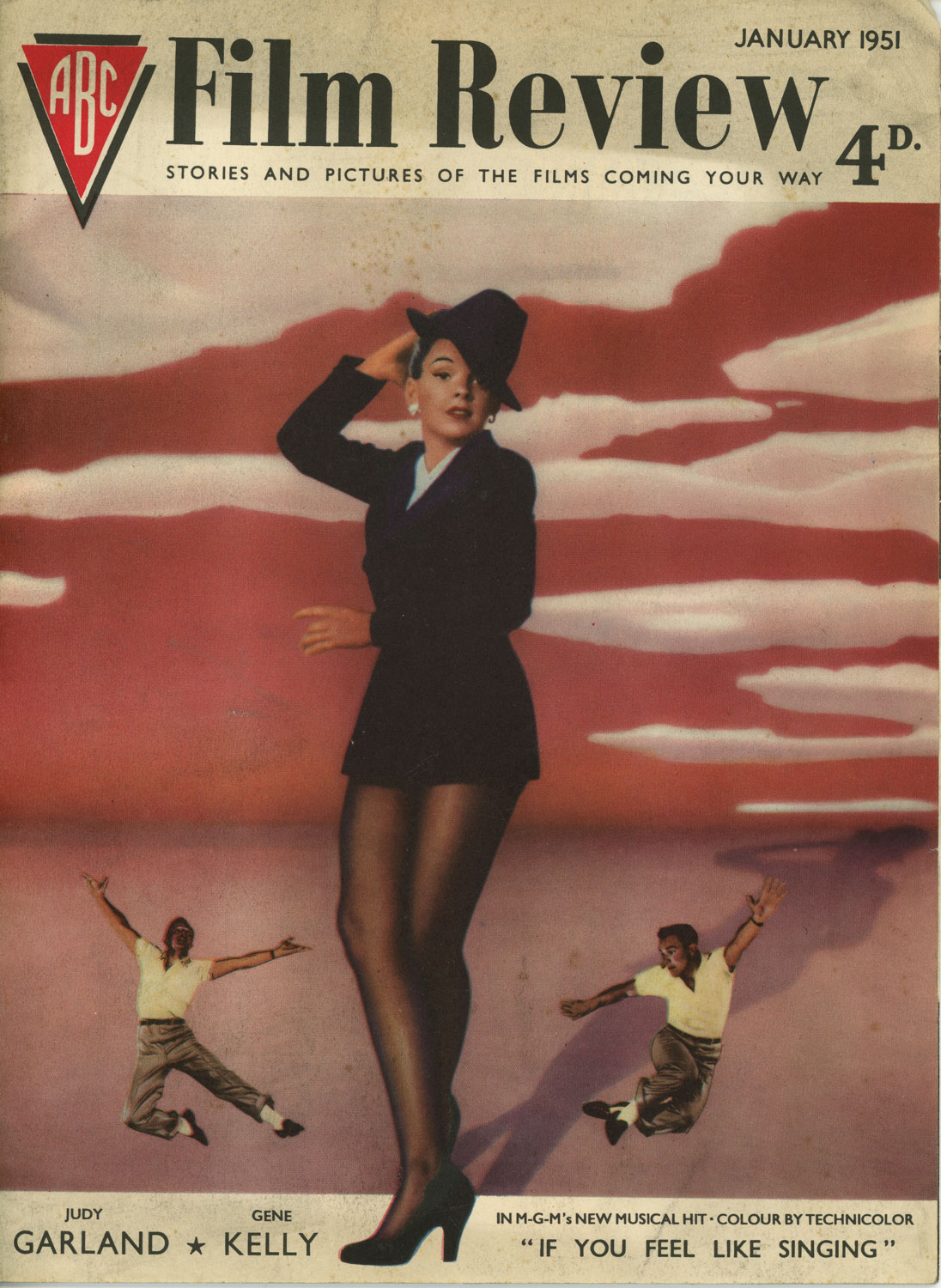
Aside from film reviews, this 1951 edition has interviews, insider stories, advertisements, some coloured pages, fashion tips centred around female film stars, and risque entertainment like this ‘whose legs’ feature.

ABC Film Review, 1961, page 24
One decade later, a slogan reads: “the cinema has everything under the sun in 1961”. As the number of televisions in households increased, the magazine clearly tried to maintain interest by reaching out to a wider audience and increasing the level of excitement. The addition of crosswords and puzzles adds family entertainment, whilst brighter colours make the magazine more sensational.
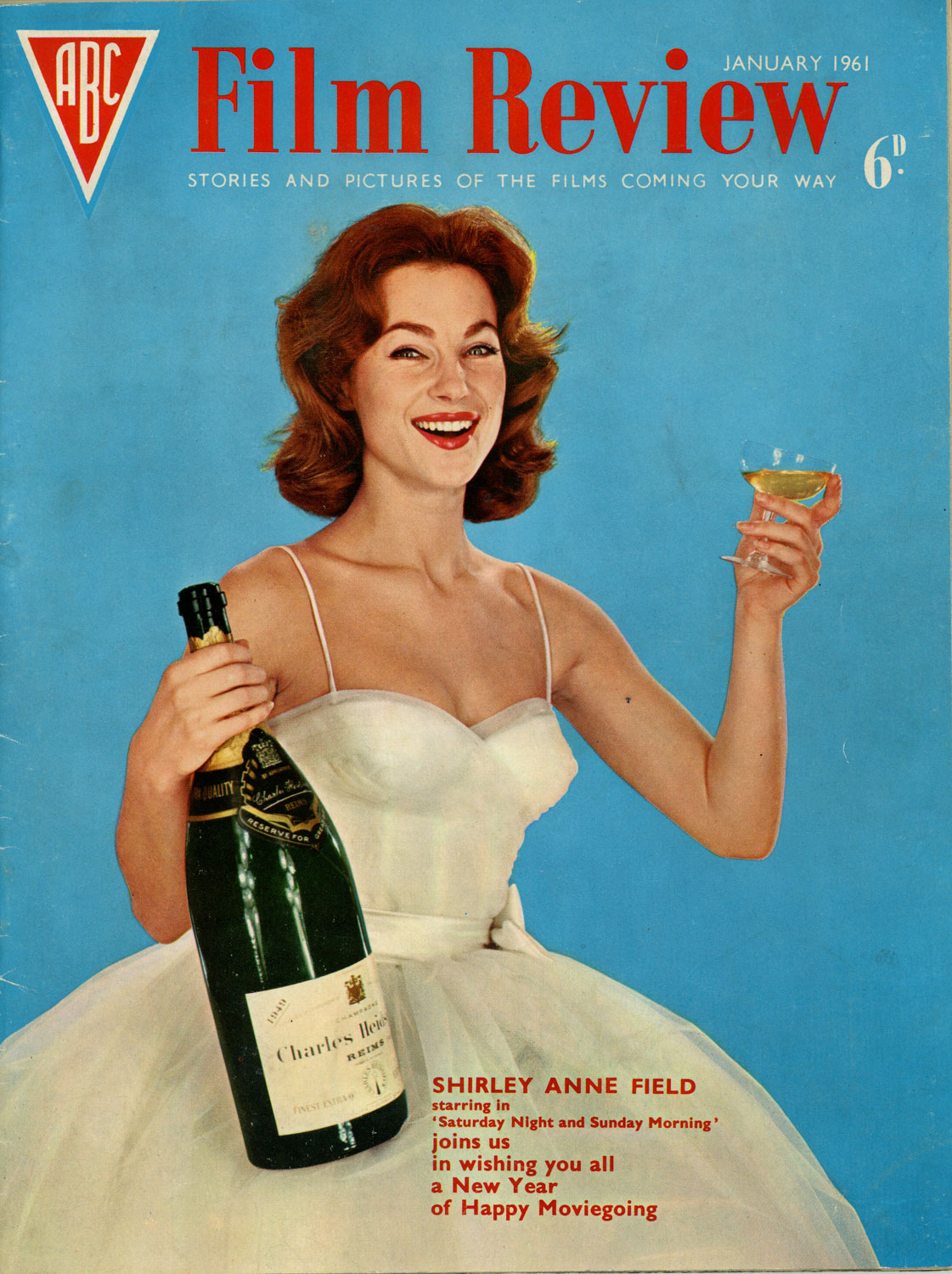

ABC Film Review, January 1961, pages 16-17
The magazine speaks to all audiences individually, rather than using a general family-friendly tone. Product advertisements regularly target women readers, assuming that women are making the household buying decisions. Women film stars are presented through sexualising and sometimes degrading images and language, aiming to attract male attention. Whilst children are addressed with the line: “Don’t take your Mum and Dad for granted… Take them out to the Pictures”.

ABC Film Review, January 1961, pages 28-29
The evolution of advertisements between these editions reflects social changes. Gone are the days of postwar economic struggles; the consumer society is taking over. From the double-page holiday advertisement, to the opportunity for home delivery, change is everywhere. The increase in advertisements suggests that the advertisement industry is more profitable, whilst the longer length of the magazine reflects the increase in film production.
Woman’s Weekly
Woman’s Weekly was established in 1911 for lower-middle class housewives, as well as women with office jobs. The magazine was launched by Amalgamated Press, a British company owned by Alfred Harmsworth, and after surviving both World Wars it remains popular today – still with a male editor. Aside from short-fiction and gossip, most of the content is advertisements.
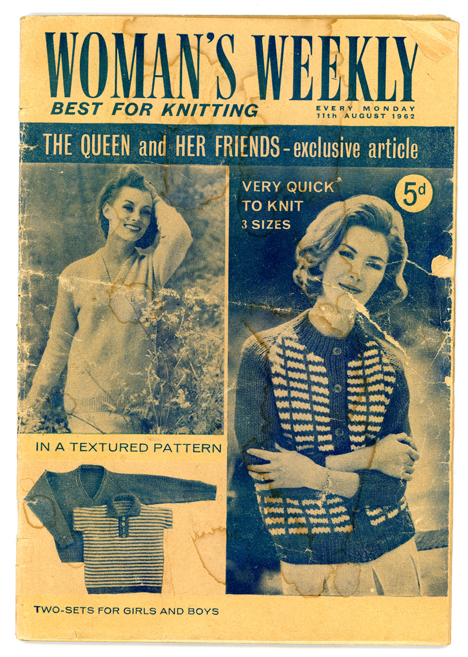
In this 1962 edition of the magazine, advertising is used to influence women to perform their gender role. Headlines like “What keeps a marriage happy?” and phrases such as “your children” indicate that the magazine targets married mothers responsible for household buying decisions. The magazine teaches women to adapt to the latest trends focused on physical appearance and domestic success. Products like ‘housefrocks’ and knitting kits make homemaking desirable, hiding the hard reality of household chores.

Woman’s Weekly , 1962, page 3
This advert tells women that holidays are times when they can be “glamorous […] relaxed and rested” if they buy clothing worn by “our London Girl”. Interestingly, the advert recognises women’s need to escape housework but provides an equally unfulfilling alternative, encouraging them to chase the “feeling that you are a different person”.

Womans Weekly, 2012
© IPC Media
What can we learn?
Magazines are valuable research tools because they allow us to enter different moments of social history. These examples show that magazines rely heavily on advertising and audience targeting to attract readers. It is also clear that the industry has the power to determine what information readers see and how it is presented. This way, magazines have long played a role in shaping the attitudes and behaviours of their readers, and continue to do so today.
References
Britannica:
https://www.britannica.com/topic/publishing/Magazine-publishing
BBC Bitesize: https://www.bbc.co.uk/bitesize/guides/zt896yc/revision/6
Science + Media Museum: https://www.scienceandmediamuseum.org.uk/objects-and-stories/very-short-history-of-cinema#the-rise-of-the-film-industry
Reed, Eleanor. “Domestic Culture in Woman’s Weekly, 1918-1958.” 2018. https://pure.roehampton.ac.uk/ws/portalfiles/portal/1346863/Domestic_Culture_in_Woman_s_Weekly_1918_1958.pdf
About the Author
Ava Barnaby is a Volunteer Digital Collections Assistant with North Lanarkshire Museums