
A look at the controversial history of chloroform
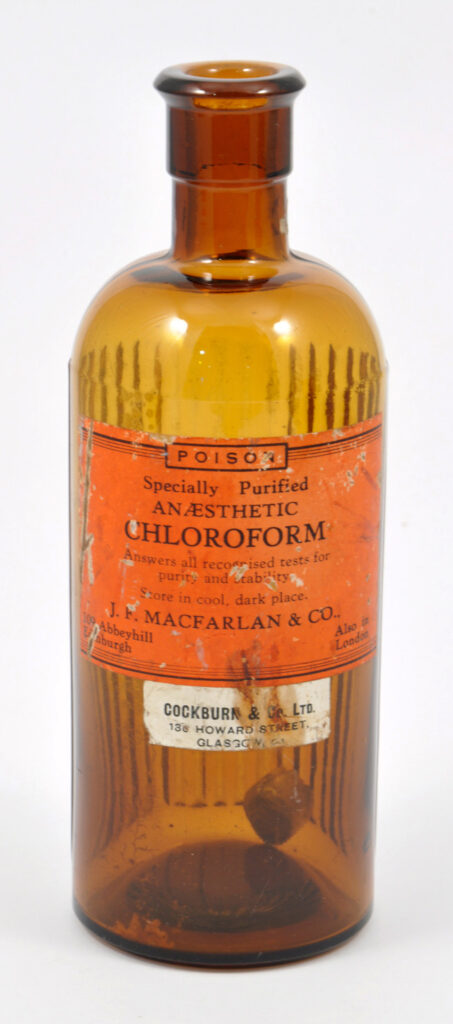
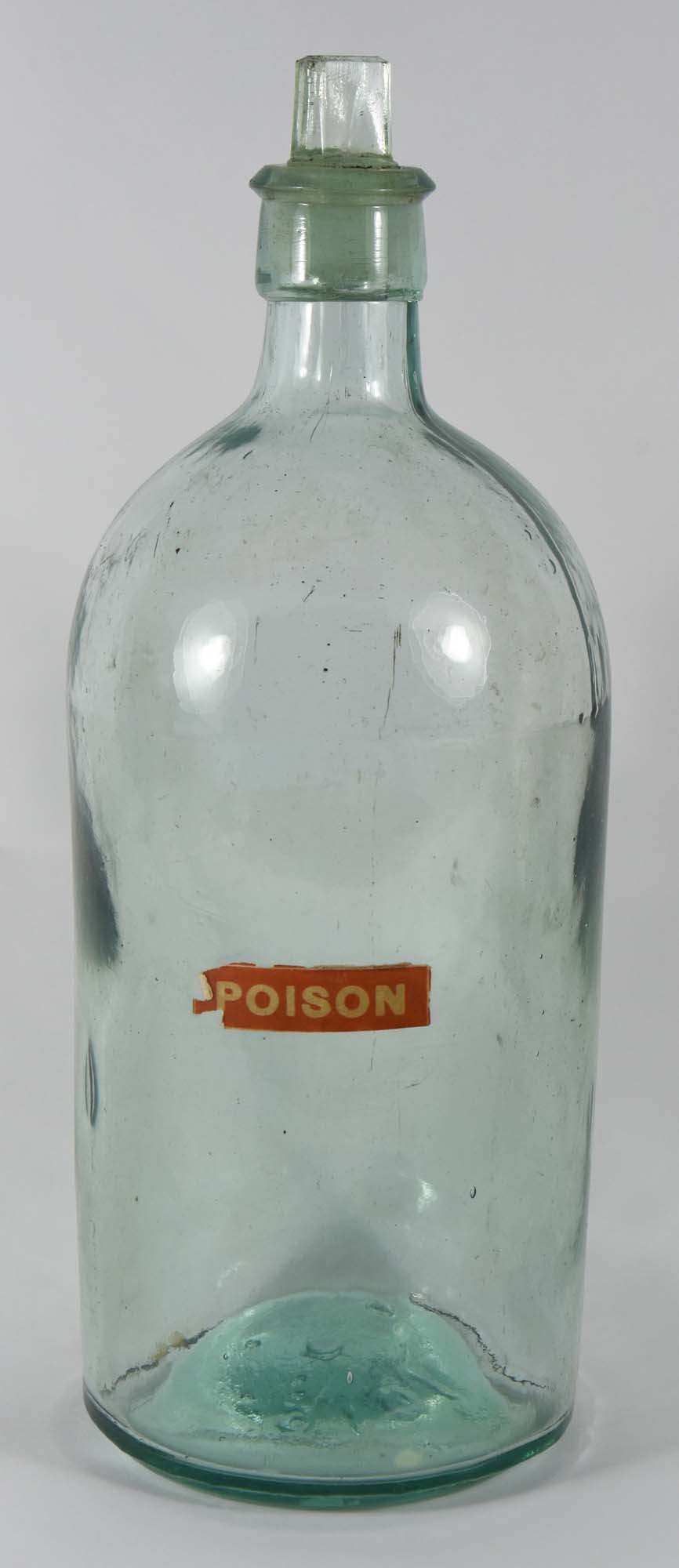
Chloroform. Ask anybody to tell you what they associate with the word chloroform and for many the answer would probably be to do with its nefarious reputation in the modern world. A drug associated with crime, an unpleasant thing most wouldn’t come into contact with. Even the word ‘poison’ being included on the label would cause alarm. So why then did Shotts Nurse Mrs McLean carry around a bottle of this sinister liquid, now donated to the museum?
Well, the history of chloroform is fascinating and its associations were quite different to the modern day. Rather than being a substance associated with harm, its conception came from wanting to do good. It came from a desire to create a medical anaesthetic to relieve people of suffering during surgery.

Before Anaesthetics
Surgery before anaesthetics was particularly dangerous and painful. Modern day we could hardly imagine undergoing surgery without pain relief or being unconscious. Yet, this was the reality for many people before these medical advancements. Excruciating pain, shock, blood loss, being awake and feeling the procedure, and subsequent infection…these were all the norm. As such, speed was crucial in surgery but regardless, death wasn’t uncommon. The 1800s thankfully brought the pursuit of ways to solve these issues and develop safe, more effective medical practices.
Chloroform as a Medical Pioneer
Ways of putting patients to sleep were experimented with, none being perfect but all leading to an advancement in knowledge. Laughing gas was found to be good for taking out teeth but not for use in surgery. Before chloroform was developed, a substance called ether was experimented with and was popularised in some circles, especially in America during the Mexican-American war (1846-1848). However, ether was flammable and could cause lung damage.
Edinburgh doctor James Simpson was on a quest to find ways of making surgery less unpleasant. Having used ether during his career, he found it had too many disadvantages and so his pursuit continued. His solution came from finding the anaesthetic uses of chloroform and pushing its uses in contemporary medicine amongst his colleagues and peers.
A Groundbreaking Anaesthetic? Yes, But Also Controversial
Chloroform in medicine was regarded as a groundbreaking development at the time but even still, it was a problematic drug to use. While it did reliably knock patients out for longer so they wouldn’t have to be drunk, tied down, or awake during surgery, it did come with its own set of issues. Dosage was a problem and it required a greater degree of skill to give a strong enough dose to knock someone out but not kill them; deaths started to be reported from using chloroform starting with a 15-year-old girl who died from a dose that was too high.
An anaesthetic in the right doses, but a poison in the wrong doses. Controversies also came from the arguments that it caused severe heart and lung issues. With its usage, longer, more invasive surgeries could be attempted but that also led to fatalities, as well as issues surrounding poor hygiene, sterilisation, and infection.
Yet despite its issues, it was still a momentous advancement in medicine and anaesthetics; an important stepping stone until later when safer, more effective anaesthetics were developed. Thus despite its negative connotation today, its history is a fascinating mixture of advancement and risk. From the hospitals to the district nurses, this substance had its uses for the public good.
Info about the author
Brooklyn Braeger is a graduate of the University of Glasgow with a History MA (Hons) and a Modern History MSc. She is a Volunteer Digital Collections Assistant within the Curatorial Team, North Lanarkshire Council Museums & Collections