
Sewing was seen as a symbol of women’s domesticity and skill. Sewing skills had been passed down from mother to daughter for centuries, and it was seen as essential knowledge for any woman to have. Before the sewing machine, clothes were made by hand, which was a slow and labour-intensive process. The sewing machine revolutionised the way clothes were made, making it possible to sew much faster and easier. Toy sewing machines were introduced in the late 19th century as a way for girls to learn how to sew and to develop their domestic skills.
Toy sewing machines were originally marketed as miniatures for women to take on vacation with them. But they soon became more popular as toys for girls, and they were found in the girl’s section of toy catalogues. Toy sewing machines were often decorated with flowers, hearts, and other feminine symbols. They also had names like “Junior Miss” and “Little Lady.” These names helped to reinforce the idea that sewing was a female pursuit.
The popularity of toy sewing machines declined in the latter half of the 20th century, as sewing became a less essential skill for women. This was due to a number of factors, including the rise of the ready-made clothing industry, the increasing participation of women in the workforce, and the changing social roles of women.
Here at Summerlee Museum of Scottish Industrial Life we have a small collection of toy sewing machines.
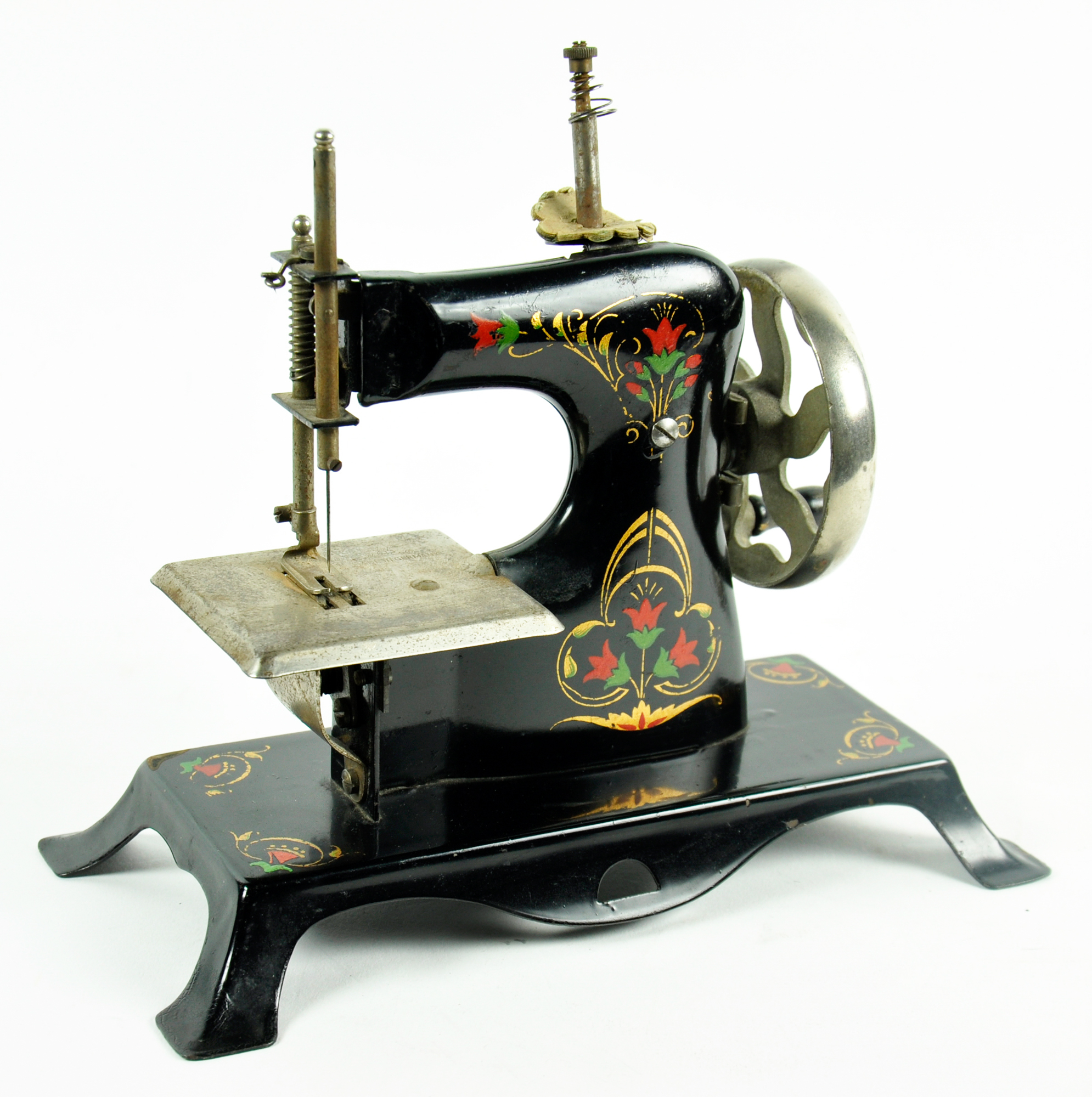
This Casige machine originates from the early 1900s and is decorated with red flowers surrounded by gold scrollwork borders (figure 1). Casige was a German toy maker who began producing toy sewing machines in 1902 and ceased production in 1975.

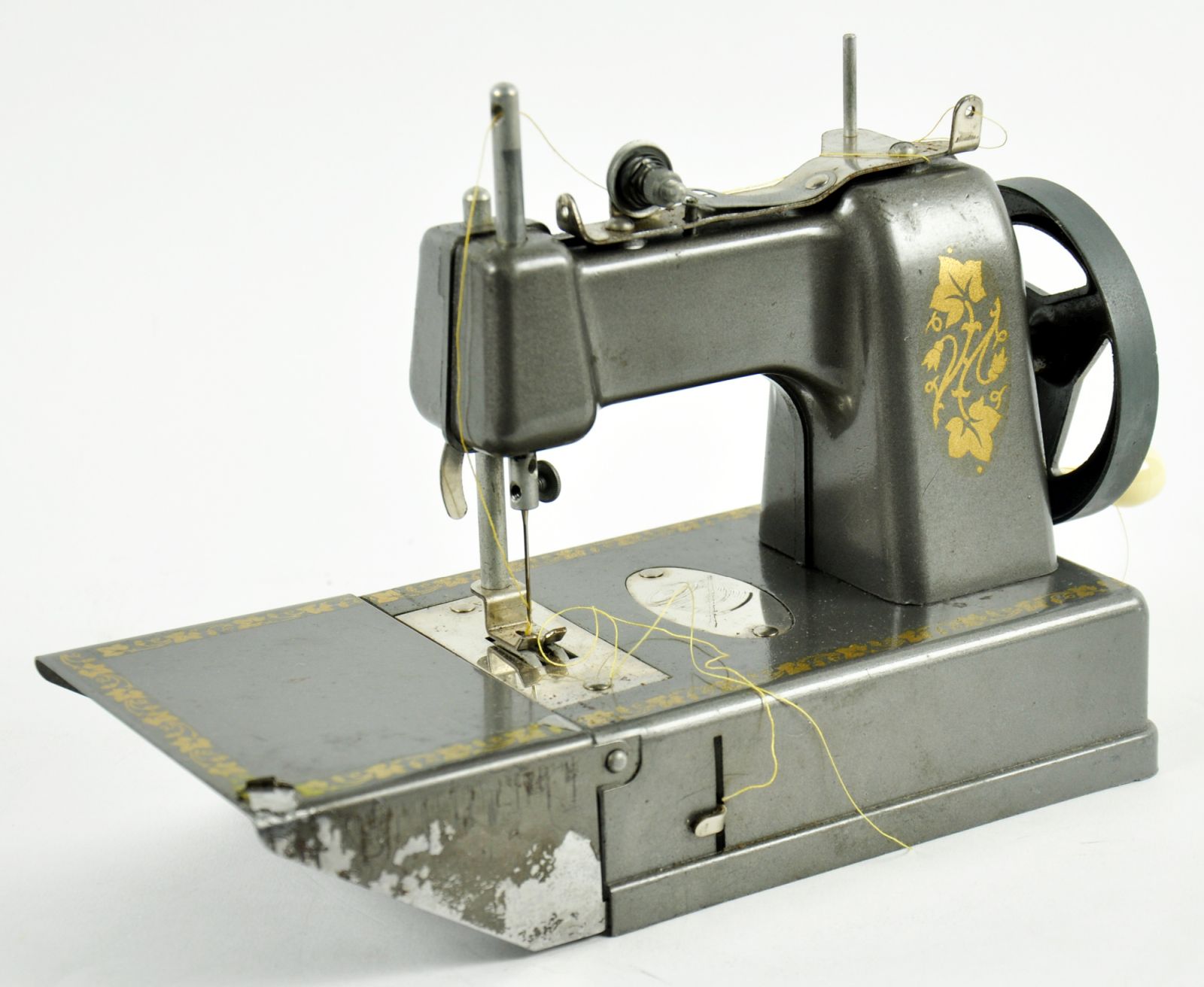
Next, we have three toy sewing machines from Vulcan. Vulcan was a British company, owned by Sydney S Bird, who traded under the name ‘Cyldon Works’. They originated in Middlesex but in the 1950s manufacturing was relocated to Dorset. They produced their first toy sewing machine in 1948 and the company operated until 1981, though it stopped producing toy sewing machines in the 1970s.
Made in 1951/52 the Vulcan Featherweight came in black and grey with floral decal patterns on the body (figure 2).
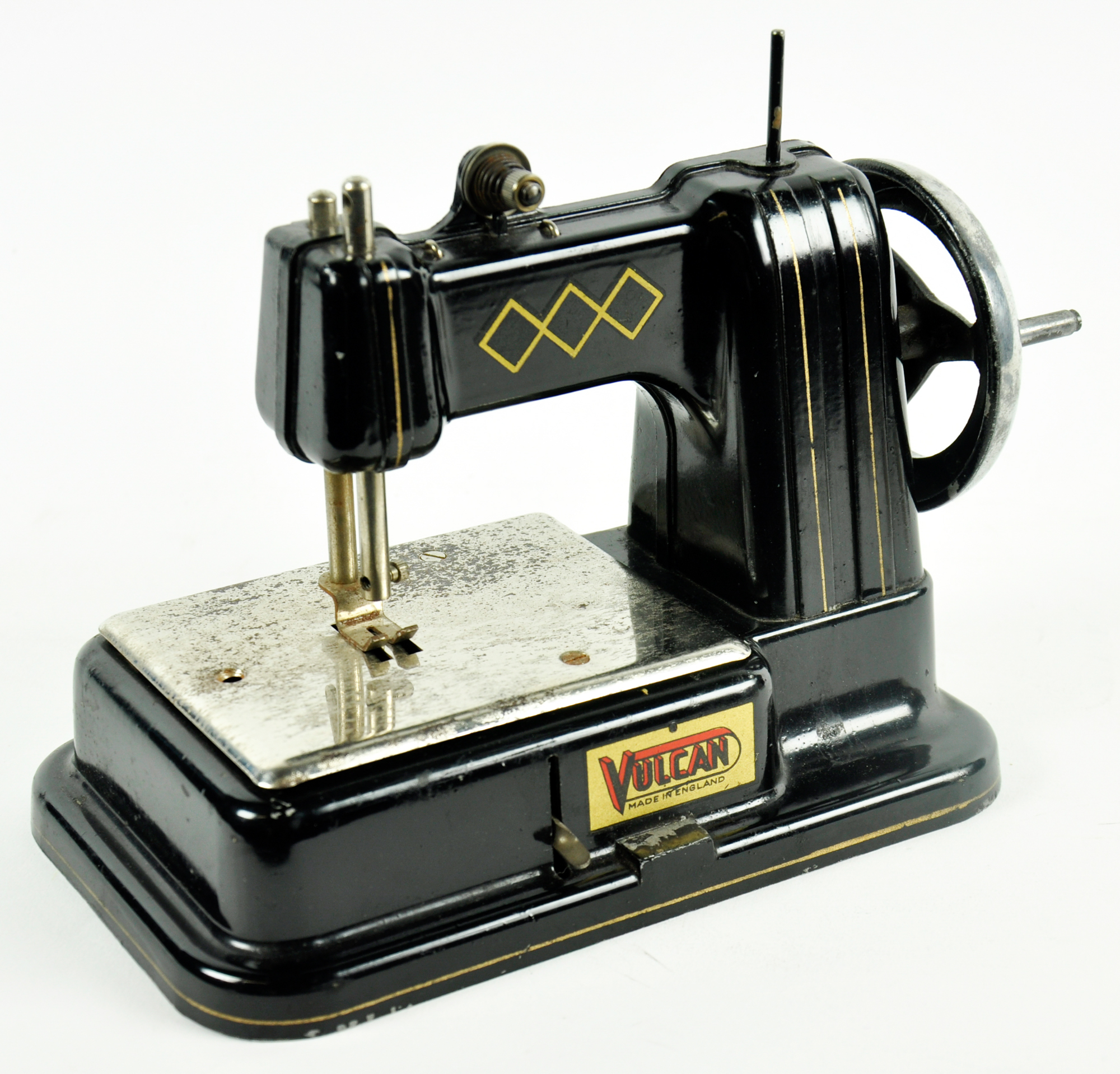
Made around the same time was a variation of the Featherweight without the extension table, nicknamed the “Dumpy.” This version was sold in black with gold stripes and diamonds as decoration (figure 3).
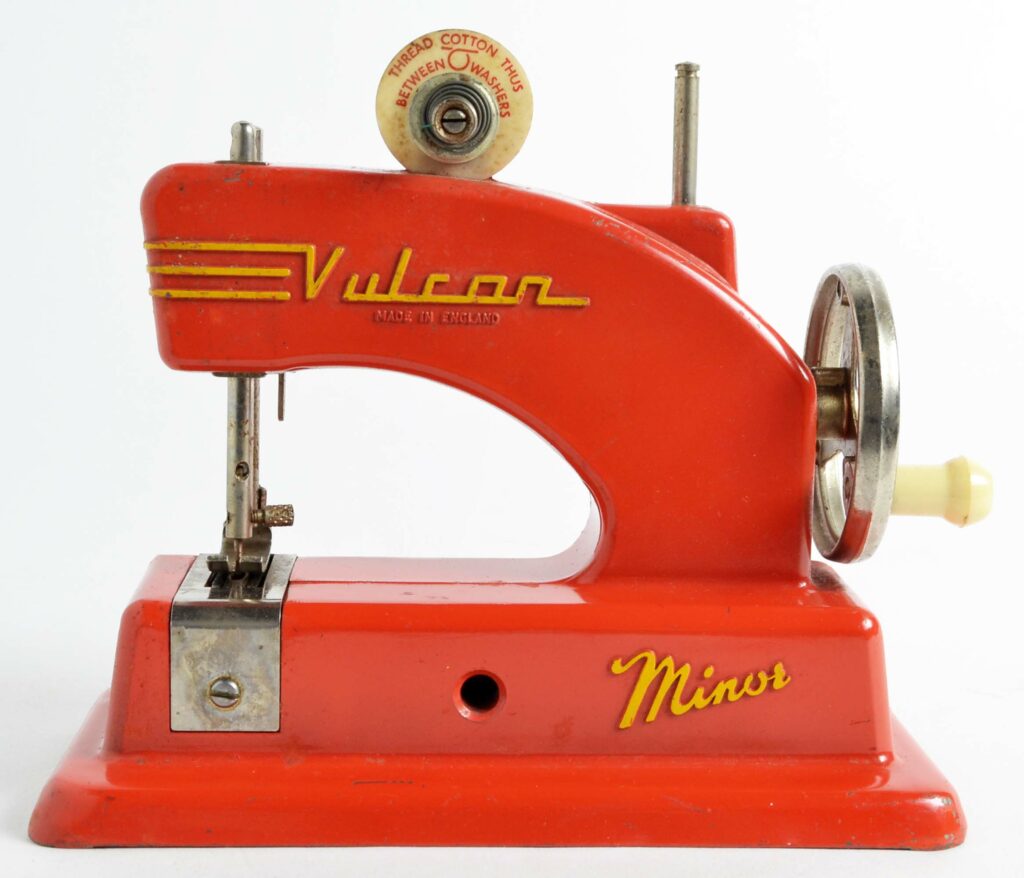
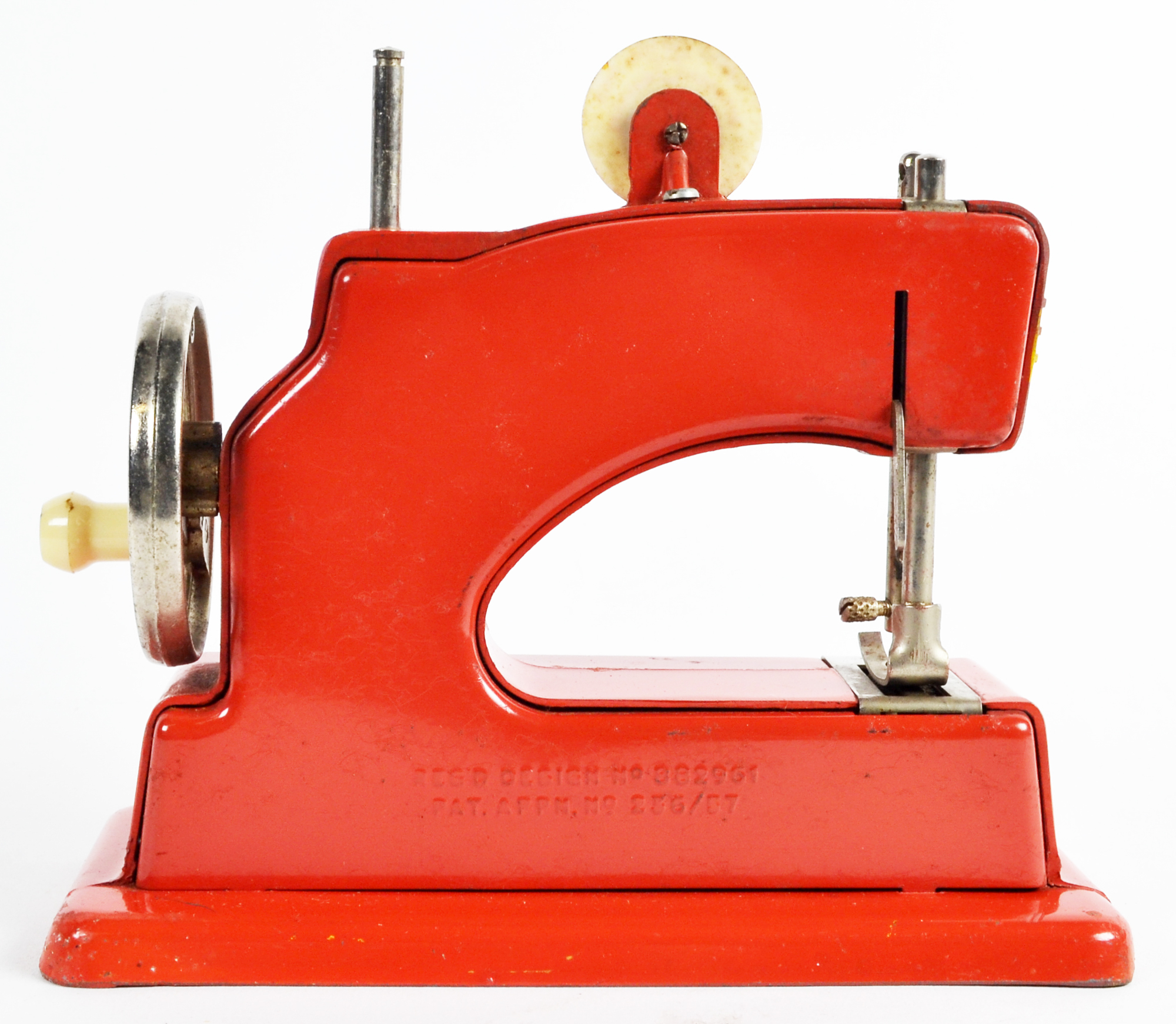
In 1957 Vulcan released a series of three budget machines called the Minor, Junior and Senior (figure 4). Here is the Minor in our collection.
Toy sewing machines were first introduced in the late 19th century, as sewing machines became more affordable and accessible. They were marketed as a way for girls to learn how to sew and to develop their domestic skills. Toy sewing machines can be viewed as a reminder of a time when sewing was an essential skill for women.
About the author:
Elinor Abbott is a student at the University of Glasgow studying her MSc in Material Cultures and Artefacts Studies. As part of her course, she has undertaken a placement at Summerlee Museum of Industrial Life and researched our collections, focusing on toys and their advertising.